How to Survive the First Week of a Zombie Apocalypse
The first night is over. Turn what you have into a workable week: usable meals, water replenishment, sanitation, shared responsibilities, and a next destination if needed.

Short answer
Key takeaways
- Days 2–7 require repeated access to essentials; count only supplies and services you can actually use.
- Calculate the next shortfall from people, usable stock, and observed consumption; a planned delivery is not stock already received.
- A replenishment plan includes access, containers, carrying capacity, and the people staying behind.
- Sleeping, sanitation, charging, and care tasks need a workable routine, including when one person is doing everything.
- Compare a failing arrangement with a specific reachable alternative while you still have options.
Fictional preparedness exercise: the first night of a zombie outbreak is over, and ordinary services remain unreliable. This guide covers days 2–7: how to make water, meals, rest, sanitation, and communication work repeatedly with the resources you can access. The outbreak is fictional; the practical foundation is managing a prolonged disruption.
If you are still resolving immediate danger, a place for tonight, or contact with separated family, start with the first 24 hours. Here, the starting point is a provisional place to stay. It might be your apartment, a friend's spare room, or shared accommodation. The end of the week is a planning horizon, not a promise that services will return then.
Start the First Week With What You Can Actually Use
Count everyone relying on the current arrangement, including the host household. Establish how long you may stay and which facilities and supplies you may use. A cupboard of food is not your reserve if its owner needs it for another family.
Look for the first essential task that has no workable next step. Perhaps tonight's meal is covered but tomorrow's drinking water is not. Perhaps food is plentiful but permission to stay ends that afternoon. Solve that gap before reorganising resources that already work.
Your situation determines the first problem to resolve on day two.
| Starting situation | First action | What you need to establish |
|---|---|---|
| Home with supplies and some working services | Count usable stock and check which services still operate | The first missing resource or service, and how to replace it |
| Staying with friends or relatives | Agree the length of stay and what is shared | A combined count that includes the people already living there |
| Shared temporary accommodation | Learn meal, water, toilet, charging, and departure arrangements | Which needs the site covers and which remain yours |
| No personal kit, working phone, or vehicle | Arrange access to the next drink, meal, toilet, and night through places or people you can reach | A specific next service or permitted place to stay |
| Alone with limited supplies | Choose a short sequence one person can finish | No overlapping errands or equipment that requires a second person |
If you have no kit or supplies of your own
Begin with access to essentials. At your present location, ask what is available now: drinking water, a meal, a toilet, and permission to remain. Ask separately about the next meal or refill and the next night. A place that helped yesterday may have changed its hours or arrangements.
If the current host cannot meet a need, ask whether they know a specific operating service or nearby person who can. Get the location, opening time, what is supplied, and whether you need to bring anything. With no phone, ask someone to make the enquiry while you are present. With no container, ask whether water is supplied in sealed bottles or whether a suitable container can be provided. Do not arrive at a refill point assuming it also distributes containers.
Some real emergency services provide several forms of help together. For example, American Red Cross service sites can offer meals, water, and charging, while shelters provide overnight accommodation. Availability depends on the site and response. This is an example of what to ask about, not a promise that such a service exists nearby.
If organised help is unavailable, start with people and resources already accessible: ask a host or neighbour directly about sharing drinking water, a meal, or temporary space. Agree what they can provide and for how long. If nearby options cannot meet essential needs, identify a known alternative and what it would take to reach it. Explain any transport or access barrier to people who may be able to assist. Avoid spending the remaining daylight pursuing an unverified distant destination.
Nothing in this sequence requires you to acquire a full kit first. A borrowed cup, a provided meal, and an agreed sleeping place can solve today's tasks even while you still own almost no equipment. Repeat the next arrangement aloud if neither a phone nor paper is available.
Calculate the Next Shortfall
Make a simple count on available paper or a phone, or work through it aloud together. Separate in hand, usable with an extra resource, and expected but not received. Dry rice needing water and a cooker belongs in the second category. Tomorrow's possible delivery belongs in the third.
A water example for three people
For storage planning, CDC uses at least one US gallon, approximately 3.8 litres, per person per day. That includes drinking and other uses; it is not a personal drinking allowance or an upper limit. Conditions and additional needs can increase the total.
Suppose three adults begin day two with 30 litres of usable stored water and six days left to plan:
- Baseline daily supply: 3 × 3.8 = 11.4 litres.
- Six remaining days: 3 × 6 × 3.8 = 68.4 litres.
- Gap against that baseline: 68.4 − 30 = 38.4 litres.
- Stock divided by baseline use: 30 ÷ 11.4 ≈ 2.6 days.
These are editorial calculations using a rounded conversion, not a separate CDC six-day recommendation. They show that a refill needs arranging well before the stock runs out. Dividing 30 litres into six smaller daily portions does not make an inadequate reserve sufficient.
Measure what the group actually uses through the next complete day if container markings or known bottle volumes allow it. If consumption is 12 litres, 18 litres remain the following morning: about another day and a half at that observed rate. Update the refill task then. Do not keep using the original 30-litre figure because it is written at the top of the list.
The water-storage guide covers choosing, filling, and positioning containers. Here, keep the inventory tied to the next available refill and the amount you can bring back.
Count meals you can complete
Build the next meals from familiar foods the people present can eat. Include opening the package, preparation, cooking if needed, serving, and cleanup. A large bag of dried food may contribute less to tonight's dinner than a small ready-to-eat package if there is no suitable cooking setup.
For three adults eating three meals a day across six days, the planning list contains 54 individual meals. This is a scheduling example, not a calorie or nutrition prescription. Work from actual packages and familiar portions; include snacks and individual requirements separately. An assortment of tins is not automatically the same number of complete meals.
Keep a ready-to-eat option available for a day when cooking or travel falls through. If a meal needs scarce water, fuel, and washing up, record those demands alongside the food. The cooking-without-electricity guide explains how to match meals to the equipment available.
By day two, yesterday's refrigerator contents need a storage-history check before they enter the count. Follow CDC's emergency food-safety guidance: refrigerated perishables must be discarded after four hours without power or a cold source such as ice. Never taste food to judge safety. Food kept adequately cold needs the relevant temperature checks; an unpowered fridge is not a week-long reserve. The cold-food guide covers the different refrigerator, freezer, and cooler situations.
Keep the count connected to an action
The example below uses invented inventory figures to show how a small group can turn a count into decisions. Replace them with your own resources and observations.
Example day-two ledger for three adults: count what works, then assign the missing step.
| Resource | Available now | What limits it | Next action |
|---|---|---|---|
| Drinking-quality stored water | 30 litres | About 2.6 days at the example baseline | Confirm a refill and arrange enough containers and carrying capacity |
| Ready-to-eat food | 18 planned individual meals | Two days at nine individual meals per day | Identify the next meals before this layer is exhausted |
| Food requiring cooking | Ingredients for 18 more meals | Cooker, water, fuel, and cleanup must all be available | Check the complete cooking setup before counting the meals as usable |
| Phone and charging | One phone and one charged power bank | Actual runtime and a working cable | Test the cable, agree essential uses, and identify the next recharge |
| Temporary accommodation | Host agrees to stay through day four | Permission after that is unresolved | Discuss an extension or a receiving place before the deadline |
The accommodation deadline can matter before the pantry empties. This is why a week plan needs more than a shopping list.
Make Replenishment a Complete Task
Start with the specific shortage and an available source: a working shop, a confirmed distribution point, an agreed share with another household, or a permitted water supply whose drinking-water status is known. Check what the source can provide before spending time and energy reaching it.
For each necessary collection, settle five practical details:
- Access: exact location, current opening or distribution time, and any access requirement.
- Supply: what is available, in what quantity, and whether a container or other item is needed.
- Payment or permission: which payment method works, or what sharing arrangement has been agreed.
- Transport: a usable route, who can make the trip, and what they can carry back.
- Return: who remains with dependants, when an update is expected, and what happens if the source is unavailable.
Water volume and carrying capacity must agree. At approximately one kilogram per litre, ten litres of water weigh about ten kilograms before the containers. For the example group's 11.4-litre daily baseline, a single person carrying one five-litre container cannot replace a whole day's supply in one trip. That gap needs a different carrying arrangement, a confirmed delivery, another accessible source, or a location closer to supply.
Use suitable, closable containers. CDC advises against containers that previously held toxic chemicals and recommends protecting stored water from contamination. A found workshop bottle is not suitable merely because its cap fits. Ask for a known drinking-water container if its history is unclear.
When services are unreliable, distinguish a source you have confirmed from one someone remembers using yesterday. If you cannot check remotely, use current information available locally and choose a trip you can abandon or return from without losing the group's only workable arrangement. Keep people informed of changes rather than extending an errand into several unplanned destinations.
On return, count what actually arrived, put it into its assigned storage, and revise the next shortage. Record a failed collection as a failure to obtain supplies. An expected delivery should not remain in the plan as though it has already replenished the shelf.
Make the Place Work for Repeated Daily Use
A room that accommodated one night may become crowded once bedding, food, wet clothing, and waste accumulate. Set a place for each recurring activity, using the space you have permission to use. Keep drinking water and food apart from cleaning chemicals, waste, and workshop materials.
Walk the route between sleeping space, toilet, water, and exit before darkness. Move ordinary clutter while there is light, and place essential items where everyone can find them. Preserve unblocked doors and windows needed for escape. The home-base guide develops the layout; the week's job is to keep that layout usable as daily life fills the room.
Keep sanitation operating beyond the first use
Check whether the normal toilet and drainage remain usable under the building's or utility's instructions. If not, choose an available alternative and plan collection, handwashing, and protected waste storage together. Local disposal arrangements still matter; a full container does not create permission to use an affected drain or leave waste in public space.
For a collection toilet, keep the required liners or other consumables alongside it, replace or empty it according to the chosen system, and store closed waste away from food and children until an accepted disposal route is available. Count those supplies alongside food and water. The emergency-toilet guide explains complete setups, including ordinary household materials. In shared accommodation, use the operator's arrangements and report a failing facility early.
Provide water, soap, and a way to collect wastewater at the handwashing point if the tap or drain is unavailable. Follow CDC's emergency handwashing guidance, including washing with soap and suitable water for at least 20 seconds. Refill the station and arrange wastewater disposal as part of the daily task; setting it up once does not keep it functioning all week.
Use a small set of dishes that can be cleaned with the available water and supplies. The low-water dishwashing guide covers the full cycle. Put food scraps and other rubbish into appropriate closed storage and check local collection arrangements. Keep ordinary rubbish separate from collected toilet waste where the chosen system requires it.
Keep rest and temperature in the plan
Agree a sleeping area and a quiet period around the actual household. Keep daytime tasks out of that area where space permits. Rotate duties so the same person is not cooking, collecting supplies, supervising a child, and handling every late update.
If ordinary clothing, bedding, and available building systems cannot keep the place usable, identify another accommodation option. Red Cross outage guidance includes moving to a location with heating or cooling when needed. Any cooking workaround must also fit the location: outdoor cooking equipment stays outdoors. A room that only functions with an unsuitable appliance is not a workable shelter arrangement.
Share the Work and Keep Information Available
Agree responsibilities for recurring jobs, following the household-planning approach recommended by the Red Cross. Name the task and its completed result: “refill the handwashing container and put soap back” is clearer than “deal with hygiene.” Include someone who can take over if the usual person is absent.
Build a modest rhythm around meals, available daylight, service hours, and rest:
- At the start of the day: check what changed overnight and choose the most consequential unresolved task.
- Before an errand or shared-equipment use: agree who is responsible, what resources they need, and what others must retain.
- After the task: report the result and update anything that depends on it.
- Before settling for the night: make the next meal, water access, toilet, light, and next update workable.
These are planning checkpoints, not prescribed hours. New protective instructions or immediate danger override the routine.
For a household with children, someone must remain responsible while another adult collects supplies or cooks. A person providing care cannot simultaneously be assumed available for every errand. Give children simple, age-appropriate information about the next activity and responsible adult. Include animals in the same allocation of work, rather than discovering at departure that nobody has arranged their transport.
If you are doing everything alone
Keep the plan small enough to execute in sequence. Prepare the space and next meal before starting a necessary collection, retain the items you need on that trip, and allow time to return and put supplies away. A neighbour's agreed help with one task may be useful without requiring you to merge households or surrender your belongings.
If nobody can receive an update, choose necessary journeys with known destinations and manageable return arrangements. A plan that depends on someone noticing your absence needs an actual person who has agreed to do that. Reduce optional errands before cutting out rest or leaving essential chores unfinished.
Give communication a power budget
Identify the device and connection that still work, then agree when to exchange routine updates. Keep the device available for alerts or urgent contact when needed. Save useful addresses and instructions locally, and copy essentials onto available paper before charge becomes scarce.
Share a charger or power bank by agreed turns. A compatible connector does not prove that a cable or supply works; test the actual charging chain. Recheck the battery after normal use and arrange charging around available access, rather than relying on an untested number of advertised recharges. The small-device power guide explains capacity and charging in depth.
An update should say what changed, when the information was obtained, and what action follows. If messages fail, use the fallback already agreed with the other person. The guide to communication without cell service covers device-based and no-device options. A silent phone does not, by itself, tell you whether the person, network, or battery is the problem.
Decide Whether to Stay, Replenish, or Move
Review the current place against the next unresolved need. If the accommodation remains usable and a refill can be completed, organise that refill. If a dependency cannot be resolved there, compare a specific alternative before the remaining margin disappears.
A change is needed when, for example, permission to stay ends, available supplies cannot bridge the gap to replenishment, sanitation can no longer be maintained, or someone cannot use the space or transport arrangement. An evacuation instruction or immediate danger calls for prompt protective action; do not wait for the scheduled review.
For a planned relocation, confirm what improves at the receiving place: permission to enter, drinking water, meals, toilets, a sleeping arrangement, and capacity for the whole group. Then check the route, transport, and load against the people making the journey. The evacuation-plan guide explains those preparations. If the move depends on unavailable transport, resolving that dependency is part of the move, not something to leave until everyone is outside with bags.
Keep necessary travel items accessible while staying, and know which shared resources must leave with you. Tell the people relying on your location about an agreed move when communication allows. At arrival, check the actual arrangements before treating the new address as a solved week.
Finish the Week With Fewer Unresolved Dependencies
By the end of the week, aim to know how the next day will work: where water comes from, which meals are usable, how waste is handled, who does the recurring jobs, and what would require a move. A modest arrangement that people can repeat is more useful than a large reserve nobody can access or maintain.
Extend the planning horizon from observed use. Restock items that proved necessary, replace failed equipment when possible, and update the shared count after departures or arrivals. The 30-day food and water supply guide explains building a larger reserve when conditions and storage allow it. Reaching day seven does not itself establish that the disruption is over.
Zombie Scenario: The Refill That Changed the Plan
Fictional scenario
Mara, Leah, and Owen are staying in a workshop with its owner's permission while reports of the outbreak continue. At the start of day two they count 30 litres of drinking water, ready-to-eat meals for two days, and ingredients they can use only if they arrange suitable cooking access. The owner can accommodate them through day four.
They learn that a nearby distribution point is operating, but recipients need their own containers. Leah has two five-litre containers. Owen can carry one, so they arrange a joint collection while Mara remains at the workshop. They agree the destination and expected return before leaving. The ten litres they bring back are useful, but do not cover the group's complete observed daily use.
At the next review they find out that the distribution point will move farther away. A daily walking collection would no longer fit their carrying capacity and other tasks. Mara reaches a relative who confirms room for all three, usable water, and an operating pickup arrangement. They check that the route and pickup still work, settle the shared supplies with the workshop owner, and prepare the load.
They move before their permission expires and before the water is gone. The deciding fact is the failed replenishment arrangement. A fuller shelf on the first morning would not have removed the need to notice that change.
Frequently Asked
Is a three-day emergency kit enough for the first week?
What changes if another person arrives halfway through the week?
Should everyone put all their supplies into one shared pile?
What if people disagree about whether to leave?
How do I include a pet in the week's supplies?
Can we stop the routine as soon as electricity comes back?
Sources
- CDC — How to Create an Emergency Water Supply
- CDC — Keep Food Safe After a Disaster or Emergency
- American Red Cross — Find Open Shelters and Disaster Relief Services
- CDC — Guidelines for Personal Hygiene During an Emergency
- King County — How to Create an Emergency Toilet
- U.S. Fire Administration — Home Fire Escape Plans
- American Red Cross — Power Outage Safety
- American Red Cross — Make a Plan
- U.S. Geological Survey — Properties of Water: Water Density
Related guides

What to Do If a Zombie Apocalypse Starts: The First 24 Hours
The outbreak catches you where you are. Work through the first decisions, a missing kit, separated family, and the first night with the resources actually available.
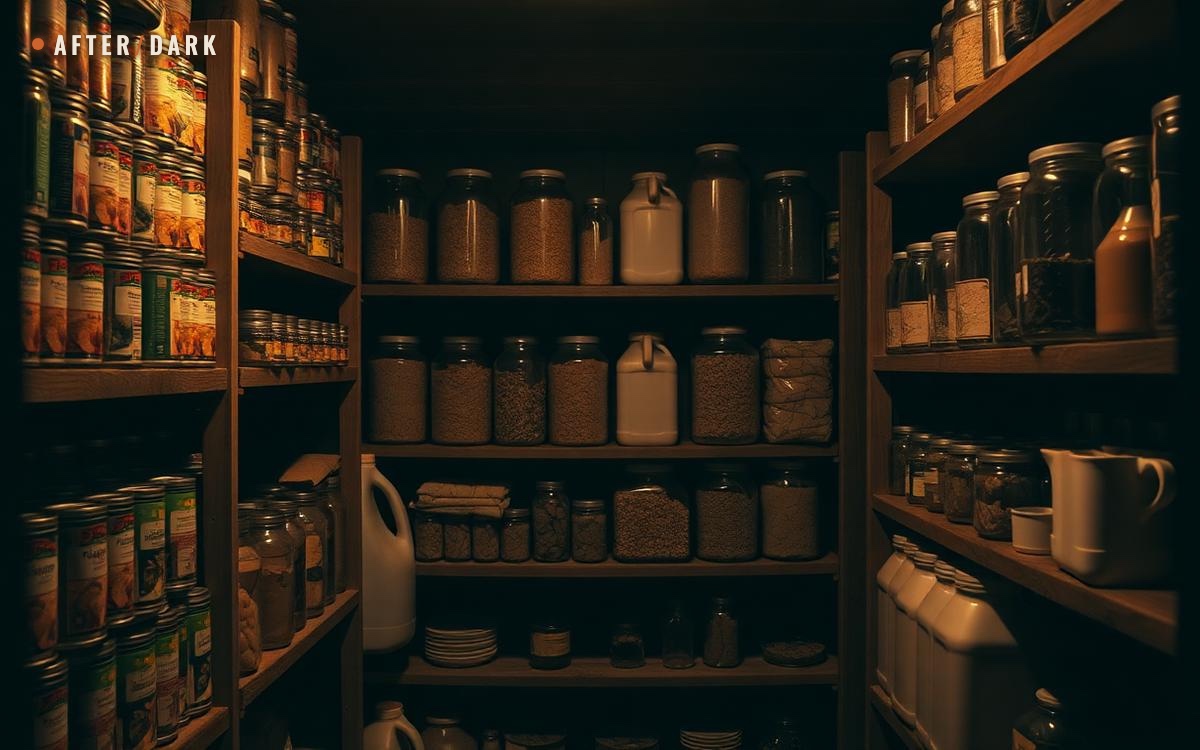
How to Build a 30-Day Food and Water Supply for an Apocalypse
A practical 30-day pantry for apocalypse preparedness, built from person-days, package labels, a no-cook layer, and stored water you can rotate.

How to Set Up an Emergency Toilet at Home for Water or Sewer Outages
Choose a workable toilet when water or sewer service stops, including a setup from household supplies, then handle washing, replacement, and collected waste.