How to Build a 30-Day Food and Water Supply for an Apocalypse
A practical 30-day pantry for apocalypse preparedness, built from person-days, package labels, a no-cook layer, and stored water you can rotate.
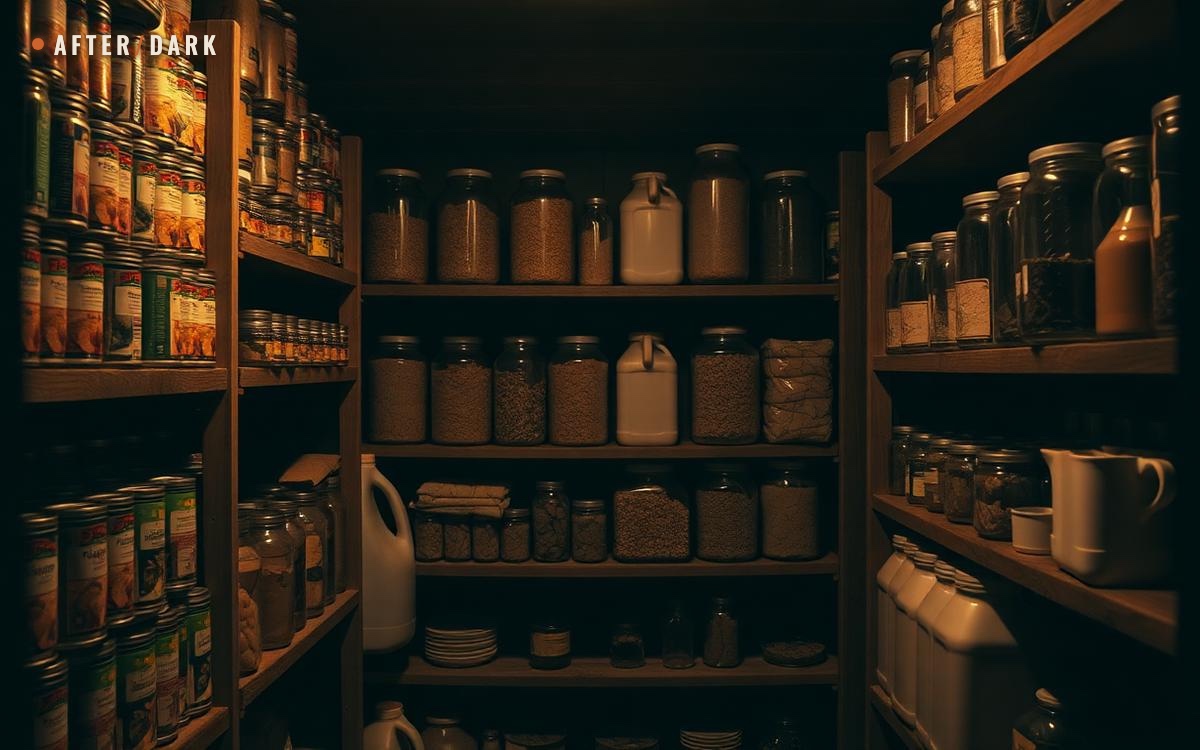
Short answer
Key takeaways
- Thirty gallons (about 114 liters) per person is a 30-day extension of the CDC's one-gallon-per-day emergency baseline.
- Plan 90 main meals per person from actual package labels instead of trusting a product's headline serving count.
- Keep the first three days ready to eat without refrigeration or cooking, and include a manual can opener.
- Filter capacity is not a safety rating: portable filters do not remove every type of contaminant.
- Use a first-in, first-out shelf and audit the inventory every three months.
This is a shelter-in-place logistics plan for an apocalypse-scale disruption: a long outage, severe storm, supply breakdown, or fictional zombie outbreak. It covers food quantities, water storage, preparation constraints, and rotation. It does not provide medical or individualized dietary advice; use foods that already fit your household and follow current product labels and local safety instructions.
Thirty days is a serious storage target. Water is the limiting factor, and a pile of dry food is not a plan unless you have counted the water, fuel, package sizes, and tools needed to prepare it. The method below turns the month into small calculations you can verify before an emergency.
Start with person-days, not random packages
A person-day is one person's supply for one day. Multiply the number of people by 30 before choosing products: one person needs 30 person-days, two people need 60, and four people need 120. This keeps household math visible and prevents a package marketed as a “30-day supply” from replacing your own count.
The CDC says to store at least one gallon of water per person per day for three days and to try for a two-week supply when possible. The 30-day totals below extend the same daily logistics baseline; they are After/Dark calculations, not an official CDC recommendation to store a full month.
Thirty-day household baseline. Water volume is rounded; one liter of water weighs about one kilogram before container weight.
| Household | Person-days | Total water | Water weight |
|---|---|---|---|
| 1 person | 30 | 30 gal / about 114 L | about 114 kg / 251 lb |
| 2 people | 60 | 60 gal / about 227 L | about 227 kg / 500 lb |
| 4 people | 120 | 120 gal / about 454 L | about 454 kg / 1,001 lb |
Build the food plan from meals
For each person, plan 30 breakfasts, 30 lunches, and 30 dinners. A ten-day menu repeated three times is easier to verify than 90 unrelated meals. It also exposes repetition, missing preparation water, packages that leave unusable leftovers, and meals that depend on the same appliance.
Use the serving information and preparation directions on the exact products you buy. “Servings” on a bucket or multipack are not automatically complete meals, and package sizes change. If your household tracks another planning measure, record that from the labels too, but do not replace the meal count with a marketing claim.
- List ten breakfasts, ten lunches, and ten dinners that use shelf-stable foods your household already eats.
- Mark each meal as no-cook, low-cook, or dependent on a specific appliance or fuel.
- Convert every meal into package counts using the labels on the products you will actually store.
- Multiply the ten-day package list by three and round up only to complete packages.
- Count all preparation water within the household water budget; increase the stored total if planned uses exceed the 30-gallon baseline.
- Run a 24- to 72-hour home test, record what you used, and correct the list before relying on it.
Validate every low-cook and appliance-dependent meal with the long-outage cooking plan, including its location, active heating time, water, power or fuel, and opened remainder.
Create a three-day no-cook layer
The first layer should cover nine main meals per person without refrigeration, cooking, or an electric can opener. USDA describes shelf-stable foods as products that can be stored safely at room temperature, but labels still matter: some canned meat or seafood is marked “Keep Refrigerated” and does not belong in this layer.
Choose small packages when an opened container would otherwise create leftovers you cannot refrigerate. Put the manual can opener with the food rather than elsewhere in the kitchen.
- Ready-to-eat canned or retort-pouch meals that are explicitly labeled shelf-stable.
- Shelf-stable beans, fish, meat, fruit, or vegetables your household already uses.
- Crackers, crispbread, nut or seed butter, dried fruit, and familiar snacks.
- Shelf-stable drinks or drink mixes only after their water use is counted.
- A manual can opener, clean utensils, and a simple way to track opened packages.
Use a shopping framework, then verify every package
The list below is a calculation framework, not a universal diet or an untested promise that a fixed pile of groceries will suit every household. Fill each line from your ten-day menu, then multiply it by three. The result is your exact shopping list for the brands and package sizes available to you.
Inventory worksheet for each person. The no-cook meals are a subset of the 90 total main meals.
| Plan line | 30-day count | Record before buying |
|---|---|---|
| Breakfasts | 30 | Product, package size, portions used, cooking water |
| Lunches | 30 | Product, package size, portions used, opened leftovers |
| Dinners | 30 | Product, package size, portions used, fuel and water |
| No-cook subset | 9 main meals | Ready-to-eat label, opener or utensil required |
| Routine extras | 30-day household use | Snacks, drinks, condiments, and normal staples |
| Preparation water | Sum from every meal | Count within the total; increase storage if needed |
Store water as a system
Commercially bottled water is the safest and most reliable emergency source. The CDC says to observe its expiration date. For water filled at home, use food-grade containers, label them with the storage date, replace the water every six months, and keep the containers cool, out of direct sunlight, and away from toxic substances.
Separate the plan into stored water, preparation water already counted in that total, containers you can actually lift and pour, and a backup treatment method. One large drum may look efficient but becomes a single point of failure and cannot move with you.
For travel beyond the stored supply, learn how to find and collect water from natural sources. The guide covers woodland and dry-country sources, portable rain collection, and the distinction between collected water and drinking water.
- Place heavy containers low and stable rather than on high shelving.
- Use several manageable containers instead of one inaccessible reserve.
- Keep a clean pouring method with the containers to reduce handling.
- Record the location and rotation date of every container in the same inventory as the food.
A filter is not a safety guarantee
A filter advertised for 10,000 liters is describing capacity, not which hazards it removes. CDC guidance says boiling is the best way to kill germs when bottled water is unavailable, and that most portable filters do not remove bacteria or viruses. Filtered water may need additional treatment.
Water contaminated with fuel, toxic chemicals, or radioactive material cannot be made safe by boiling or disinfecting. Use bottled water or a different source and follow current local-authority or CDC instructions; do not improvise a treatment recipe from memory.
Choose storage the stockpile can survive
Shelf life depends on both the product and its storage conditions. USDA's shelf-stable chart shows that different canned, dried, retort, and ready-to-eat products have different storage windows, so a single expiration rule for the whole pantry is unreliable.
Use a cool, dry indoor area without large temperature swings. In flood-prone locations, USDA advises placing emergency food on shelves above potential contaminated water. Keep food and water away from fuel, pesticides, cleaners, and other chemicals.
- Put water and dense food on low, stable shelving and respect the shelf manufacturer's load rating.
- Write the purchase date where it is visible without moving the package; keep the printed package date readable.
- Group food by meal or use, not only by package type, so missing parts are obvious.
- Keep the three-day no-cook layer accessible rather than buried behind long-term staples.
Storage is part of the shelter plan. Use the same low-profile, accessible approach described in the home-fortification guide without blocking an exit route.
For location codes, access levels, container labels, and a household retrieval test, use the emergency-supply organization guide. This stockpile guide remains the source for quantities and food-and-water rotation decisions.
Run a first-in, first-out rotation
- Record item, package size, meals supplied, preparation water, purchase date, package date, and storage location.
- Place new stock behind older stock and use the oldest suitable package in normal meals first.
- Audit the inventory every three months for missing items, damaged packages, changed labels, and upcoming dates.
- Replace what you use immediately so the meal count does not quietly shrink.
- Repeat the no-cook test at least once a year and update the menu from what the household actually used.
Avoid the seven common stockpile failures
- Buying a “30-day” package without checking how many complete meals it supplies.
- Storing mostly dry staples without counting their cooking water and fuel.
- Depending on one oversized water container or one treatment device.
- Treating filter capacity as proof that unsafe water will become safe.
- Buying unfamiliar food that never enters the household's normal rotation.
- Relying on a freezer as the core of a grid-down plan.
- Forgetting a manual can opener and a way to manage opened packages.
A home stockpile is not mobile. If evacuation becomes necessary, switch to a separate 72-hour plan built around a weight-tested bug-out bag rather than trying to carry the pantry.
Zombie Scenario: Day Nine Without Power
Fictional scenario
In this fictional outbreak, deliveries have stopped and the refrigerator is no longer part of the plan. Your three-day no-cook layer covered the chaotic start, the ten-day menu tells you what to open next, and every liter needed for dinner was counted before the outage. The pantry is ordinary, labeled, and usable because its decisions were tested in advance.
Frequently Asked
How long does bottled water actually last?
Is freeze-dried food necessary?
What about power for a freezer?
Sources
Related guides
How to Organize and Store Emergency Supplies at Home
Turn scattered emergency supplies into a mapped, labeled home system that stays accessible, countable, and separate from your departure kit.
How to Build an Apocalypse Bug-Out Bag
Build a portable evacuation kit around a real destination, route, household, and loaded walk test—not a generic pile of emergency gear.
How to Prepare Your Home for an Apocalypse
Turn an ordinary house or apartment into a safe, workable base without blocking exits, scattering supplies, or mistaking barricades for preparedness.