What to Do If a Zombie Apocalypse Starts: The First 24 Hours
The outbreak catches you where you are. Work through the first decisions, a missing kit, separated family, and the first night with the resources actually available.

Short answer
Key takeaways
- Start from your actual location and resources; returning home is a separate decision, not an automatic first step.
- Keep observations, current instructions, and unconfirmed reports separate when choosing your next action.
- Agree on a contact, a destination if travel is needed, and what to do if a message does not get through.
- Count usable water, meals, light, and carrying capacity before adding tasks or trips.
- A first-day plan needs a review point and reasons to change, not an hour-by-hour prediction of the outbreak.
Fictional preparedness exercise: imagine that reports of a zombie outbreak interrupt an ordinary day. Transport becomes unreliable, messages conflict, and the people you care about are in different places. The task is to get through the first day with a workable plan. The practical guidance below concerns real emergency logistics; the outbreak is the fictional premise, following the preparedness teaching approach used in CDC's 2011 zombie comic.
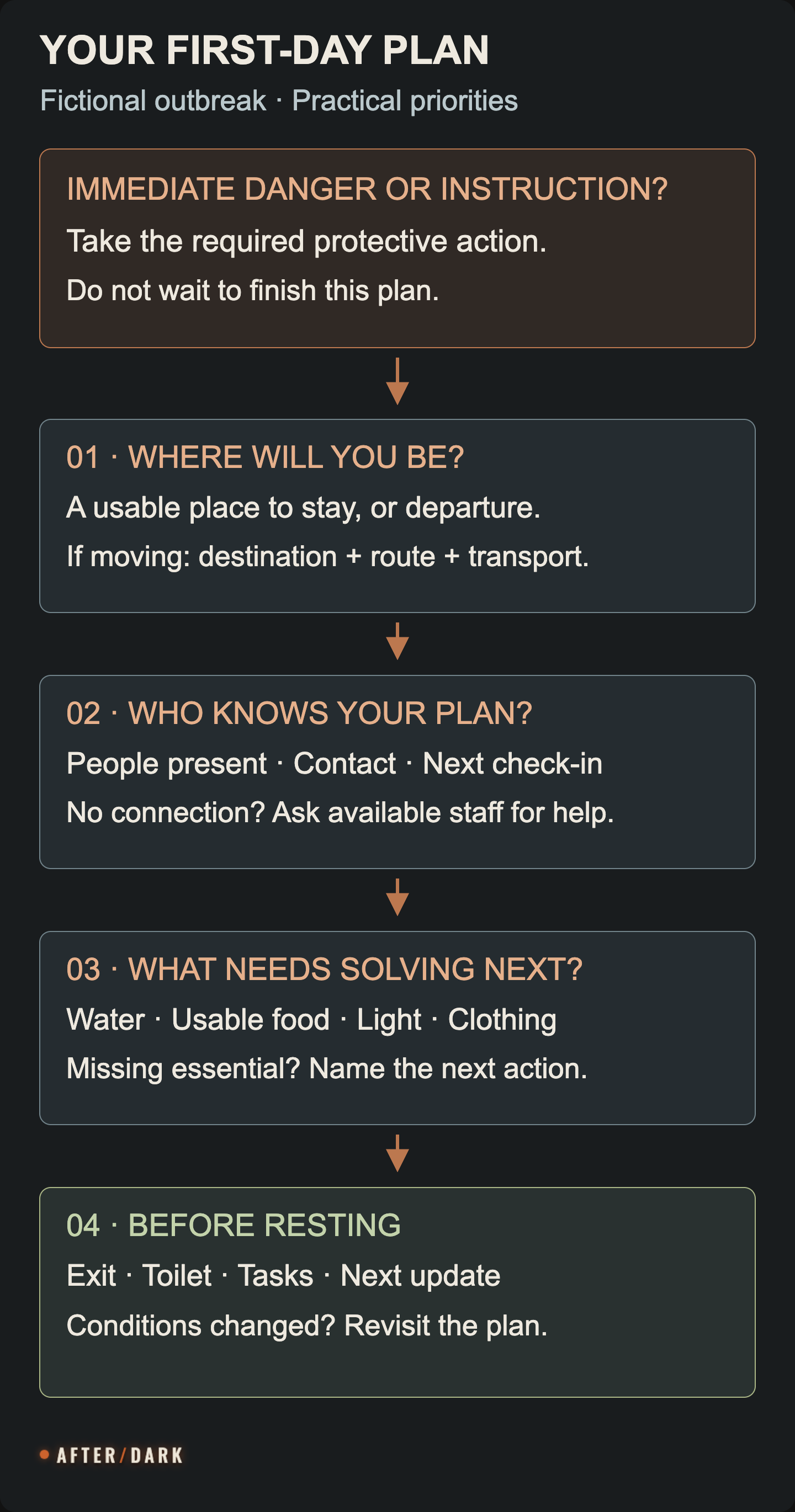
You might have supplies at home, a half-charged phone at work, or nothing useful in your pockets. Start there. The stages below follow decisions, rather than a fixed timetable: an urgent instruction takes precedence over the next item on a list.
Start Where You Are When the Outbreak Begins
Account for anyone already with you and identify the immediate instruction for your location. A workplace, station, hotel, and apartment building can have different arrangements. Find out what applies before making a journey across town simply because home feels familiar.
Your starting situation changes the first practical problem to solve.
| Where you are and what you have | First task | Useful result |
|---|---|---|
| Away from home, with no kit, working phone, or vehicle | Follow immediate directions; if accessible without entering danger, ask staff or responders about a place to wait, drinking water, and contact help | A specific next arrangement, even if it is only temporary |
| At home with ordinary household supplies | Check whether the location remains usable, then count people and available essentials | A realistic first-night plan based on what is already there |
| At work, school, or a transport terminal | Follow the site's procedure and establish whether onward travel is operating | A decision to remain or leave that accounts for the actual route |
| In a hotel or unfamiliar city | Ask reception for current local instructions, the building's arrangements, and transport information | A known address, contact point, and next step in an unfamiliar place |
| With a prepared bag and household plan | Check that the destination and route still work before relying on them | A current plan using the preparation you already completed |
If you have no kit, phone, or transport
Begin with actions that need none of them. If you must leave immediate danger, follow the available exit directions without waiting to acquire equipment. Once in a place where you can pause, identify your location from a street sign, building name, or staff member. Keep the people already with you together while you agree what happens next.
Where a staffed location is safely accessible, explain the missing resources directly: “I cannot contact anyone, I have no transport, and I need somewhere to wait and drinking water.” Ask which of those needs can be met there and who handles the others. Establish whether you may remain, where you should wait, and how you will hear further instructions. A reception desk is a contact point, not automatically an overnight shelter.
If someone can place a call for you, give a remembered number and a short message. If you cannot remember a number, ask whether they can help locate a contact or the appropriate assistance desk. If no communication is available, agree the next step aloud with whoever is with you; a notebook is useful only if one becomes available.
When nearby places are unstaffed or inaccessible, use the safest available position outside the immediate hazard, observe current signs and announcements, and avoid starting an unknown cross-city journey to chase an unconfirmed shelter. Request help from responders when you can reach them safely. The purpose is to resolve the next missing resource, not to assemble a complete kit before doing anything.
Separate Facts From the Story Spreading Around You
The group chat may say the whole city has fallen. What you can actually establish might be that your train is cancelled and the station is closing. Those facts already justify changing your journey; they do not establish what is happening at every destination.
Use three categories when making a decision:
- Observed: the exit you can use, a closed road, the water you have, the people present.
- Confirmed instruction: a current direction from the responsible authority or staff, including the place it applies to.
- Unconfirmed: a forwarded clip, an unnamed “safe zone,” or a claim about a route nobody has checked.
For an update that changes your plan, establish its source, place, time, and requested action. An old screenshot can describe a real event without describing conditions now. Share those details with the message so someone else can tell what it actually means.
Use local alerts, broadcasts, or direct announcements that remain available. If you have access to a radio, the emergency-radio guide explains reception and station choices. If you have none, ask an accessible staffed location to relay the current announcement. Checking information must not delay a response to immediate danger.
Decide Where to Spend the Next Part of the Day
Make this decision before spreading your belongings around a building or loading a car. Official evacuation and shelter instructions depend on the emergency: leave when directed or in immediate danger; when instructed to shelter, use the specified arrangements. A general first-day plan cannot choose a safe route or room for every real hazard.
When there is no urgent direction and your present location remains usable, compare staying with a specific alternative. Staying can preserve access to familiar people and resources. Moving is useful when it solves an actual problem at a reachable destination.
For a possible stay, establish:
- Permission and access: can you remain, including after the building's normal closing time?
- Basic needs: what water, toilets, weather protection, and help are available there?
- Departure: can everyone reach and use the exit if the arrangement changes?
- Information: how will you learn about a new instruction or a building closure?
For a possible move, name the destination and reason. “My sister has confirmed we can stay, and the open route avoids the closed station” is more useful than “somewhere outside the city.” Check that the destination can receive your whole group, including anyone who needs accessible entry and any animals travelling with you.
If the preferred destination cannot be confirmed, keep it marked as uncertain. Ask about a known reception point or another contact rather than describing an assumption as an arrangement. A long journey should not depend on someone being home merely because they usually are.
If the vehicle or usual route is unavailable
Check operating transport, a confirmed pickup, or assistance available through the current evacuation arrangements. State the number of people, where they are, and any access barrier. “We need a vehicle that can take this wheelchair” is a request someone can act on; “we will find a ride” leaves the problem unresolved.
A walking option needs a known usable route and a group that can complete it with its actual load. Do not treat the driving distance on a map as evidence that the same trip works on foot. If no workable transport is available, tell staff or responders explicitly and establish the next assistance arrangement.
The home evacuation plan explains destinations, routes, and transport in depth. For a location that remains usable, the home-base guide develops the longer-term systems. Here, finish with one provisional answer: where you will be next, and how you will get there if a move is needed.
Contact Your People Without Creating Another Journey
Send a short, actionable message once you can do so without delaying a necessary protective action. Include where you are, who is with you, whether you are staying or moving, and the next contact arrangement. For example:
I am at the library reception with Sam. We can stay here for now. Do not come to the closed station. Please reply with your location. I will check again at 18:30.
The time is an example of an agreed check-in, not a universal interval. Choose one that fits the next known update and your available battery. Ask for a reply; a sent message does not establish that the other person received it.
When calls fail, a text or an out-of-area contact may help a separated household reconnect. Use the household's existing contact person if there is one. Otherwise, agree who will collect updates so everyone is not making separate calls to everyone else.
If a child is at school or someone is with a caregiver, find out the site's current shelter, release, or pickup arrangement. Identify one responsible person for any agreed pickup. An unanswered phone is not, by itself, confirmation that the site has been abandoned or that two relatives should set off separately.
With no functioning connection, use an already agreed meeting arrangement only if it remains accessible and consistent with current instructions. If no such arrangement exists, do not invent a new meeting place and assume the absent person will guess it. Remain findable through the responsible desk or contact point where possible, and record or relay a change before leaving.
The emergency communication plan covers family coordination; communication without cell service explains which alternatives work with the devices and connections actually available.
Turn Available Supplies Into a First-Night Plan
Once your immediate location and contact arrangements are settled, check what you can actually use. Open a cupboard or bag and count the contents. A box labelled “emergency” might contain a flat power bank, food requiring a cooker, or water reserved for someone elsewhere.
Start with the next drink, meal, period of darkness, and possible journey. Those are concrete tasks you can allocate. Keep resources that must travel separate from items staying at the current location.
Drinking water comes before a complicated meal
Count sealed drinking water and confirm whether the local tap supply is usable. If it is, fill clean, suitable drinking-water containers already available and close them. If a water advisory applies, follow that specific instruction; running water alone does not establish that the supply is suitable for drinking.
For estimating a stored reserve, CDC uses at least one US gallon, about 3.8 litres, per person per day, with a three-day supply as an initial preparation target. This covers drinking and other uses; it is not a personal drinking prescription or a guaranteed maximum. Pets and local conditions can add to the amount needed.
For four people, that baseline is about 15.2 litres for one day. If the group has six litres, the inventory is short by about 9.2 litres before any extra needs are included. Obtaining more water therefore needs a named action and a responsible person now; the calculation is a supply comparison, not a reason to ration drinking water or postpone a refill.
If you have neither water nor a container, ask the available host, reception point, or operating retailer about drinking water and something suitable to carry it in. Confirm what is actually available before setting out. The emergency water-storage guide covers containers and larger reserves once those resources are accessible.
Choose food you can open and eat
Set aside a workable meal from food already available: familiar shelf-stable food, ready-to-eat packages, and items you can open with the tools present. Count portions for the people staying there. Check the packaging instructions and individual needs rather than assuming everyone can eat the same thing.
If electricity has failed, record when it stopped and keep refrigerator and freezer doors closed. An unopened refrigerator keeps food safe for up to four hours; perishable food then needs an adequate cold source or must be discarded. Do not taste it to decide. Use the cold-food guide for the temperature checks and freezer decisions rather than repeatedly opening the appliance to inspect it.
A no-cook meal also avoids consuming scarce water and fuel just to make the pantry useful. If cooking is necessary, use an appropriate appliance in its permitted setting: outdoor stoves must stay outdoors. Do not introduce an indoor cooking hazard to preserve a familiar dinner routine.
Keep enough light and communication for the next task
Identify which devices are charged, which cable fits them, and whether the power source is working. Connect a needed phone while ordinary power remains available. Save the address, contact details, and essential instructions locally if the device supports it; copy them onto available paper so they are not trapped behind a flat battery.
Use an available flashlight for emergency lighting, and place it where it can be found. If the phone is your only light, plan around that shared resource: using it continuously to illuminate a room also uses the device needed for messages. Arrange the space before dark and ask about available lighting at a staffed location.
For a longer outage, the phone, light, and radio power guide explains how to match devices to backup power. During the first day, simply establish which essential task each functioning device will serve and who has it.
If you need to leave, pack what serves the journey
Use an ordinary bag if that is what you have. Bring the drinking water and ready food available, necessary clothing, keys, identification if accessible, contact details, and working light or phone equipment. Include the essentials used by children and anyone travelling with you. Keep frequently needed items accessible rather than packing every useful object first.
Put the bag on and check that you can manage it while doing what the journey requires. Distribute shared items according to each person's ability to carry them. The person carrying a child may have little capacity for the household's water as well.
The bug-out bag guide provides the fuller packing method. A necessary departure must not wait until you match its checklist; take the essentials immediately available and explain the missing resources at your receiving point.
Make the First Night Work for Everyone
Before settling down, walk through the place you are actually using with the people responsible for it. Locate the toilet, drinking water, sleeping area, information point, and exit. At someone else's home or an organised shelter, agree how shared resources are used before spreading your belongings around.
Keep bags and bedding clear of passageways. Doors and windows needed for escape must remain usable; piling furniture across the only exit can make the room harder to leave. Use normal locks and the building's access arrangements while preserving a way out.
Assign short, specific tasks rather than asking everyone to “help prepare.” One person can confirm the water supply, another make contact, and another arrange the sleeping space. Someone should account for people who cannot independently follow the plan. Read the result back together so an unfinished job does not get mistaken for a completed one.
If the usual toilet is unavailable, settle where people should go and how handwashing will work before the need becomes urgent. Ask the operator of a shared building about its arrangements. For an ordinary home without working water or sewer service, the emergency toilet guide explains how to choose and organise a suitable alternative.
Check whether the room can remain usable in the expected temperature. Clothing and bedding may solve an ordinary comfort problem; a location that cannot meet the group's basic needs requires another arrangement. At a reception point, explain those needs while staff can help identify options.
For children, describe the next concrete step: where they will sleep, which adult is responsible, and what happens if the group moves. Include pets in the sleeping and transport arrangements; establish who has the leash or carrier and who has their supplies. The pet evacuation-kit guide helps resolve those separate carrying tasks.
Agree who will receive the next expected announcement and how they will tell the others. Follow the site's arrangements and allow people to rest; an improvised all-night watch is not a substitute for a usable location or an action you already know is necessary.
Review the Plan Before It Becomes Yesterday's Plan
A decision can be sensible when made and stop working later. A host may only be able to accommodate you until morning. A pickup may fall through. A previously usable water source may become unavailable. Record the next dependency before it turns into a surprise.
Use six lines in a phone note or on available paper. If neither is available, agree them aloud and repeat them back:
- People: who is here, who is elsewhere, and who is responsible for any dependent or animal.
- Place: where you are staying now and any limit on that arrangement.
- Contact: who has received your update and when you will try again.
- Essentials: usable drinking water, meals, light, and the most urgent shortfall.
- Next action: a specific task with one person responsible.
- Review: the next expected update or event, plus what would make you change course sooner.
New protective instructions, an unusable exit, a destination becoming unavailable, or a shortfall that cannot be resolved at the current location all require a fresh decision. Review then; do not wait for an arbitrary hour in the “first 24 hours.”
Before any onward journey, confirm what changed, update the people relying on your location, and take the information the next host or reception point needs. When the first night is settled, the next day's work begins with the largest unresolved dependency. This makes the plan useful even when events do not follow the story you expected.
Zombie Scenario: The Last Bus Does Not Leave
Fictional scenario
Mara is finishing a shift at a city library when reports of a zombie outbreak fill the staff chat. Outside, a bus has stopped and the driver tells passengers the service is suspended. Mara's partner is across town with their child. Her emergency supplies are at home; she has an ordinary backpack, a nearly empty water bottle, and a phone with limited charge.
The library manager confirms that staff may remain while the building receives further instructions. Mara messages her partner with that exact location and asks for an acknowledgement. Her partner replies that they can stay with a relative nearby. They agree not to attempt a reunion through the closed interchange, and choose the next check-in time.
Mara refills her bottle after staff confirm the drinking-water supply is operating normally. She puts aside the food she has, borrows a compatible charger with permission, and asks about the building's closing arrangements. The manager can accommodate staff that evening, but not overnight. That becomes the next task: confirm a permitted place to sleep and a workable route there, rather than spend the remaining time reorganising a bag for a journey she has not chosen.
A colleague offers her a spare room nearby. They confirm that the local route remains open, tell the manager they are leaving, and update Mara's partner with the new address. On arrival, they check the available meal and agree when to review the next morning's transport information. They have solved the first night without pretending the normal journey home has become possible.
Frequently Asked
Should I leave the city and head for the countryside?
Should my first stop be a supermarket?
What changes if I am on my own?
Can I get emergency shelter without money or identification?
Should I post my exact location publicly to find my family?
What should I prepare once the first day is under control?
Sources
- CDC — Preparedness 101: Zombie Pandemic (2011)
- NYC Emergency Management — Get Prepared
- American Red Cross — Make a Plan
- CDC — How to Create an Emergency Water Supply
- CDC — Keep Food Safe After a Disaster or Emergency
- U.S. Fire Administration — Severe Weather Fire Safety
- U.S. Fire Administration — Home Fire Escape Plans
- American Red Cross — Power Outage Safety
- American Red Cross — Find an Open Shelter
Related guides

How to Prepare Your Home for an Apocalypse
Turn an ordinary house or apartment into a safe, workable base without blocking exits, scattering supplies, or mistaking barricades for preparedness.
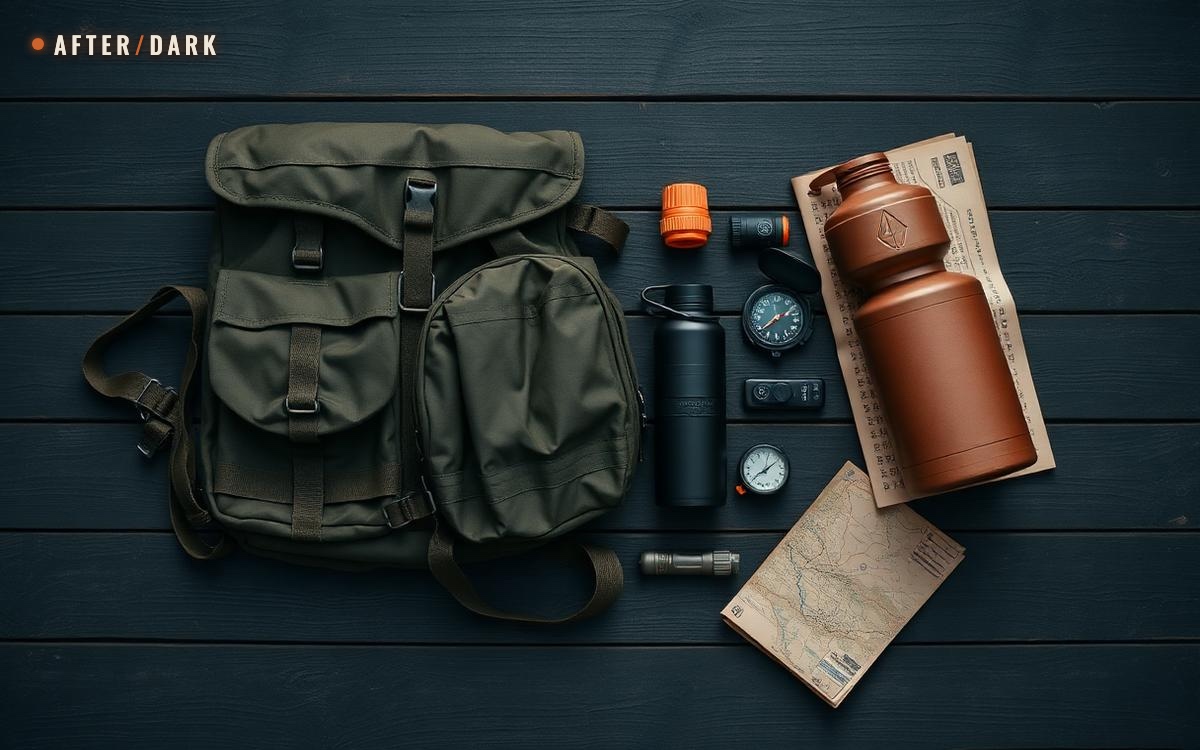
How to Build an Apocalypse Bug-Out Bag
Build a portable evacuation kit around a real destination, route, household, and loaded walk test—not a generic pile of emergency gear.
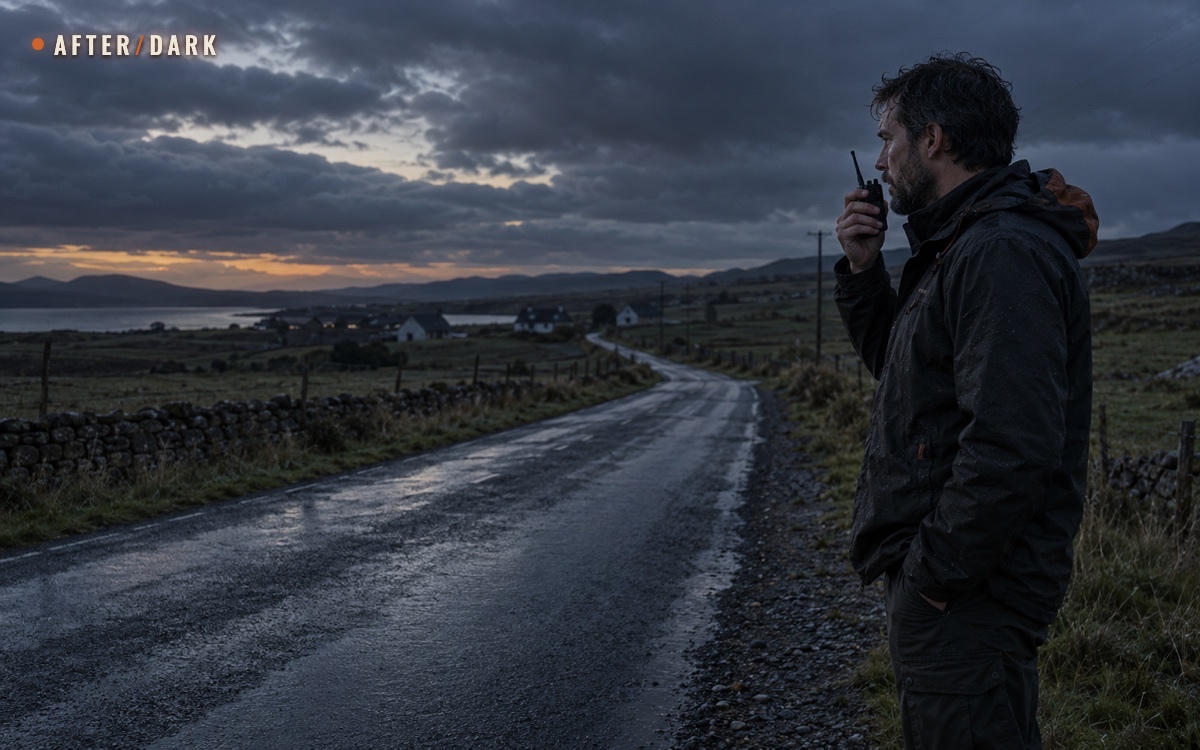
How to Communicate Without Cell Service or Internet
Choose a way to exchange messages during an outage or beyond coverage, including what to do with only a phone or no working devices.