How to Make a Home Evacuation Plan
Turn exits, routes, destinations, transport, household roles, and meeting places into one practical evacuation plan that works without mobile data.
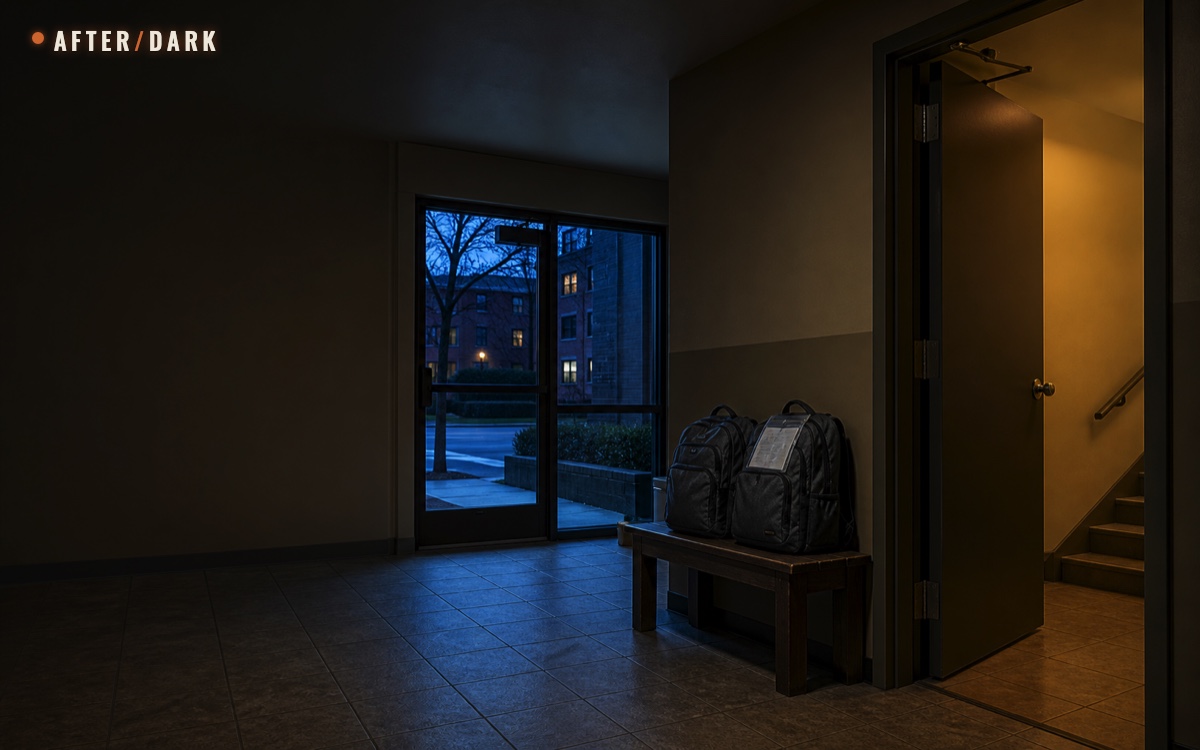
Short answer
Key takeaways
- Build the evacuation plan around six decisions: who leaves, where they go, which routes work, how they travel, where they reunite, and how completion is confirmed.
- Use a destination ladder with a nearby meeting point, an outside-neighbourhood meeting place, and a confirmed stay location.
- An alternate route should avoid the same critical road, station, bridge, gate, or account access as the primary route.
- Assign every person, pet, shared item, and pickup task to a primary person and a backup instead of relying on whoever remembers first.
- Keep one printed Route Sheet with each travel group and test the complete plan under calm, ordinary conditions.
A home evacuation plan is a one-page operating guide for leaving together or reuniting when household members begin in different places. It should name the people and animals covered, destinations, primary and alternate routes, transport options, meeting places, responsibilities, and the method used to confirm that everyone has completed the plan.
Do not use the planning document to predict every disruption or override current instructions. Government of Canada guidance asks households to identify safe exits, meeting places, contacts, pickup responsibilities, places for pets, and risks in their area. During an actual event, use current local information and follow the directions that apply to your location.
This guide owns the route system. The tested bug-out bag owns portable supplies, the household communication plan owns contact order and message formats, and the grab-and-go document kit owns essential records. Connecting those systems is part of the evacuation plan; duplicating their entire contents is not.
Define the Six Decisions Before Drawing a Route
An evacuation map cannot decide who is leaving, where the household will reunite, or whether the destination can be used. Start with six decisions and require one usable answer for each.
Six decisions form the minimum operating structure of the household plan.
| Decision | The plan must record | Completion test |
|---|---|---|
| People | Every household member, regular guest who depends on the plan, child pickup, and support responsibility | Nobody is represented only by “everyone” |
| Destinations | Nearby meeting point, outside-neighbourhood meeting place, and confirmed stay location | Each place has an address or precise description and a verification method |
| Routes | Primary route and an alternate that avoids the same critical dependency | Both can be followed from a printed plan |
| Transport | Primary travel method and an alternative for each travel group | The group can begin without waiting for an unassigned person or unavailable service |
| Responsibilities | Primary and backup person for every shared task, pet, and shared module | Every task has a name beside it |
| Confirmation | Contact sequence and a simple completion message | The group knows who records arrival and who follows up on a missing check-in |
Write an unknown as UNCONFIRMED, not as a hopeful answer. “Relative's house,” “main road,” and “someone takes the pet” are not operational entries. Each hides a decision that will otherwise be made during departure.
The plan should also state its authority boundary near the top:
Follow current local instructions. Do not enter a closed route or return until the relevant authority or property manager says it is permitted.
That sentence does not make one country’s process universal. Replace it with the correct local wording and information sources during household planning.
Build a Three-Level Destination Ladder
Canadian Red Cross recommends agreeing on one meeting place nearby and another outside the neighbourhood, identifying places to stay, and choosing an out-of-town contact. Turn those elements into a destination ladder. Each level solves a different coordination problem.
The destination ladder separates immediate accountability from longer relocation.
| Level | Purpose | Required record | Verification question |
|---|---|---|---|
| A: Nearby meeting point | Reunite after leaving the building by different exits | Precise visible location a safe distance from the home, plus an alternate side if access is blocked | Can every household member identify it without a phone? |
| B: Outside-neighbourhood meeting place | Reunite when the household cannot return home or local access is restricted | Full address, contact, operating hours if relevant, and travel options | Is it outside the same immediate access problem as Level A? |
| C: Confirmed stay location | Provide a realistic place to continue the plan | Host or facility contact, full address, access conditions, household capacity, and confirmation date | Has the destination agreed, and can every assigned person and animal be accepted? |
Level A is not automatically safe in every situation. It is a preselected accountability point used only when current conditions and instructions permit. Level B may be a library, community location, or known household. Level C may be farther away and should be confirmed directly rather than assumed from a normal visit.
For each destination, record:
- exact name and address or an unambiguous description;
- phone number and one non-phone contact option when available;
- normal and after-hours access conditions;
- whether every household member and pet can enter;
- who last confirmed the arrangement and when;
- a nearby fallback if the entrance is closed or the contact cannot be reached.
New Zealand Civil Defence advises choosing an evacuation place, making sure everyone knows it, and confirming the plan with friends or family who may host the household. Reconfirm a private destination after a household change instead of treating an old invitation as permanent capacity.
Map Home Exits and Independent Neighbourhood Routes
The route plan needs two scales: movement out of the home and travel away from the immediate area. Do not combine them into one arrow on a regional map.
Record usable home exits
Draw a simple floor outline and mark ordinary exits that household members can actually open and use. Include the room where each person normally sleeps or works, the location of keys or access devices needed for an ordinary exit, and the Level A meeting point.
Walk every proposed path under calm, well-lit conditions. Remove storage that narrows it, confirm doors operate as intended, and check that the route remains usable with the real bag, carrier, mobility equipment, and animal carrier. The broader home-base route audit owns ongoing household access and clear-path organization.
Do not improvise structural escape methods or include an opening simply because it appears on a drawing. If the building has an official evacuation plan, incorporate its current routes and assembly procedures. Renters should obtain the current building instructions and note which parts of the household plan depend on shared corridors, stairs, gates, or access systems.
Draw a primary neighbourhood route
Mark the complete route from the property to Level B and Level C destinations. Include:
- street names and major turns;
- walking distance and expected travel method;
- transit stops or pickup locations actually used by the plan;
- gates, bridges, tunnels, stations, or other critical connections;
- a point where the household can switch to the alternate route;
- the official information source used to confirm current access.
A normal navigation app can help create the route, but export or print the result. A route that exists only inside one account is not a complete offline plan. Build a layered offline navigation pack with downloaded coverage, a paper map, and a route card after the household has approved its destinations and routes.
Make the alternate meaningfully different
Drawing a parallel line for one block does not create resilience if both routes still depend on the same single bridge or station. Use an independence check.
Route independence is measured by critical dependencies, not by how different two lines look.
| Dependency | Primary route | Alternate route | Independent enough? |
|---|---|---|---|
| First exit from property | Front building entrance | Secondary approved building exit | Yes, if both are officially usable |
| Main corridor or road | North corridor / Central Avenue | South corridor / Market Road | Yes |
| Bridge or underpass | East bridge | East bridge | No; one closure removes both routes |
| Transit line | Line A from Central | Line A from West | No; both depend on the same service |
| Navigation | Live phone map | Screenshot on the same phone | No; both depend on one device |
| Destination access | Host reached by phone | Same host reached by messaging app | Partly; both depend on one destination |
The goal is not perfect independence. Most homes have shared constraints. The table exposes them so the plan can name an earlier decision point, another transport method, a different destination, or an explicit NO INDEPENDENT ALTERNATIVE limitation.
Match Transport to the Route and the Travel Group
An address is not reachable merely because a route exists on a map. New Zealand Civil Defence asks households to consider how far, how long, and how fast they can travel without outside help, choose how they will evacuate, and practise to discover what is actually possible.
Create one travel group for people who must move together. A household may have one group when everyone starts at home, but need several plans for ordinary weekday locations.
Each route needs a transport method, a start condition, and an alternative.
| Travel method | Record before relying on it | Alternative question |
|---|---|---|
| Walking | Tested distance, route surface, weather layer, carried load, rest points, and time range | Can the destination be shortened if the route takes longer than tested? |
| Bicycle or similar personal transport | Assigned user, storage access, carried load, locks, route surface, and destination storage | Can the group continue on foot with the essential load? |
| Household vehicle | Assigned driver and backup, keys, parking access, passenger and animal capacity, current range, and two routes | What happens if the vehicle, road, parking area, or driver is unavailable? |
| Public transport | Current service map, payment method, operating procedure, station access, and final walking segment | Which route works if the line or station is closed? |
| Pickup by another household | Named driver, confirmation method, exact pickup point, waiting limit, and luggage capacity | Where does the group go if the pickup cannot arrive? |
Do not write “car” when only one person knows where the keys are or only one person can complete the planned task. Do not write “bus” without identifying the line, stop, payment method, operating information, and final leg. Do not write “walk” without testing the real distance with the actual group and load.
For a household vehicle, use the vehicle evacuation guide to turn the transport row into readiness gates, fixed cargo positions, a loading order, and a door-to-road rehearsal. Keep those vehicle details on their own card instead of expanding the Route Sheet into a second packing list.
The route test is not a contest. It should reveal a usable pace, ordinary access barriers, excessive load, unclear turns, and the point at which the group needs a nearer destination.
Assign Every Person, Pet, and Shared Task
Canadian Red Cross guidance says household plans should include children, pets, people with specific needs, and places such as schools and workplaces where household members may be located. A name beside each task prevents “we all know” from becoming “nobody did it.”
Use primary and backup assignments. The backup is not an extra person who must always perform the task; it is the named replacement if the primary person begins elsewhere or is unavailable.
Responsibility assignments expose gaps before the household starts moving.
| Responsibility | Primary | Backup | Completion evidence |
|---|---|---|---|
| Confirm current local instructions | Assigned adult | Named backup | Time and source written on Route Sheet |
| Account for household members | Travel-group lead | Named backup | Names checked once, not estimated |
| Collect child or dependent person | Authorized person | Authorized backup | School or care location has current details |
| Move each pet and carrier | Named handler | Named backup | Pet, carrier, lead, and destination acceptance confirmed |
| Take shared Route Sheet and map | Travel-group navigator | Group lead | Printed copy physically present |
| Take shared document module | Named carrier | Named backup | Sealed module checked against inventory |
| Send departure and arrival messages | Communication lead | Group lead | Short status entered in the contact log |
| Confirm destination access | Destination contact lead | Named backup | Host or location confirmation recorded |
For a household member who needs extra time, accessible information, a mobility device, or assistance from another person, record the functional requirement and the assigned support. Do not put unnecessary private details on a widely shared route copy. Keep protected information only where it is actually required and appropriate.
For children, confirm who is authorized to collect them and what the school or care location instructs during an emergency. Government of Canada guidance recommends naming a pickup person in case the usual caregiver is unavailable. The home plan should not tell someone to ignore the institution's current procedure.
For pets, verify transport space and destination acceptance rather than adding “take pets” at the bottom. The pet emergency kit and transport drill turns that assignment into one readiness record per animal, with an assigned carrier, handler, supply module, destination, and caretaker handoff. New Zealand Civil Defence and Canadian Red Cross both advise including animals and checking whether the planned destination can accept them.
Connect the Plan to Existing Household Systems
The evacuation plan coordinates four systems. It should point to each system's current version without copying every detail.
Communication
Use the household communication plan to define the out-of-area contact, call or message order, group status format, and offline contact cards. The Route Sheet needs only the contacts and status messages required for departure and arrival.
Use short, factual updates such as:
GROUP B / LEFT SCHOOL POINT / 16:20 / USING ROUTE 2 / NEXT CHECK AT LEVEL B
The exact format is a household convention, not an official standard. Test that everyone understands it and can send or relay it without opening a long document.
Portable supplies
Use the bug-out bag guide to assign the portable water, food, light, power, clothing, hygiene, route information, and other travel functions to tested carriers. The evacuation plan records which bag goes with which person; it does not rebuild the packing list.
Do not count the same physical water as both a home reserve and a carried supply unless the plan clearly records the transfer. Coordinate the travel layer with the home emergency water system.
Documents, keys, and payment
Use the grab-and-go document kit to select, protect, and maintain records. The Route Sheet needs only the module ID, carrier, and backup. Keep keys and access devices with the assigned person and test them at the doors and destination they are meant to open.
Home-base transition
The plan should say who confirms that the household is switching from staying at home to leaving, which current information is checked, and which prepacked modules move. It should not become a long last-minute list of optional property tasks. Current instructions and safe departure take priority over unfinished household chores.
Build the One-Page Route Sheet
The detailed maps and supporting plans may span several pages. The operational sheet should not. Create one side of paper that a travel group can scan without opening an app.
One-page Route Sheet: the values below are examples of field types, not a universal route.
| Field | What to enter |
|---|---|
| Plan version | Date plus a short version number |
| Travel group | Names, pets, and group lead |
| Current information | Local authority, building, transport, and destination sources |
| Level A | Precise nearby meeting point and alternate side |
| Level B | Outside-neighbourhood meeting place, full address, and contact |
| Level C | Confirmed stay location, contact, access conditions, and fallback |
| Route 1 | Major turns, critical dependencies, travel method, and switch point |
| Route 2 | Meaningfully different path, dependencies, travel method, and switch point |
| Assignments | Primary and backup for pickup, pets, shared modules, navigation, and messages |
| Status sequence | Departure recipient, arrival recipient, out-of-area contact, and message format |
| Attached references | Paper map name, communication-card version, bag IDs, and document-module ID |
Put the sheet through an After/Dark 60-second read check. This is an editorial usability test, not an official time requirement. Give the sheet to a household member and ask them to find, without explanation:
- their travel group;
- the next meeting place;
- both route names;
- their responsibility;
- the person who receives the arrival message;
- the alternate action if the primary transport is unavailable.
If any answer requires searching through paragraphs, shorten labels, move detail to the supporting map, or use clearer location codes. Do not shrink the type until it becomes unreadable.
Keep one copy with each travel group, one at the home planning point, and a current digital copy shared securely. New Zealand Civil Defence recommends completing a household plan, printing it for the home, or saving and sharing it as a PDF.
Adapt the Plan for an Apartment or a House
The same six decisions apply in both settings, but their dependencies differ.
Apartment plan
Record the current building evacuation procedure, approved exits, assembly point, stair routes, access gates, intercom or entry dependencies, property-management contact, and any place where the route depends on common power. Do not assume the everyday lobby remains the only usable exit or that an elevator belongs in the evacuation route.
Walk the route from the actual unit with the real travel group and bags under normal conditions. Check doorway width, turns, stairs, carrier handling, and where the group can wait without blocking other residents. Keep the Level A point consistent with the building procedure when that procedure assigns one.
If household members begin on different floors or outside the building, state whether they go to Level A or directly to Level B. “Meet downstairs” is too vague for a large property with several entrances.
House plan
Record each ordinary usable exit, gate, driveway or path, the location of required keys, and whether a parked vehicle can leave without moving another vehicle first. Separate the path out of the building from the neighbourhood route.
A house may offer more exits but still have one street, bridge, private gate, or driver as the critical dependency. Use the same independence table rather than assuming extra doors create extra regional routes.
For both homes, keep stored supplies, furniture, bicycles, boxes, and routine deliveries out of designated paths. Recheck after reorganizing the home because a route that passed six months ago may now be narrowed by ordinary storage.
Run a Door-to-Destination Drill
Practice should test logistics without creating danger or interfering with other people. Canadian Red Cross recommends practising household routes and meeting points regularly, while New Zealand Civil Defence says practice reveals what is and is not possible.
Run the drill only when routes are open, travel conditions are ordinary, and every activity is legal. Do not disable building systems, enter closed areas, surprise children or neighbours, or imitate hazardous conditions.
- Tabletop review: give each person the Route Sheet and ask them to identify their group, responsibility, destination, and alternative.
- Start-position check: run one version with everyone at home and one paper exercise with people at their normal weekday locations.
- Departure check: collect only the modules assigned by the plan, account for every group member, and record the start time.
- Home-exit segment: move through the normal approved route with the actual bags, carriers, keys, and mobility equipment.
- Route segment: travel a safe representative portion of Route 1, including an ordinary transfer or turn that might be confusing.
- Alternate check: walk or review the critical independent section of Route 2 rather than merely looking at it on the same app.
- Meeting-point check: stand at Level A or Level B and confirm that the location is precise, accessible, and recognizable.
- Communication check: send the planned status message and confirm that the recipient can interpret it.
- Destination check: verify current access to Level C with the contact; travel the full route only when practical and safe.
- Debrief: record every delay, missing item, unclear instruction, route dependency, access problem, and responsibility conflict.
Drill log: record failures as plan changes, not as personal performance scores.
| Observation | Evidence | Revision | Retest needed? |
|---|---|---|---|
| Route Sheet was hard to scan | Group could not find Route 2 quickly | Move both routes into one boxed section | Yes, tabletop |
| Pet carrier blocked a stair turn | Carrier contacted the rail during ordinary movement | Reassign carrier and test alternate orientation | Yes, exit segment |
| Pickup person started across town | Estimated arrival exceeded the waiting limit | Assign closer weekday backup | Yes, paper exercise |
| Both routes used one transit station | Route-independence table exposed shared dependency | Add walking route to nearer Level B | Yes, route segment |
| Host did not answer | Destination confirmation was six months old | Reconfirm Level C and add nearby fallback | Yes, contact check |
Record actual observations without claiming the drill reproduces a real emergency. The test validates household logistics under ordinary conditions; current conditions will still require current judgment and official information.
Maintain the Plan as Routes and Households Change
An evacuation plan can become inaccurate without looking old. A phone number changes, a child moves schools, a road closes, a host relocates, a pet carrier no longer fits, or a new gate appears in the building.
Canadian Red Cross says to review and update the household plan when household members, routines, or local conditions change. Use those events as mandatory review points.
If the household has no maintenance schedule, use this After/Dark cadence:
- Monthly visual check: designated routes and exits remain clear; printed sheets remain in place.
- Every six months: confirm contacts and destinations, check route access, update map dates, inspect assignments, and run the drill.
- Immediately after a change: revise after a move, school or workplace change, transport change, road closure, building-policy update, household change, or destination change.
- After every real use or practice: correct the observed failures and replace any opened or moved travel modules.
Put a version date on every Route Sheet, map, contact card, and related module. Remove obsolete copies when the new version is distributed; two conflicting plans can be worse than one incomplete plan.
Correct the Common Evacuation-Plan Failures
The destination is only a place name
“Family,” “hotel,” or “community centre” does not identify an address, contact, access condition, or fallback. Complete those fields and confirm the arrangement.
Route 2 fails with Route 1
Both routes use the same bridge, station, gate, or phone. Record the shared dependency and create an earlier switch, another travel method, or a different Level B destination.
The plan assumes everyone starts at home
Normal weekdays scatter people across work, school, care locations, and errands. Add location-specific actions and authorized pickup backups.
Shared tasks have no owner
“Take the bags” and “bring the pet” do not assign responsibility. Put one primary and one backup name beside every shared task.
The plan exists only on one device
A screenshot stored on the same phone as the navigation app is not an independent copy. Print the Route Sheet and map for each travel group.
The bags and route were tested separately
The route looked manageable and the bags looked organized, but nobody carried the actual load through the actual stairwell. Combine them in the door-to-destination drill.
Practice stops at the front door
Leaving the building is only the first scale. Test the confusing turn, pickup point, transit transfer, or walking segment that connects the home to the meeting place.
Old copies remain in circulation
One person follows Route 1 from version three while another waits at a Level B point from version four. Date every artifact and retrieve obsolete copies after an update.
Zombie Scenario: The Meeting Place Beyond the Dead Signal
Fictional scenario
During a fictional zombie outbreak, mobile service disappears while two household members are at home and a third is returning from work. Nobody waits for a group chat to load. The home group takes its assigned bags and printed Route Sheet, checks the current local instruction source still available by radio, and follows Route 2 because the primary station is closed.
The third person does not attempt to return through the affected neighbourhood. The weekday column on the Route Sheet sends them directly to the outside-neighbourhood meeting place. Both travel groups carry the same Level B address, out-of-area contact, and short status format.
When the home group arrives, one person checks the names and sends the planned message. The fictional crisis did not create a reliable evacuation plan; the independent route, assigned responsibilities, printed copies, and earlier drill did.
Complete the Home Evacuation Plan
The plan is ready for household use when every person can answer these questions:
- Who is in my travel group, and who is the group lead?
- Where are Levels A, B, and C?
- Which route is primary, and what makes the alternate genuinely different?
- What transport method do we use, and what is the fallback?
- What is my assigned responsibility, and who is my backup?
- Which bag, document module, map, and contact card travel with the group?
- Who receives the departure and arrival messages?
- What do I do if I begin at work, school, or another ordinary location?
- Which current source tells us whether a route or destination can be used?
- When was the plan last confirmed and practised?
If an answer depends on memory, one phone, one person, or an unconfirmed destination, the plan still has a visible gap. Correct the gap, update the version date, replace the old copies, and repeat the affected part of the drill.
Frequently Asked
How many routes should a home evacuation plan include?
What if household members are away from home when evacuation begins?
Can the evacuation plan be stored only on a phone?
How often should a household practise its evacuation plan?
Does a household plan decide when it is safe to evacuate?
Sources
Related guides

How to Build an Apocalypse Bug-Out Bag
Build a portable evacuation kit around a real destination, route, household, and loaded walk test—not a generic pile of emergency gear.
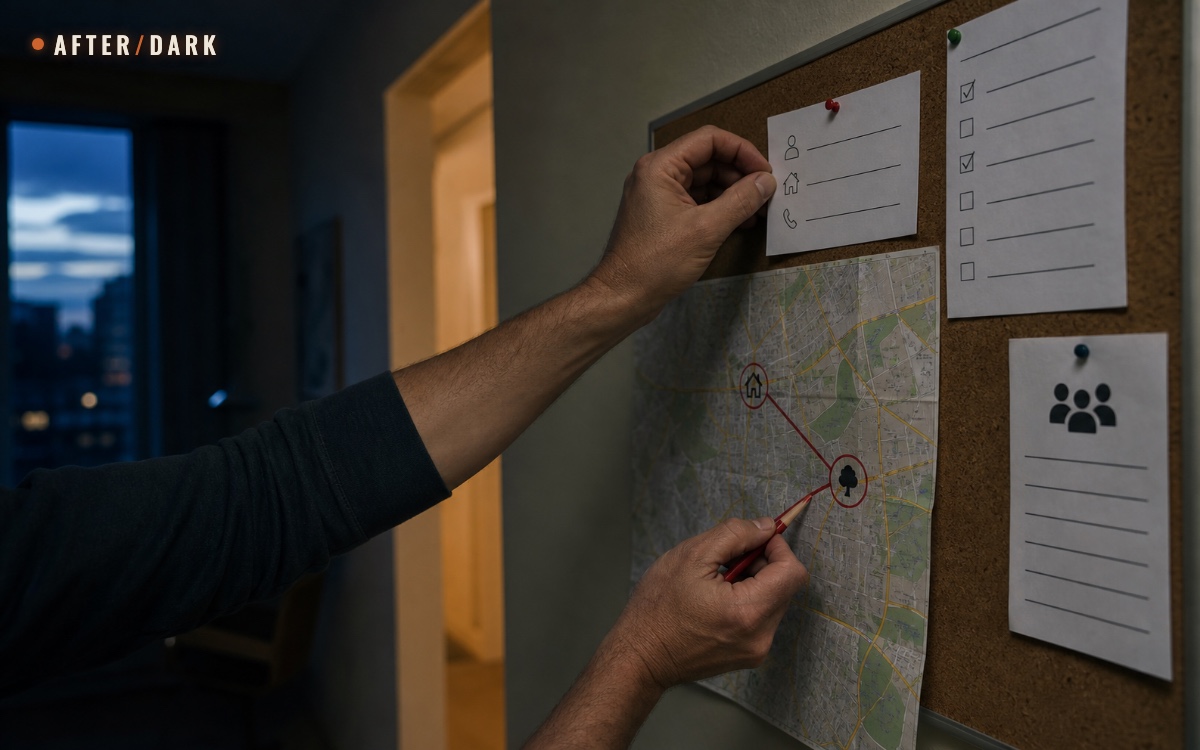
How to Build an Emergency Communication Plan
Create a household contact system that still works when phones, power, internet, or normal meeting routines become unreliable.

How to Build a Grab-and-Go Emergency Document Kit
Create a compact, protected document system that remains usable during an evacuation, extended outage, or loss of internet access.