How to Evacuate Without a Car
Build a departure plan that covers the whole journey, from your front door to a place you can actually stay, with transport you and your household can use.
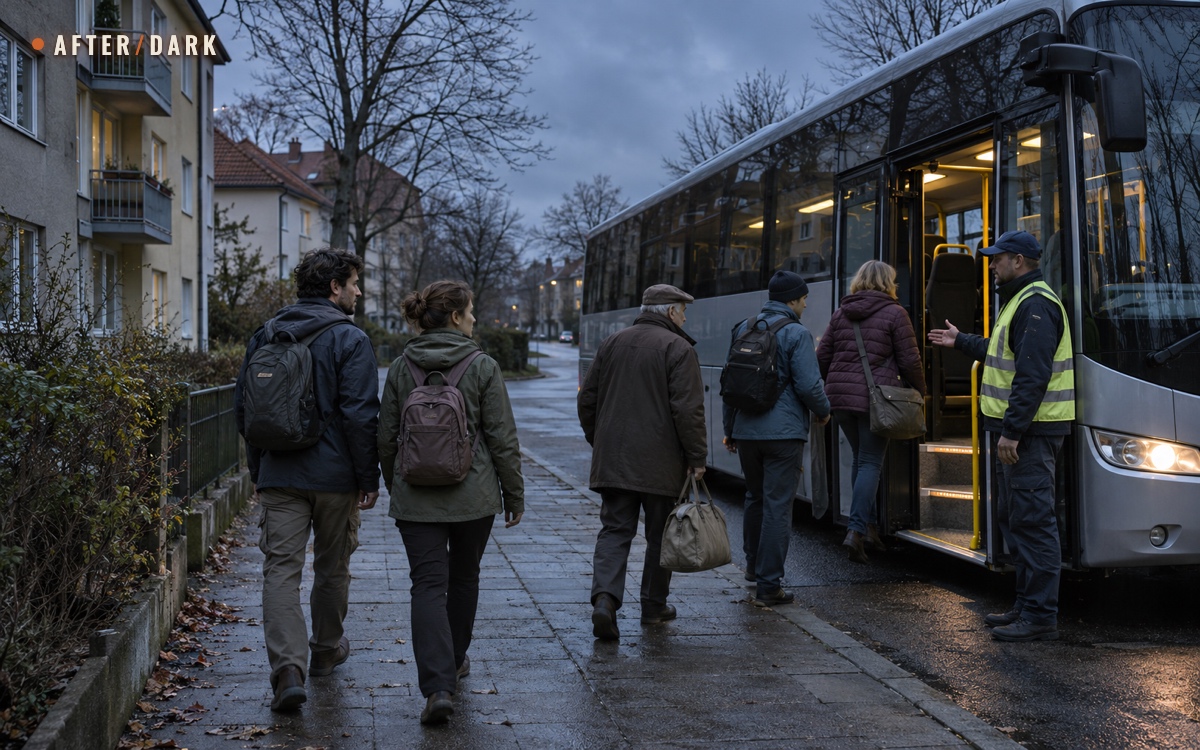
Short answer
Key takeaways
- Plan every leg, including getting to the pickup and reaching accommodation after the main ride.
- Confirm usable seats, baggage space, and assistance before counting a ride as available.
- Find out how local evacuation transport is activated and how to request help reaching it.
- Test the journey with the people and bags that will actually travel; map distance alone is insufficient.
- Keep pickup details and a fallback accessible without a working phone.
An evacuation plan can work without owning a car. The difficult part is coordinating transport you do not control: a friend's spare seats, a bus that may change its route, or an assistance service that needs to know where you are.
This guide helps you arrange departure before a prolonged disruption, then handle the gaps if your first option fails. Use it alongside your home evacuation plan, which covers destinations, routes, and household responsibilities. Current official instructions take priority, including an instruction to shelter rather than travel.
Told to Leave, but You Have No Ride or Ready Kit?
Start with the instruction you have received: the area affected, the required action, and any announced route or transport point. If you need help leaving, use the official contact given in the message or local emergency information. If you are in immediate danger, contact the local emergency number. Say where you are, how many people need transport, whether you have a pet, and what prevents you from reaching a pickup. “We need a ride” gives less usable information than “Two adults at this address; one cannot reach the street without assistance.”
If your phone is dead or you have none, ask an available responder, building staff member, or trusted neighbour to relay that information and the reply. Ask for the actual boarding location and current instructions. A bus stop nearby is not necessarily an evacuation pickup. Tell the person helping you if you cannot get to the announced point; that is part of the transport problem, not something to hide until a vehicle arrives.
Take immediately accessible essentials you can carry without delaying departure. You do not need to finish a shopping list or assemble a perfect bag first: NSW evacuation guidance makes the kit conditional on having one. Follow the available instructions with your group. If a pickup is unconfirmed or your waiting place becomes unsafe, report that promptly and seek updated directions rather than continuing to wait there for an expected ride.
For advance preparation, start with the constraint that changes your journey most.
Starting situations for an evacuation without a personal vehicle.
| Your situation | First preparation task | What a usable arrangement includes |
|---|---|---|
| You normally use public transport | Check how your usual journey could change during a disruption | Current boarding point, onward connection, and a different fallback |
| Your car or usual driver is unavailable | Arrange a named alternative before relying on it | Confirmed seats and room for the actual travelling group |
| You live beyond regular bus or taxi coverage | Speak to possible drivers and local emergency planners early | A specific offer or assistance process, including reaching your property |
| Someone needs help reaching or boarding transport | Describe the whole journey's access requirements | Help from the starting location through every transfer |
| You must leave without a working phone, money, or packed bag | Relay your location and transport needs using available people or communication | A verified next step that uses resources you actually have |
Plan Through to a Place You Can Stay
Write the intended journey in ordinary language: “Leave the flat, meet Sam at the side entrance, travel to the station, take the confirmed train, then meet our host at the arrival exit.” Each change of vehicle or person creates another arrangement to verify.
Start with the destination. Ask the host whether they can receive the whole group, including pets, and how you would get inside if you arrive late. For accommodation you pay for, include the booking, payment, and arrival requirements. New Zealand's evacuation guidance recommends discussing your destination and transport in advance.
Official locations can have different jobs. A boarding point may only collect passengers. A reception centre may register people and arrange support, with sleeping accommodation elsewhere. For example, Canada's North Shore distinguishes transportation hubs, reception centres, and group lodging. The names vary; ask what happens after you arrive.
Use the following worksheet to find missing arrangements. It is a planning tool, not a promise that services will operate.
The complete transport chain: record one workable answer for each stage.
| Journey stage | What to write down | A gap to resolve |
|---|---|---|
| Starting location to pickup | Address, entrance, person helping, way to reach the street | The lift is available but someone cannot get to it |
| Boarding | Exact point, departure window, operator or driver, capacity | The vehicle has fewer usable places than your group needs |
| Main journey | Destination, service confirmation, required ticket or payment | An ordinary timetable is mistaken for current service |
| Transfer or final leg | Meeting person or next service, access, bags, arrival arrangements | The train runs but the final bus does not |
| Arrival | Host confirmation or official reception instructions | The address exists but nobody can admit you |
| Failure of a stage | Who receives the update and which alternative you check | Both choices depend on the same unavailable driver |
Keep the completed details with your household plan. The result should be specific enough that another adult in the group can explain the journey without reconstructing it from several apps.
Turn “Someone Will Drive Us” into an Arrangement
A lift needs a conversation before it becomes a plan. Ask the driver whether their offer still works when their own household also needs to leave. Identify the people already occupying the vehicle, then check the remaining passenger places and baggage space. Include child seating requirements and the room needed for pet carriers or mobility equipment.
Agree on these details together:
- The pickup address and entrance, including which side of a large building or station.
- The people travelling and what they are bringing.
- The destination the driver has actually agreed to reach.
- How you will confirm departure and communicate a change.
- The point at which an unconfirmed ride means you move to your next option.
That last point depends on the current instructions and the alternative service's departure, not a universal waiting period. A friend's “probably after work” is unresolved if your only train leaves before then. Ask for an answer early enough to act on it.
Try the loading arrangement during normal conditions. Two empty seats do not establish that a carrier, a folded mobility aid, and several large bags fit. Settle who carries each item to the vehicle and who retains the documents and contact details during unloading.
Arrange a backup with a different dependency where possible. A second household's driver or a usable transport service can cover a failure that another messaging app cannot. If nobody can offer a ride, record that honestly and investigate local assistance.
Check Public Transport and Organized Evacuation Separately
Ordinary buses, trains, and paid rides
A familiar route is a useful starting point. Check the operator's live notices when disruption develops, including the boarding location, destination, changed stops, and last operating connection. UK transport guidance recommends checking operators and planning alternatives.
For a journey with a transfer, work backward from the last confirmed leg. If the regional train is running but your connecting local bus has stopped, you need a different last segment before calling the journey complete. Include the time and access needed to change platforms or terminals with your actual group.
For taxis or booked rides, confirm passenger capacity, baggage, pet acceptance, pickup details, and the payment method. Read what the booking actually confirms and how the provider communicates cancellation or driver assignment. A quotation or a saved favourite destination is not a confirmed vehicle.
Write down the operator's contact details and ticket information you would need if the booking app stopped working. Check whether printed or offline tickets are accepted rather than assuming a screenshot will work everywhere.
Locally organized transport
Ask your local emergency-management office about arrangements before you need them. Use its ordinary planning contact for advance enquiries. Find out whether a service exists for your area, what activates it, and how people without private transport request a place.
Useful questions are specific:
- Where are current pickup instructions announced, including for someone without internet?
- Is advance registration needed, or do people request assistance when the service activates?
- Can help include reaching the street or pickup point?
- Where will transport take you, and can your companion, equipment, and pet travel with you?
- How is a request acknowledged, and whom do you contact if arrangements change?
For example, NYC's coastal-storm transport assistance takes eligible people to an evacuation centre rather than a private address of their choice. Its public information also warns that ordinary transit may stop before the storm. These are local rules, illustrating why the destination and service timing need checking.
Write the answers in the plan with the date checked. A service in another city is useful evidence of what might be available, but your household needs the arrangement that actually applies at your address.
Decide Whether Walking or Cycling Fits the Journey
Walking may cover the short link to a pickup, or the entire trip to a nearby agreed destination. Cycling may work for a household that already uses bicycles and can carry what it needs. Assess each as a complete journey, including where it ends and what happens to the bikes if you later board transport.
In normal conditions, walk or ride the proposed route with the actual travelling group. Notice crossings, gradients, surfaces, access gates, exposed stretches, and places where a pavement disappears. Check the route at the time of day you might use it. A route that looks short on a map can demand much more when someone carries a child or pushes a loaded stroller.
Test the planned load too. Can everyone manage it through the whole trip? Does helping another person leave enough hands for the bags? If a bicycle will connect to a train or bus, check that service's bike carriage rules and space requirements in advance.
Record what your trial demonstrated instead of assigning the group a generic walking speed. Use offline evacuation maps to retain route details, while checking current closures separately. A saved route cannot tell you that it remains open.
On the day, official directions and actual conditions decide whether this option is usable. NSW guidance says not to walk or ride through fire or floodwater. If conditions rule out your pedestrian or cycling route, tell the people arranging transport; absence of a car does not make an obstructed route workable.
Include the Help People Need Before Boarding
An accessible vehicle is only part of an accessible journey. Discuss the person's own requirements with them: getting through the building, reaching the street, waiting, boarding, transferring, and entering the destination. State the specific task that needs support instead of expecting a driver to infer it at arrival.
Arrange more than one suitable contact. New Zealand Civil Defence recommends a personal support network rather than dependence on one person. Agree how that network will check in and who will handle a transport request if the usual helper is unavailable.
For an apartment building, ask management how its evacuation arrangements cover residents who cannot use the ordinary exit route independently. For transport, confirm the equipment the operator can accommodate and assistance it actually provides. Identify who is responsible for the handover between building support and the transport team, including how each will know the other has arrived.
Children and pets also change the work adults can do. Assign one adult to each child-related handoff and make sure everyone knows who is responsible for the pet carrier. If the group needs two vehicles, allocate the passengers and responsible adults before loading, with one agreed destination and contact.
Check pet rules for both the ride and accommodation. Some programs make different arrangements for different animals: New Orleans describes separate transport options for larger pets. Confirm the current local process rather than assuming every bus accepts the same carrier. Use the pet evacuation kit guide for the supplies and identification that travel with the animal.
Handle the Gaps: Rural Areas, Money, and Phone Service
There is no regular transport nearby
In a rural area, start with actual people and organizations that could reach your location: neighbours, family, an employer, or a community organization with an established arrangement. Ask what they can commit to, how long reaching you normally takes, and whether they are responsible for other passengers. A suggested contact becomes useful only after the person agrees.
Ask local emergency planners how residents without vehicles receive instructions and request transport. Give the property access details a driver would need, including the correct entrance and any gate arrangements. If collection requires reaching a distant road or village, establish how you will cover that first segment.
When disruption is developing, recheck availability while choices remain open and follow the applicable departure instructions. If neither a private lift nor a local service can meet your needs, report the unresolved transport requirement promptly. Do not build the plan around an unverified taxi arriving from the nearest town.
You cannot afford the proposed ride
Compare the cost of the whole journey: each fare, the final connection, and any paid accommodation. A cheap first bus is not affordable transport if the only final leg is a taxi you cannot pay for.
Ask about assistance through the official local contact. Some activated programs are free; New Orleans offers free city-assisted transport during a mandatory evacuation. This is a specific local provision, not a worldwide entitlement. Explain both the transport and accommodation gap so that an offered destination does not leave you with another unaffordable journey.
Your phone or internet may stop working
Keep the pickup address, destination, contact numbers, and ticket details on paper or another usable offline copy. Give the driver and a trusted contact the same version. Decide how a change will reach everyone, including someone who cannot receive a message.
Use the emergency communication plan to assign check-ins and a relay contact. If you are already without a working connection, the guide to communicating without cell service covers available alternatives. Keep the immediate transport request short: location, group, obstacle, and where a reply can reach you.
Pack for the Journey You Will Actually Make
Choose the bag after considering the journey. A suitcase that rolls easily from a lift to a taxi may be awkward across stairs and a long transfer. A large backpack may leave no workable way to carry the child's belongings or pet carrier as well.
Lay out the items using the bug-out bag guide, then assign them to people and bags. Put anything needed at boarding where it can be reached without unpacking everything. Keep an identifiable small essentials pouch accessible if larger luggage must go into a separate compartment.
Try leaving the building, opening doors, using the planned steps, and loading the actual transport when practicable. Carry the load for the route you tested. Reduce or redistribute it if the arrangement prevents someone from travelling or helping their companion. There is no useful bag-weight target that replaces this trial for your particular group.
Check baggage limits with the provider. Count carriers and equipment in the space conversation, even when the operator treats them differently from ordinary luggage. Finish with a clear answer to “Who moves this item at the next change?”
Rehearse the Departure and a Failed Connection
During normal conditions, rehearse the parts you control. Visit the pickup entrance, try the walk with your bags, confirm the host can receive you, and have each adult explain the fallback. Do not make test emergency calls or assume an evacuation-only service operates for practice.
Then remove one dependency from the plan: the usual driver is away, the phone has no data, or the final bus stops operating. Work through the remaining journey. If your answer is “we will ask someone when we get there,” identify who that is and how you will reach them. Update the plan after a move, a changed support need, or a change in the driver or service you rely on.
If a connection fails during the real journey, establish the new facts with the operator or staff: cancellation, a changed boarding point, an alternative service, or no onward transport. Tell your contact where you are and what leg has failed. Recheck the fallback's availability and destination before committing the group to it. If you become stranded away from home, use the guide to finding a workable place to wait or stay.
On arrival, account for everyone and the essential bags, confirm entry or registration, and tell your contact that you have reached the destination. Keep the transport details: you may need them for onward travel or a later return.
Zombie Scenario: The Spare Seats Are Already Taken
Fictional scenario
A household has planned to leave during a prolonged zombie outbreak with a neighbour. When they confirm the ride, the neighbour says two relatives now need the spare seats. The car is running; the original passenger arrangement no longer works.
Their written fallback names a second driver who has already agreed to take both adults and their cat carrier to a relative's house. They confirm that offer, check that the current departure instructions allow the proposed journey, and tell the first neighbour to stop expecting them. Their compact bags fit the second vehicle because they checked the load beforehand.
The useful preparation was the passenger conversation and a separate confirmed option. Owning more supplies would not have created space in the first car.
Frequently Asked
Do I need to leave the whole city?
What if I am at work and my children are at school?
Does joining an assistance registry guarantee a pickup?
Can I use a rental car as my backup?
What if I have no identification with me?
Will evacuation transport bring me home afterward?
What changes if I live alone?
How do I avoid getting into the wrong pickup vehicle?
Sources
- NSW Government — Be Ready for an Emergency Evacuation
- New Zealand Civil Defence — Have to Evacuate
- North Shore Emergency Management — Evacuations on the North Shore
- UK Be Ready — Transport Disruption and Delays
- NYC Emergency Management — People with Disabilities and Access and Functional Needs
- New Zealand Civil Defence — Steps to Get Ready for Disabled People
- NOLA Ready — Hurricanes and Tropical Weather: City-Assisted Evacuation
- Government of Canada — Make an Emergency Plan
- American Red Cross — Find an Open Shelter
Related guides

How to Make a Home Evacuation Plan
Turn exits, routes, destinations, transport, household roles, and meeting places into one practical evacuation plan that works without mobile data.

How to Build an Apocalypse Bug-Out Bag
Build a portable evacuation kit around a real destination, route, household, and loaded walk test—not a generic pile of emergency gear.
How to Prepare Offline Maps for an Emergency Evacuation
Build a three-layer navigation pack that keeps household routes, destinations, and decision points usable when mobile data is unavailable.