3-Day Emergency Kit Checklist: What You Need
Check what you already own, calculate the gaps, and build a usable household reserve for three days without dependable utilities or shopping.
Short answer
Key takeaways
- Count supplies you can actually use: a stored device still needs the correct batteries, cable, and a working test.
- Using the US water baseline, three days means at least 3 US gallons per person, about 11.4 litres; hot conditions and other needs can increase the amount.
- Plan complete meals and suitable package sizes, rather than treating every tin or advertised serving as a meal.
- Multiply personal consumables by household size; equipment such as a radio or can opener can usually be shared at home.
- Three days is a starting reserve. Extend it according to local guidance, and keep a portable departure kit ready separately.
Build your three-day emergency kit around the ordinary things you still need to do when electricity, tap water, deliveries, or electronic payments are unavailable. You need to drink, eat, see in the dark, receive information, keep yourself and your space reasonably clean, and find essential records. Much of the equipment may already be in your home.
This checklist is for a household reserve, whether you live in a house, apartment, or rented room. It gives you a first stage to complete before building a longer supply. Three days is not a prediction of how quickly services will return: the American Red Cross recommends two weeks of home food and water, with three days for evacuation. Follow your local authority’s target when it calls for more.
Your 3-day emergency kit checklist
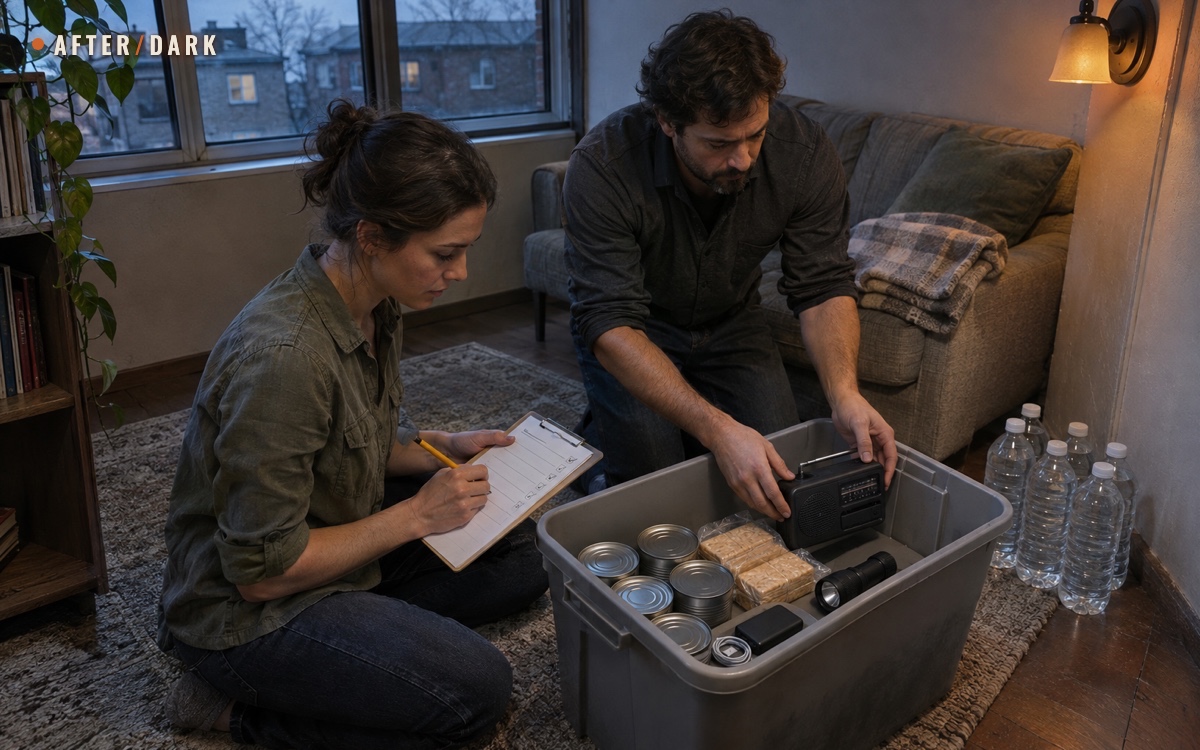
Work through the list before shopping. For each row, note have / need / location on paper or in a saved copy. Tick it only when the supplies are present and usable. An item ordered online, an empty water container, or a power bank you have never charged remains a gap.
The equipment counts below are practical starting choices for this checklist, not official universal minimums. Adjust them for the people and rooms you actually need to support. Water calculations follow immediately after the table.
Three-day household checklist: count the supplies, then check whether they complete their intended job.
| Check | Supply and purpose | Quantity to prepare | Mark ready when |
|---|---|---|---|
| □ | Water for drinking and essential daily use | At least 3 US gallons per person using the US baseline, about 11.4 L; add for other needs | The water is stored, counted, and accessible in manageable containers |
| □ | Food that works without utilities | Three days of complete meals and usual snacks for every person | You can open and eat the planned food without a cooker or working fridge |
| □ | Opening and eating equipment | One shared manual can opener if needed; a cup, spoon, and suitable plate or bowl per person | The opener works on your tins, and the serving/cleanup plan is practical |
| □ | Personal light | A flashlight/torch or headlamp for each person who needs independent light | Each works, can be found in the dark, and has a planned power supply |
| □ | Batteries and small-device charging | Correct spare cells for battery devices; charged power bank capacity and leads for planned phone use | The actual phone, light, batteries, and cables work together |
| □ | Broadcast information | One shared battery-powered or wind-up radio | You can receive a relevant local station and have its frequency on paper |
| □ | Personal hygiene | Three days of usual toilet paper, soap, toothbrush/toothpaste, menstrual products, and other required toiletries; wipes as useful | Quantities cover everyone, including the water the routine needs |
| □ | Household waste and toilet fallback | Waste bags, suitable lidded containers, and supplies for your chosen toilet arrangement | You know what to use if normal flushing is unavailable |
| □ | Clothing and bedding | Suitable layers, dry socks, usable footwear, and bedding for each person | Items fit, are dry, and can be reached without searching |
| □ | Paper information | One shared contact/meeting-point sheet, local map, and pen; personal copies where useful | Another household member can read and use them without your phone |
| □ | Documents, keys, and payment | Accessible essential records, necessary keys, and a household cash reserve in small denominations | You know where they are and which items must leave with you |
| □ | Household-specific additions | Children's and pets' supplies; personal equipment and medications as inventory categories | Each person or animal has a separate checked entry rather than an assumed share |
The broad categories reflect household preparation guidance. The checks in the last column turn that list into something you can verify, rather than a box of objects you hope will work.
Work out quantities for one person or two
Consumables increase with the number of people. Shared equipment often does not: two people need twice the planned meals, but they can use the same radio and can opener while staying together.
Water: choose a clear baseline
The CDC water-storage baseline is at least 1 US gallon per person per day for three days, covering drinking and other uses. Three days therefore means 3 US gallons per person, approximately 11.4 litres. More may be needed in hot conditions and for pets or other household requirements.
For comparison, UK guidance lists 3 litres per person per day for drinking, with additional water for cooking and washing. That makes 9 litres of drinking water per person over three days. It is a drinking-only figure, so do not treat it as an equivalent total allowance for every household task. “Gallon” in the US calculation means a US gallon, not a larger UK imperial gallon.
Worked three-day quantities: water uses the US baseline; meal and equipment counts are planning examples.
| Item | One person | Two people living together |
|---|---|---|
| Water at the US baseline | At least 3 US gal ≈ 11.4 L | At least 6 US gal ≈ 22.7 L |
| Example purchase in 2 L bottles | 6 bottles = 12 L | 12 bottles = 24 L |
| Meals, assuming three per day | 9 meals, plus usual snacks | 18 person-meals, plus usual snacks |
| Personal lights | 1, with its power supply | 2, with their power supplies |
| Radio and manual can opener | 1 of each needed | 1 of each needed, shared |
| Clothing and bedding | 1 person's suitable set | 2 people's suitable sets |
The bottle counts round the baseline upward to whole packages; they do not establish an extra allowance for pets or all washing. Calculate those needs separately. Keep the water you would carry away identifiable within your plan, and recount the home supply if it leaves the house.
Choose bottles or food-grade containers that the intended users can lift and pour. Unopened commercially bottled water is a straightforward starting option. For self-filled containers, use the cleaning, filling, and rotation procedure in the emergency water-storage guide.
Food: count meals you would actually eat
“Nine meals” means nine eating occasions for the example above, not nine individual tins or nine small servings printed on a kit label. A meal might combine several products. Write breakfast, lunch, dinner, and snacks for each day, then add the package quantities.
Choose food that requires little or no cooking, water, or refrigeration. For this starter kit, make the whole menu work without heating. Check each label: a packet of dry rice, a ready-to-eat rice pouch, and a microwave meal may require very different preparation and storage.
Match package size to what the household will finish at that sitting. If the label requires refrigeration after opening, a large unfinished container creates a storage problem. Include the opener and utensils before declaring the menu complete. The three-day no-cook meal plan and shopping list provides a worked menu with quantities and substitutions.
Add what your household will actually use
A general list cannot identify the items somebody reaches for several times a day. Walk through each person's normal morning, evening, and time away from home, and write down the supplies those routines depend on.
For children, count familiar food, relevant nappies/diapers and hygiene supplies, spare clothing, and a small offline activity. Include the practical equipment their established routine requires. Keep specialized feeding or other care arrangements with the appropriate professional guidance; a general supplies article cannot design those for a child.
For pets, add their own food, water, bowls, waste supplies, and any carrier or lead needed if you leave. They are additional mouths to supply, not part of a person's water allowance. Household and pet kit guidance also includes identification and essential records. Our pet evacuation kit covers the portable part in detail.
For accessibility and individual routines, check that the person can open the packaging, operate the switches, reach the storage, and carry or pour the water. Keep necessary personal items and equipment identified. Record any required assistance as an arrangement to confirm, rather than marking the row complete because an object has been purchased.
For documents and payment, identify the records you would need to prove identity, contact your insurer, or reach your household's meeting place. Keep useful copies protected and accessible without logging into an account. Set the cash amount by pricing likely essentials and transport locally; there is no single sum that fits every household. Small denominations make that reserve easier to use when change or electronic payments are unavailable.
Adapt clothing and bedding to the season. The winter items you already own may fill a gap without another purchase. If your accommodation cannot remain suitable without heating, cooling, or another essential service, make an alternative-place-to-stay arrangement alongside the kit; extra supplies alone do not resolve that limitation.
Turn the checklist into a shopping list
Start with the actual usable stock, then subtract it from the target:
Needed quantity − usable quantity already present = quantity to obtain.
For example, two people following the bottle example need twelve 2 L bottles for their initial baseline. If they already have four suitable unopened bottles assigned to the reserve, the gap is eight bottles, not twelve. They may already own a working radio and can opener, while one light has no matching spare batteries. Their shopping list should show those gaps individually.
Use three passes:
- Count before moving things. Check the cupboard, drawers, bedding, and existing bags. Record items where they already live. Decide whether shared or daily-use equipment will actually be present when needed.
- Complete missing functions. If money is tight, begin with stored water, usable meals, a working light, and essential hygiene. Close small dependency gaps, such as the correct cable or opener, before buying a duplicate device. Paper contacts and finding existing supplies cost little or nothing.
- Extend the unfinished quantities. Add ordinary products gradually during normal shopping. Keep partially covered rows visible: “four of twelve bottles” shows the remaining job much better than a tick beside “water.”
A generic kit price is not a useful target when one household owns most of the equipment and another owns almost none. Price your remaining gaps locally. You also do not need a generator or large power station to complete this basic list: the charging requirement here is for planned small-device use.
For that use, count what must be charged, with which cable, and how often. A power bank advertised by capacity does not by itself prove it will cover every phone and light for three days. Test the intended combination and use the phone, light, and radio power guide for a fuller capacity calculation.
Put it somewhere you can reach
The kit can occupy several sensible locations. Home supplies do not all have to be in one place, provided you can find them quickly. Water can stay in manageable containers low on stable storage, food in a suitable cupboard, and a light beside the bed. Keep exits clear.
Follow product storage instructions. Keep food and water protected from heat, moisture, contamination, and pests; do not choose a hot garage or damp cupboard simply because it is empty. Keep cleaning products separate. A rented room may use a low shelf and a drawer rather than a dedicated storeroom.
Write the locations beside the checklist and let everyone involved see them. Keep private documents protected, with their location known to the right people. The home supply organization guide explains labels and storage mapping when your reserve grows.
If normal flushing may become unavailable, settle on the household emergency toilet arrangement before buying its containers and consumables. A roll of toilet paper covers only one part of that task; follow local instructions about wastewater and waste collection.
Check that the kit works before you need it
Do a short rehearsal in normal conditions. Leave essential services running; the aim is to test the supplies, not create an outage.
- Find a light without using the ceiling light or your phone as the answer. Switch it on and locate its replacement power source.
- Open and assemble one planned meal with the stored opener and utensils. Check what cleanup requires, then replace the food used.
- Connect the power bank to the actual phone with the actual cable. Confirm charging, and recharge the bank after testing.
- Receive a relevant broadcast on the radio in the room where you expect to use it. Write down the station and frequency.
- Have another household member find the contact sheet and water, then identify the toilet fallback and departure essentials. If you live alone, do the same walk using only your written locations.
A radio receives information; it does not let you contact someone. Include an agreed meeting point and paper contact numbers with the supplies. The guide to communication without cell service develops that plan beyond the equipment checklist.
Record what failed and correct it. The useful result is a working setup with known limits, not a perfectly arranged photograph.
Keep a smaller set ready if you must leave
Mark the portable essentials: water and ready-to-eat food you can carry, light, phone and charging lead, keys, cash, documents, appropriate clothing, and personal or pet necessities. Keep everyday items that cannot stay packed on a short last-minute collection list.
Bulk household water, all bedding, and the entire food reserve will not necessarily travel with you. Plan the carried load around your route, transport, companions, and destination using the bug-out bag guide. Do not count one shared item as present in two places once someone takes it away.
Review and extend the reserve
Set a review reminder when you finish. A six-month household check is a useful starting schedule, with earlier dates for any package or equipment requirement. Replenish after use, check charge and batteries according to their instructions, and update the list after a move or household change. Self-filled stored water needs replacement every six months; keep its date visible.
Once this first stage works, extend the quantities toward local recommendations. The longer food and water stockpile plan helps you build beyond three days without repeatedly buying more of the categories already covered.
Zombie Scenario: The Missing Cable
Fictional scenario
Reports of a zombie outbreak arrive just as the shops close. Your household has water, familiar meals, and two lights, but the only power bank is packed with a cable that fits neither phone. The paper contact sheet and battery radio still work; the charged-bank tick was misleading. In a rehearsal a week earlier, plugging in the actual phone would have exposed the gap. A complete kit is a collection of working tasks, including the small connections between them.
Frequently Asked
Is a 72-hour kit the same as a three-day emergency kit?
Can I use food from my everyday pantry?
Is buying a ready-made emergency kit worthwhile?
Should I buy rechargeable lights or ones with replaceable batteries?
How should roommates divide the cost and supplies?
Do I need extra supplies for visitors?
Do I need a second complete kit at work or in the car?
Sources
Related guides
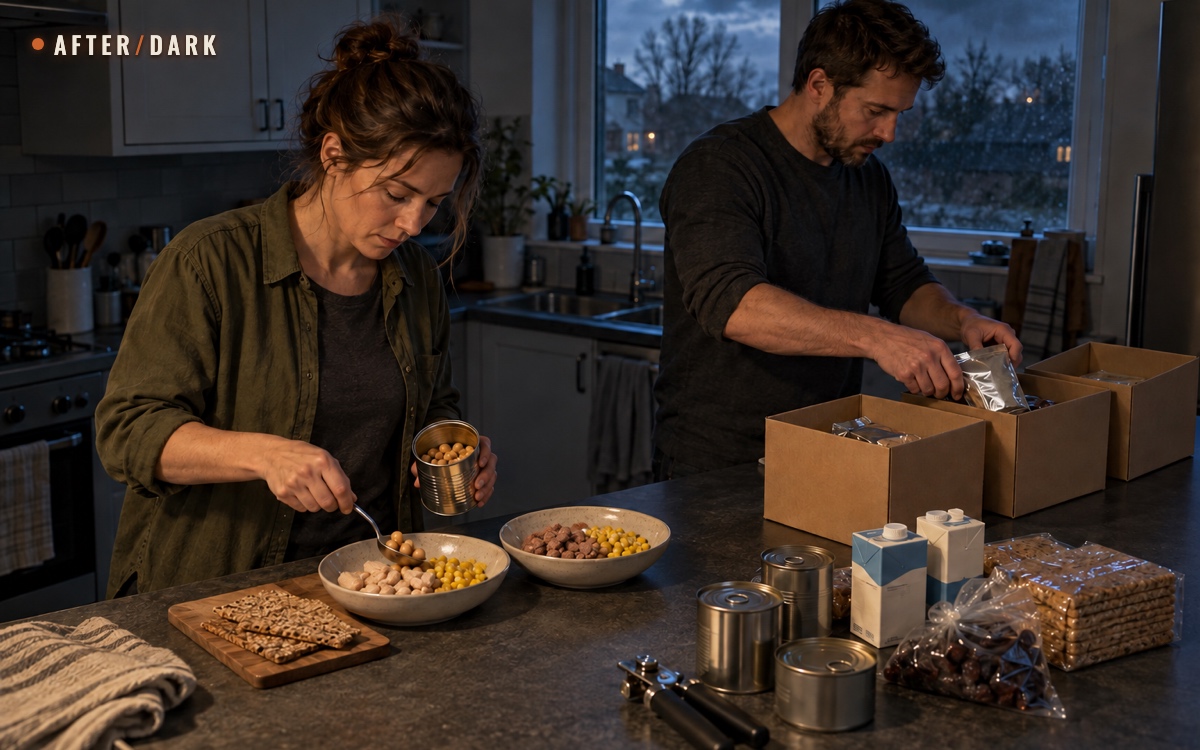
3-Day No-Cook Emergency Meal Plan and Shopping List
Nine meals, daily snacks and a matching shopping list for three days without cooking or refrigeration, with practical US and UK substitutions.
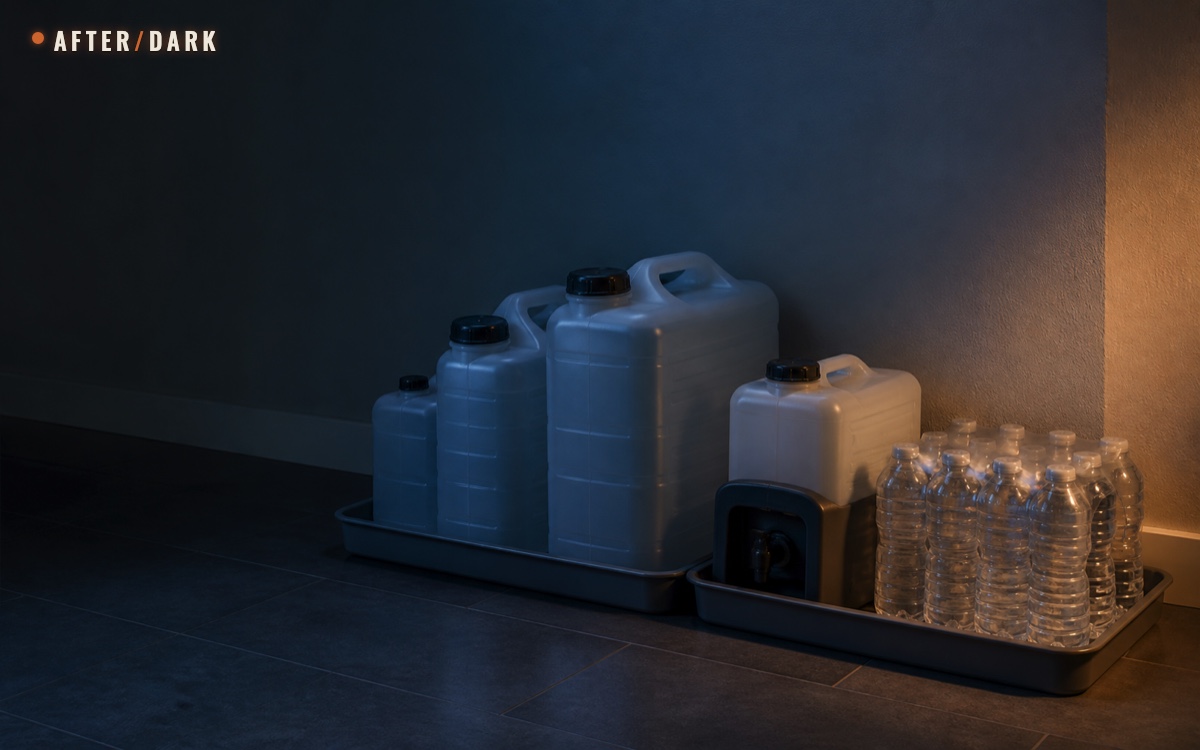
How to Store Emergency Water at Home for a Long Outage
Build a household water-storage system around usable quantities, full container weight, safe filling, accessible placement, and scheduled rotation.
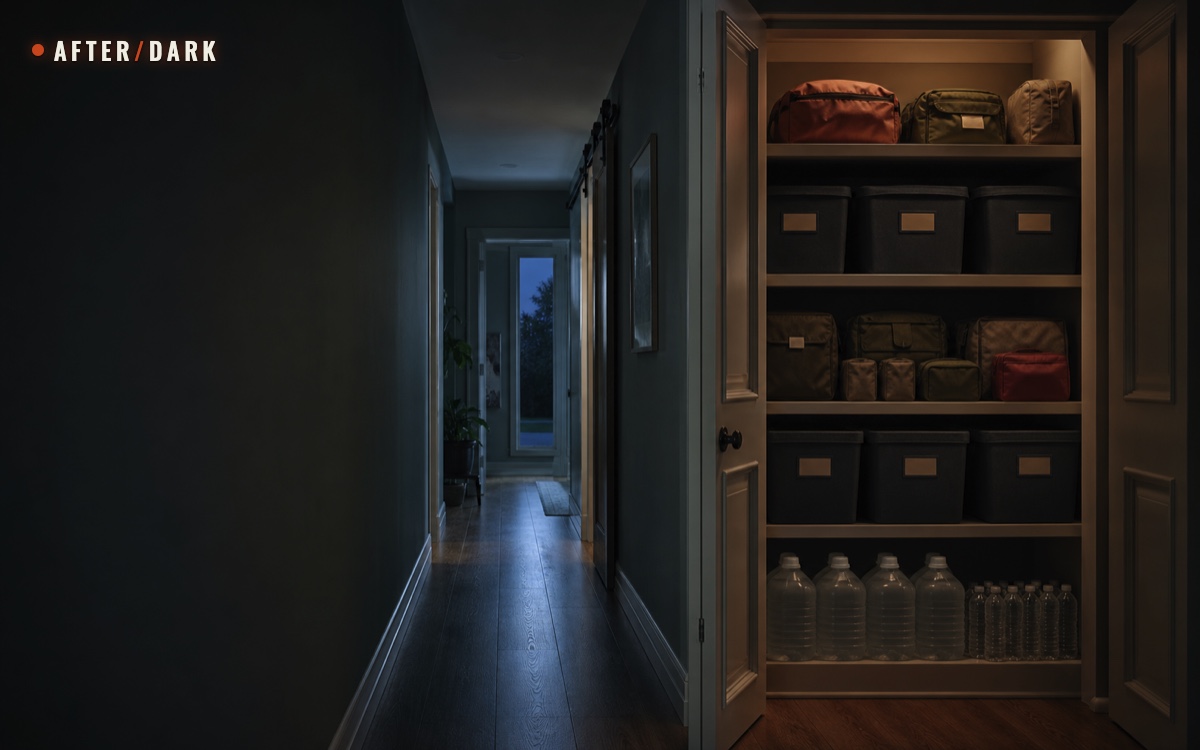
How to Organize and Store Emergency Supplies at Home
Turn scattered emergency supplies into a mapped, labeled home system that stays accessible, countable, and separate from your departure kit.