3-Day No-Cook Emergency Meal Plan and Shopping List
Nine meals, daily snacks and a matching shopping list for three days without cooking or refrigeration, with practical US and UK substitutions.
Short answer
Key takeaways
- The menu covers three breakfasts, three lunches, three dinners and daily snacks; its ingredient totals reconcile with the shopping list.
- Buy wet foods in packs you can finish at one meal, and count drained contents rather than liquid-filled can weight.
- Choose wraps, spreads and other shared dry-pantry items whose labels allow the planned storage after opening.
- Scale quantities after checking household portions and the package sizes actually sold near you.
- Try one complete day while normal services are available, then adjust portions, opening tools and cleanup supplies.
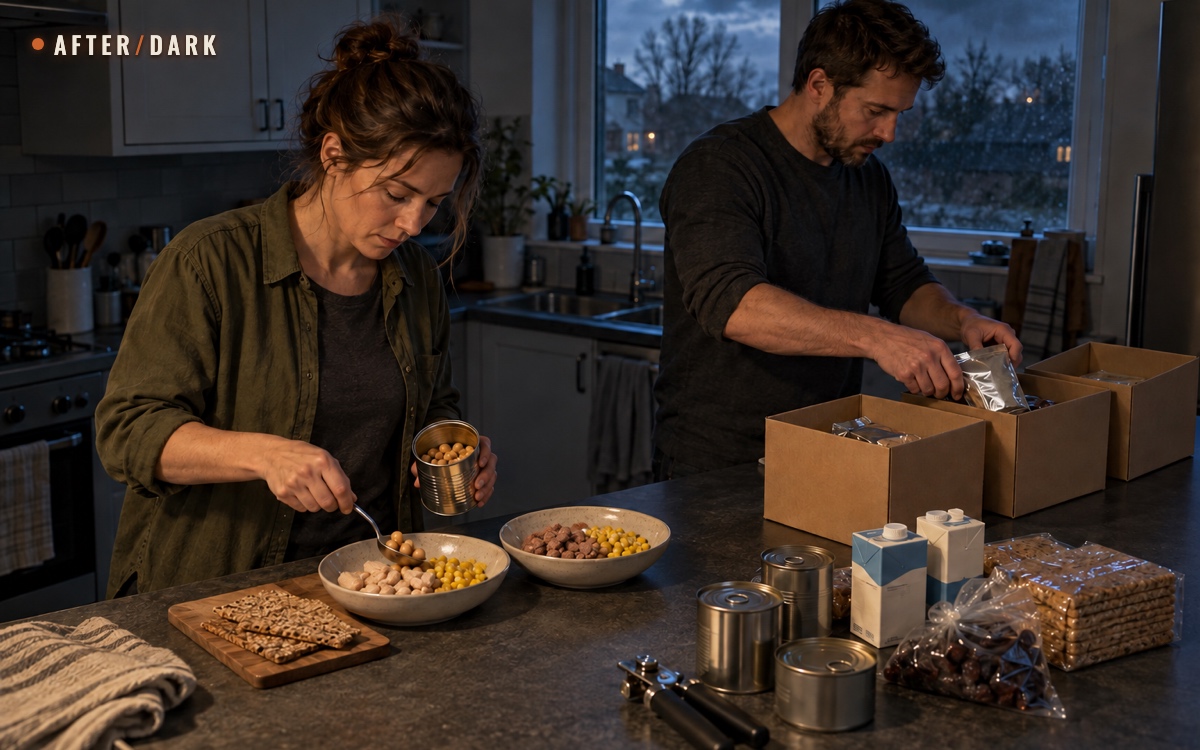
A useful emergency food plan tells you what lunch is, how to open it and what remains for tomorrow. This example uses ordinary supermarket foods for three days without a stove, kettle, microwave or working refrigerator. Its quantities are an editable shopping example for one adult, not a universal diet or a ration limit.
The products are familiar in the United States and Britain. Elsewhere, use equivalent local foods and the package conversions below. The goal is a usable first layer within a longer food and water supply.
Start with the food and tools you actually have
Preparing ahead: work through the menu, choose suitable products, subtract what is already in your cupboard and buy the difference. Keep the menu with the food so another household member can serve it without an internet connection.
The outage has already started: first identify one meal you can make from intact ready-to-eat packs, an available opener and clean utensils. Then allocate the remaining food to later meals. Use the substitutions below instead of assuming you can shop for the example. If a missing tool prevents opening a can, choose an accessible pack for the immediate meal and arrange help with the others.
For this menu, every product must be ready to eat without heat and suitable for its planned storage. These are separate checks: dry pasta keeps in a cupboard but still needs cooking. The FSA explains that eating canned food cold depends on the particular product and its instructions.
Your three-day no-cook emergency menu
The amounts below are the reference quantities used in the shopping calculation. Fish, beans and vegetables are edible or drained weights; fruit cups include the contents you eat. A 400 g can containing liquid is not 400 g of drained beans. Small differences in local pack sizes are handled after the table.
Use fully cooked, ready-to-eat wraps; ready-to-eat breakfast cereal; and commercially packaged beans, fish and vegetables suitable for eating cold. The milk is an unopened shelf-stable carton, not a carton taken from the chilled aisle. Salt, sauce, mayonnaise and fresh salad are not required ingredients.
One adult, three days: nine main meals and daily snacks. All food is served without heating.
| Day | Meal | Food to serve |
|---|---|---|
| 1 | Breakfast | 60 g cereal, one 250 ml shelf-stable milk carton and 30 g dried fruit |
| 1 | Lunch | Two ready-to-eat wraps, 120 g total, filled with one fish pack providing about 100 g edible contents |
| 1 | Dinner | One chickpea can providing about 240 g drained contents, one vegetable pack providing about 150 g drained contents, and 60 g crackers |
| 1 | Snacks | One 120 g fruit cup, 30 g nuts and one 40 g cereal or granola bar |
| 2 | Breakfast | 60 g crackers with 30 g peanut butter, one 250 ml milk carton and one 120 g fruit cup |
| 2 | Lunch | One ready-to-eat bean can providing about 240 g drained contents, one 150 g vegetable pack and 60 g crackers |
| 2 | Dinner | Two wraps, 120 g total, with 60 g peanut butter and 30 g dried fruit |
| 2 | Snacks | 30 g nuts and one 40 g cereal or granola bar |
| 3 | Breakfast | 60 g cereal, one 250 ml milk carton and 30 g dried fruit |
| 3 | Lunch | Two wraps, 120 g total, filled with a second fish pack providing about 100 g edible contents |
| 3 | Dinner | One ready-to-eat bean can providing about 240 g drained contents, one 150 g vegetable pack and 60 g crackers |
| 3 | Snacks | One 120 g fruit cup, 30 g nuts and one 40 g cereal or granola bar |
Choose different bean varieties and vegetables for the three bean meals. Tuna or salmon can fill the wraps; chickpeas, white beans or a suitable mixed-bean product can fill the bowls. Sweetcorn, carrots or mixed vegetables provide variety without needing fresh preparation. Check flavored products separately because their ingredients and instructions can differ.
The repeated ingredients keep the list manageable, while the combinations change. If these amounts are smaller than your usual meals, increase them before shopping and record the additions. A rehearsal should establish whether the example is enough for the people using it; a manufacturer's small “serving” is not automatically a full lunch.
Assemble the meals with minimal washing
Cereal breakfast: pour out the cereal and dried fruit before opening the milk. Use as much of the carton as you want on the cereal and drink the remainder with breakfast. On Day 2, the carton is a drink alongside the crackers and fruit.
Fish wraps: open one meal-sized pack, drain if needed and divide the contents between the two wraps. Fold and eat immediately. If the fish seems dry during your trial, choose a ready-to-eat flavored or oil-packed version you like, or add a separately counted single-use condiment. Do not silently add a jar that needs a fridge after opening.
Bean bowls: open the day's beans and vegetables, drain as needed and combine in a clean bowl. Eat with the crackers. Pick products that can be served this way as labeled; a bowl of plain beans and a ready-seasoned bean salad will taste different. If only a small amount of clean tableware is available, keep the components separate and use a clean utensil rather than making an extra mixing bowl dirty.
Peanut-butter wraps: spread half the meal's peanut butter on each wrap, add the dried fruit and fold. A clean spoon also serves the smaller peanut-butter portion at Day 2 breakfast. Reseal shared dry foods and the suitable spread promptly after taking the portion.
The matching three-day shopping list
This is the food total for the menu above, before substitutions. Package examples show the arithmetic, not a claim that every shop sells those sizes. Buy the amount you need after deducting suitable food already owned.
Shopping quantities for one adult. Approximate ounces are weights; milk is shown in millilitres to avoid US/UK fluid-ounce confusion.
| Item | Used across three days | Example purchase | What remains after the menu |
|---|---|---|---|
| Ready-to-eat cereal | 120 g / 4.2 oz | One 250 g box or smaller packs totaling at least 120 g | 130 g dry cereal from a 250 g box |
| Shelf-stable milk | 750 ml | Three separate 250 ml cartons | No opened milk |
| Ready-to-eat wraps | 360 g / 12.7 oz | Six 60 g wraps; check total weight if buying a multipack | None from six; any extras stay under the pack's storage instructions |
| Crackers or crispbread | 240 g / 8.5 oz | One 250 g pack, or packs totaling at least 240 g | 10 g from a 250 g pack |
| Peanut butter | 90 g / 3.2 oz | One 200 g jar approved for ambient storage after opening, or suitable small portions | 110 g from a 200 g jar, stored as labeled |
| Canned or pouched fish | About 200 g / 7.1 oz edible contents | Two packs yielding about 100 g each | No opened fish |
| Chickpeas and other beans | About 720 g / 25.4 oz drained | Three cans yielding about 240 g each | No opened beans |
| Ready-to-eat vegetables | About 450 g / 15.9 oz drained | Three small packs yielding about 150 g each | No opened vegetables |
| Shelf-stable fruit cups | 360 g / 12.7 oz contents | Three 120 g cups | No opened fruit |
| Dried fruit | 90 g / 3.2 oz | One 100 g bag | 10 g dry fruit |
| Nuts | 90 g / 3.2 oz | One 100 g bag | 10 g nuts |
| Cereal or granola bars | 120 g / 4.2 oz | Three 40 g bars | None from three |
The peanut butter is used only on Day 2: 30 g at breakfast + 60 g at dinner = 90 g. Crackers appear four times: 4 × 60 g = 240 g. The Day 2 fruit cup belongs to breakfast; it is not an extra fourth cup. These details matter when someone else packs the boxes.
Shared dry packages do not have to be emptied in three days. Keep their labels and close them appropriately. The important distinction is between a usable pantry remainder and an opened food that requires refrigeration.
Match real packaging to the example
If your milk comes in 200 ml or 8 US fl oz cartons, buy three meal-sized cartons, one for each breakfast, and record their actual volume. Eight US fluid ounces is about 237 ml, so three such cartons supply about 710 ml. Use the whole carton at breakfast. The example does not require finding a 250 ml import.
For canned foods, read net weight and drained weight separately. A hypothetical 400 g can with 240 g drained beans supplies one reference bean meal. If your can gives 250 g drained, use that whole suitable portion at the meal and record 250 g; do not save 10 g for tomorrow to match the table. If your local small packs are much smaller, combine enough sealed packs for the meal.
Wrap count alone is unreliable. A 360 g pack of eight wraps averages 45 g each, while the example uses six 60 g wraps. You can distribute the eight smaller wraps across the three wrap meals, or buy extra if that arrangement is too small for you. Check the meal, not just the number printed on the pack.
For exact shopping arithmetic, use packages to buy = required usable amount ÷ usable amount per package, rounded up. Apply it meal by meal to foods that become perishable when opened. A large can that supplies three portions is only convenient if those three portions will be eaten together.
If you are weighing this shopping list against a boxed reserve, the emergency food kit and supermarket comparison shows how whole-package prices, preparation requirements and unused portions affect the purchase.
Adapt the plan for your household and country
Start with the people who will actually eat the food. Multiply the accepted portions, then choose packages that suit their mealtimes. Two adults using this example need 240 g cereal, 480 g crackers, six small milk cartons, four fish packs, six bean cans and six vegetable packs. Four adults need 480 g cereal, 960 g crackers and twelve small milk cartons; multiply the other lines in the same way.
For four people eating breakfast together, one 1-litre milk carton can replace four 250 ml cartons at that breakfast. If people eat at different times, keep the individual cartons. Package sharing works at the same meal, not simply because people live in the same home.
Treat the following as food substitutions, not nutritional equivalents. Change the quantities and the shopping list when you change a meal.
US, UK and other local equivalents: preserve the preparation and storage requirements when substituting.
| Menu item | Names or alternatives you may find | Adjustment to make |
|---|---|---|
| Canned fish, beans or vegetables | “Canned” in US shops; often “tinned” in Britain; ready-to-eat retort pouches elsewhere | Match edible quantity and opening method, not the container's appearance |
| Shelf-stable milk | Long-life or UHT milk; suitable shelf-stable plant drink | Check unopened storage and use one complete meal-sized carton |
| Wraps | Ready-to-eat flatbread, bread, crackers, crispbread or suitable oatcakes | Choose an accepted meal portion and verify storage through Day 3 |
| Fish filling | Ready-to-eat beans or a suitable shelf-stable meat filling | For two bean substitutions, add two meal-sized bean packs and remove the two fish packs |
| Peanut butter and nuts | An already accepted seed spread and snack, or another familiar filling and snack | Check every replacement's ingredients and opened storage; do not assume equal weights give the same meal |
| Cereal, crackers and bars | Familiar products meeting the household's existing ingredient requirements | Check each label rather than relying on a category name such as “oat” or “plant-based” |
For known food restrictions, use products the person already accepts and check the labels again when replacing stock. Ingredients and recipes can change. Keep different people's portions identifiable instead of mixing every snack into a shared unlabeled container.
To reduce cost, compare the price of the amount you will actually use. Larger dry-food packs may make sense because the remainder can return to ordinary pantry use. A cheaper large wet-food container can be poor value for one person if most of it cannot be kept after opening. Own-brand products are reasonable candidates when they pass the same label and meal checks.
Open one meal, not tomorrow's food
Keep the next meal's wet food sealed until you are ready to eat it. Divide a shared can between people at the same sitting; do not assemble three days of bean salad or filled wraps in advance. If leftovers needing refrigeration are unavoidable, this no-fridge plan cannot keep them for tomorrow.
The distinction is visible on the milk carton: shelf-stable milk can remain unrefrigerated while sealed but needs refrigeration after opening. That is why the solo shopping list uses three small cartons rather than one large carton spread over three mornings.
For foods requiring refrigeration, FDA advises a maximum of two hours at room temperature, or one hour above 90°F / about 32°C. Serving and finishing the meal promptly avoids building the plan around that limit. Follow any stricter product or local instructions.
Shared wraps and spreads need their own label check. Mission describes ambient storage and tightly resealing suitable tortillas, while Jif states that its peanut butter does not require refrigeration. Those are product examples, not rules for every wrap or nut butter. Buy a version whose instructions fit your actual storage conditions, or choose a suitable alternative from the table.
If you also have food in a refrigerator when power fails, handle it through the separate cold-food outage plan. The menu here remains available after usable chilled food is gone; it does not depend on deciding that the fridge will stay cold for three days.
Put water and meal tools beside the food plan
These meals require no boiling or rehydration water. Drinking, handwashing and cleaning still need a counted supply. The US and UK figures below describe different allowances and should not be treated as identical totals:
- United States: CDC recommends at least one US gallon per person per day for three days, covering drinking and other uses. That is three US gallons, about 11.4 litres, per person over three days.
- United Kingdom: the Be Ready checklist specifies three litres per person per day for drinking, plus more for tasks such as washing. The three-day drinking amount is nine litres; it is not the whole household washing allowance.
Use current local advice and account for actual conditions and tasks. Keep the milk cartons and fruit contents as menu items rather than subtracting them from the planned water reserve. The emergency water-storage guide covers containers and a usable dispensing setup.
Pack the meal equipment you will actually use:
- a working manual can opener unless every relevant package opens without one;
- a clean bowl or plate, cup and eating utensil for each person, plus the serving utensil the meals require;
- a way to reseal shared dry foods and retain their instructions;
- soap, safe washing water and the materials needed to clean the chosen tableware;
- rubbish bags for food residue and packaging;
- a printed menu and a small light you can use when necessary.
With little washing water, select meals that serve directly onto fewer dishes and keep clean spares protected. Suitable disposable tableware is another option if a complete washing routine cannot be supported. The no-tap dishwashing guide explains the full cycle; a quick wipe of a dirty utensil is not a substitute for it. Account for waste collection as well as food preparation.
Try one day, then pack all three
Run an ordinary-day rehearsal while the kitchen and refrigerator remain available. Leave the appliances operating normally; simply prepare the chosen day's meals from the no-cook supplies.
- Choose a whole day. Include its breakfast, lunch, dinner, drinks and snacks. Do not add an unrecorded sandwich from the fridge halfway through.
- Open the actual packages. Check whether the person using the plan can manage the tabs, caps and opener.
- Serve and eat the planned portions. Note what was insufficient, excessive or unpleasant cold. Add accepted extras or change the meal, then update the purchase total.
- Record every dependency. Include extra condiment, water, dish, light and ingredient that made the meal work.
- Check the remainder. Identify anything opened that would need refrigeration. Replace its package size or move the entire pack into a shared meal.
- Clean up and reset. Confirm that the next meal has clean tableware, accessible food and enough counted water.
If one day exposes a problem with portions or package size, review the other two days for the same issue. The example is ready when the planned people can use it without borrowing missing ingredients, heat or cold storage.
Group unopened wet foods by day, keeping shared dry goods and the opener beside them. Attach the corrected menu, including any substitutions and which products are shared. Follow the food-storage and rotation routine so the selected foods stay part of normal household use rather than an abandoned box.
Recheck the list when household numbers, accepted foods or package sizes change, and replace what you use. Once you can also support hot meals, the cooking-without-electricity guide helps plan that additional layer. Keep these no-cook meals available for days when the heating option cannot be used.
Zombie Scenario: The Carton for Tomorrow
Fictional scenario
On the second morning of a fictional zombie outbreak, two neighbors share a kitchen without power. One reaches for a large milk carton, planning to use a little and keep the rest for tomorrow. Their printed menu has a different arrangement: each person's breakfast has a small unopened carton.
They use those cartons, leave tomorrow's food sealed and finish the morning's fruit cups. The larger carton stays unopened for a meal with enough people to finish it. The food count has not changed; the opening schedule is what makes the reserve work without a fridge.
Frequently Asked
Can I eat microwave rice straight from the pouch?
Can powdered milk replace the small cartons?
What if someone cannot manage a tin opener or a stiff pull tab?
Can children use this meal plan?
What if I dislike cold beans or cold fish?
Can I repeat this menu for a week?
Sources
- Food Standards Agency — Home Food Fact Checker
- FDA — Are You Storing Food Safely?
- UK Government — Be Ready for Emergencies
- CDC — How to Create an Emergency Water Supply
- Horizon Organic — What Is Shelf-Stable Milk?
- Mission Foods — Frequently Asked Questions
- Jif — Frequently Asked Questions
- NSW Food Authority — Reading Food Labels
- Tilda — Frequently Asked Questions
Related guides
How to Build a 30-Day Food and Water Supply for an Apocalypse
A practical 30-day pantry for apocalypse preparedness, built from person-days, package labels, a no-cook layer, and stored water you can rotate.
How to Store Emergency Food at Home
Keep the food you already own usable: choose a storage spot, protect each type of food, retain its instructions and rotate it through ordinary meals.
How to Cook Without Electricity During a Long Outage
Build an outage kitchen for an apartment or house with no-cook meals, safe heat options, measured capacity, and clear food-safety limits.