How to Build a Home Power Outage Plan for a Long Blackout
Turn separate outage supplies into one tested household sequence for lighting, food, communication, water, temperature control, and recovery.
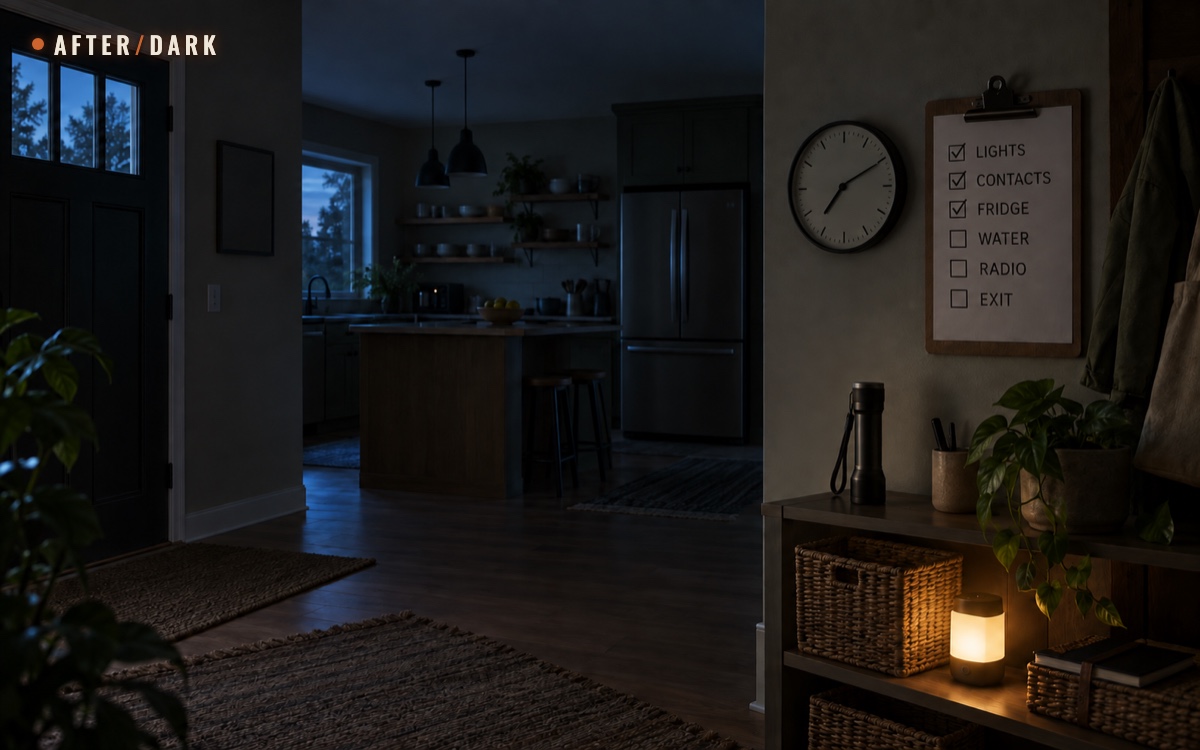
Short answer
Key takeaways
- Plan household functions before equipment: light, information, cold food, water, meals, indoor temperature, access, and departure all need an owner and a fallback.
- Use one written outage clock and one operating card so every person works from the same sequence.
- Make the first 15 minutes deliberately quiet: establish light, account for the household, check official information, and keep cold-storage doors closed.
- Define transition triggers before the outage; do not wait for fatigue, darkness, or a depleted battery to decide when the home plan has stopped working.
- Test the workflow without cutting power to the building, risking refrigerated food, or altering fixed electrical systems.
To build a home power outage plan, map every household function that depends on electricity, give each function a no-grid method, and define the condition that makes the household change course. Write one operating card covering preparation, the first 15 minutes, the first four hours, days one through three, and recovery. Assign each decision to a person, connect the card to detailed food, power, communication, water, and temperature plans, then run a controlled two-hour test without switching off the home's electrical service.
A collection of charged devices and stored supplies is not yet a plan. A plan establishes sequence: which light is reached first, who starts the outage clock, how official updates are received, when the refrigerator may be opened, which resources are reserved, and what evidence ends home operation.
The American Red Cross notes that a prolonged power outage can disrupt communication, water, transportation, stores, banks, and other services. Build the household procedure around those dependencies rather than assuming the only problem will be a dark room.
Build the Plan Around Functions That Fail
Start with functions, not products. Electricity may be only the first dependency in a chain: an apartment door may need building power, a tap may depend on a pump, a phone may depend on both stored energy and a working network, and a cold-food plan depends on time, temperature, and disciplined door use.
For every function, record five items:
- Normal method: what the household uses while the grid works.
- No-grid method: the tested way to perform the same essential job without normal power.
- Owner: the person responsible for starting and recording that method.
- Evidence: the clock, thermometer, battery reading, official notice, or physical check used to make the decision.
- Transition trigger: the condition that moves the household to a fallback or another location.
Household Dependency Map: connect every function to one tested method and one decision trigger.
| Function | No-grid method | Evidence to record | Transition trigger | Detailed guide |
|---|---|---|---|---|
| Safe movement and task light | Distributed battery lights in assigned locations | Light starts, location, battery state | A required route cannot be lit independently | Small-device power plan |
| Official information and household contact | Scheduled phone and radio checks plus a printed contact card | Source, check time, message status | Planned channels fail or an official instruction changes the plan | Emergency communication plan |
| Refrigerator, freezer, and cooler | Closed doors, appliance thermometers, one outage clock, prepared cooler layer | Start time, temperature, access | Official time or temperature boundary is reached | Cold-storage plan |
| Drinking and meal water | Accessible stored reserve with a pouring method | Container location and remaining quantity | The reserve cannot support the written household plan | Emergency water-storage plan |
| Meals | No-cook layer followed by a permitted, tested cooking method | Meal used, water and energy consumed | The planned method or location is unavailable | Outage cooking plan |
| Workable indoor temperature | One prepared room and a recorded day-to-night routine | Indoor and outdoor readings, room condition | The home can no longer maintain the household's predefined usable conditions | Warm-room plan or passive cooling plan |
| Leaving the home | Packed modules, independent route information, destination ladder | Route status and destination confirmation | Official direction, building condition, or another written home-plan trigger | Home evacuation plan |
Do not promise the same device, person, or stored energy to several functions without recording the conflict. A phone cannot simultaneously travel with one person, provide the household's only official-information channel, and remain at the home charging point. A shared battery cannot be reserved in full for both refrigeration and communication.
Define Transition Triggers Before the Outage
A transition trigger is observable evidence that changes the plan. It replaces late, tired debate with a decision made while the household still has light, connectivity, and time.
Write triggers for three operating states:
- Short interruption: preserve resources, collect reliable information, and avoid unnecessary setup.
- Extended home operation: activate the written lighting, food, water, communication, meal, and temperature schedules.
- Switch location: follow current official instructions or use the household's prepared destination and route plan when a required home function cannot be maintained.
Transition Card: write evidence and action together so the trigger cannot be reinterpreted later.
| Evidence | Decision | Prepared action |
|---|---|---|
| Utility or official source gives a credible restoration window | Stay in the current phase and schedule the next information check | Record the source and time; do not refresh continuously |
| Refrigerator approaches the official closed-door window | Move from preservation to the prepared cold-food procedure | Use the thermometer, cooler, and item plan; do not improvise from memory |
| The planned phone reserve reaches its protected level | End nonessential phone use | Switch to printed information and scheduled contact windows |
| Indoor conditions move outside the household's written operating range | Activate the seasonal room plan or the prepared location change | Use the recorded destination and route rather than selecting one during the outage |
| Tap, entry, elevator, garage access, or another building-dependent system stops | Recalculate whether the home plan still works | Follow the prepared building fallback and current management instructions |
| An official instruction conflicts with the household card | Official instruction takes priority | Note the change and follow the current authoritative direction |
Avoid unsupported universal triggers. Homes, climates, building systems, household needs, and local services differ. The card should state what the household will observe and which already-prepared plan follows; it should not invent a safety threshold that belongs to an authority, manufacturer, or qualified local professional.
Write One Home Power Outage Operating Card
Keep the operating card short enough to use under weak light. It is an index and decision sequence, not a compressed copy of every guide. Store a printed copy at the household information point and an offline copy on each assigned phone.
The card needs these fields:
- outage start time and the person who recorded it;
- utility status source and the next scheduled check;
- household members accounted for and the agreed status message;
- first-light locations and the protected lighting reserve;
- refrigerator and freezer rule, thermometer location, and next decision time;
- water-container locations and the current count;
- first no-cook meal and the permitted cooking fallback;
- warm-room or cool-room activation trigger;
- apartment or house systems that may fail without building power;
- destination, route source, and switch-location triggers;
- recovery sequence and items that must be restored after use.
Use exact locations. “Flashlight in hall cabinet, second shelf” is actionable; “emergency light somewhere near the door” is not. Use exact responsibility. “Sam records the outage time” is actionable; “someone checks the clock” is not.
Complete the Before-Outage Setup
Build the plan while the home is operating normally. The American Red Cross recommends preparing household supplies, a communication method that works without home power, a paper contact list, food and water, cold-storage equipment, and heating or cooling alternatives.
Complete this setup in order:
- Walk through the home after dark and mark the route from every sleeping area to the information point, bathroom, exit, and assigned light.
- Test every planned light, phone, radio, cable, power bank, thermometer, manual opener, and offline document.
- Write the utility, building-management, household, and destination contacts on paper.
- Save official alert sources and utility-status pages offline where practical.
- Label refrigerator and freezer doors with the closed-door rule and thermometer location.
- Put the first no-cook meal, safe water, manual opener, and utensils in an accessible layer.
- Record which doors, elevators, water pumps, parking systems, alarms, or other shared services depend on building power.
- Assign the outage clock, information checks, cold-storage decision, power log, and departure check to named people.
- Put the operating card where it can be reached without crossing a dark room.
- Choose a date for the controlled household test.
Do not alter fixed wiring, test by disconnecting building systems, or assume an unfamiliar backup source is ready because it turns on. Equipment remains inside its manual, property rules, and local requirements; installed electrical work belongs to a qualified local professional.
Use the First-15-Minute Checklist
The first minutes should establish control without consuming resources or creating extra work.
- Use the nearest independent light. Do not cross the home to reach a central supply box. The CDC recommends battery-powered flashlights or lanterns rather than candles to reduce fire risk.
- Account for the household. Use the communication plan's short status format if anyone is away.
- Record one outage start time. Put it on the operating card and on the cold-storage log.
- Determine the outage scope without electrical investigation. Check the utility, building channel, official alert source, or another planned information route. Do not open electrical equipment or reset a repeating fault.
- Keep the refrigerator and freezer closed. Do not inspect food or reorganize shelves.
- Move phones into the planned operating state. Reduce nonessential use and protect scheduled contact and information windows. The Department of Energy recommends reducing screen brightness, using airplane mode when appropriate, and closing unused apps.
- Check the next decision time. Schedule the next official update, cold-storage decision, indoor-condition check, and household contact window.
Do not deploy every light, connect every cable, or open every supply container immediately. Activate only what the current phase needs. A long outage is easier to manage when the first response preserves options.
Protect the First Four Hours
The first four hours contain an important cold-storage boundary. FoodSafety.gov states that an unopened refrigerator keeps food safe for up to four hours; a full unopened freezer holds a safe temperature for about 48 hours, or 24 hours when half-full. These limits depend on closed doors and do not replace item-level evaluation, thermometer readings, or current official guidance.
During this phase:
- keep one clock and resist exploratory door opening;
- use the prepared no-cook meal instead of opening cold storage for convenience;
- deploy route and task lighting only where people are active;
- receive official information at scheduled times rather than keeping every device active;
- confirm that stored water can be reached and poured if the tap stops;
- compare indoor conditions with the seasonal room plan;
- update the expected duration only from a credible source;
- prepare the next phase before the current resource boundary is reached.
Department of Energy guidance recommends listening to officials and energy suppliers through battery radios, phones, computers, or other available channels and keeping a contact list. Record the source and time beside each material update so an old message is not mistaken for a new instruction.
Run Days One Through Three as Scheduled Cycles
Once the outage extends beyond the initial window, replace constant checking with short operating cycles. The purpose is to preserve attention as well as stored resources.
Extended-Outage Cycle: choose household times that match local information services and actual routines.
| Cycle | Required actions | Evidence recorded | Avoid |
|---|---|---|---|
| Morning | Household check, official update, phone and radio schedule, water count, indoor-condition reading | Time, source, battery state, water remaining, room reading | Turning every device on at once |
| Midday | Meal, limited task lighting, cold-storage action only when scheduled, route or building update | Meal and water used, cold-storage log, access change | Opening appliances to decide what to do |
| Evening | Official update, household status message, next-day resource check, route-light placement | Message status, next check, lights assigned, trigger review | Using the protected overnight reserve for convenience |
| Overnight | Personal light within reach, clear route, sleeping-area check, one designated information method | Light location and responsible person | Leaving several rooms illuminated without a task |
The cycle is not a rigid universal timetable. It is a household control loop: observe, record, act, and schedule the next observation. Change it when an official instruction, resource boundary, building failure, or planned household trigger requires a different state.
Keep combustion-powered outdoor equipment out of the indoor plan. CDC guidance says not to use portable camping stoves, charcoal equipment, or gasoline-powered engines inside a home, basement, garage, tent, camper, or other enclosed or partially enclosed space. A window or open garage door does not convert an indoor location into an outdoor one.
Adapt the Plan to an Apartment or House
The operating sequence is portable; the dependencies are not. Walk the actual property and record what changes when shared or private systems lose power.
Building Dependency Review: verify each answer with the responsible property, utility, or manufacturer.
| System | Apartment question | House question | Required fallback |
|---|---|---|---|
| Entry and exit | Do lobby doors, intercoms, elevators, or corridor lights depend on shared power? | Do gates, garage doors, exterior lights, or powered locks have a permitted manual method? | A route that can be used under current property instructions |
| Water | Does a building pump serve upper floors? | Does a private pump serve the home? | Accessible stored water and a written activation trigger |
| Information | Where does management publish updates? | Which utility and local sources cover the address? | Two recorded channels with different dependencies |
| Cooking | Is any outdoor location explicitly permitted? | Which location and equipment are permitted by local and manufacturer rules? | A complete no-cook layer when no safe permitted method exists |
| Indoor temperature | Which common areas or nearby locations remain usable? | Which room is easiest to manage without whole-home conditioning? | A seasonal room plan plus a prepared location change |
| Departure | Can stairs, parking, and street access work without shared power? | Can the vehicle, gate, or garage be accessed by the approved manual method? | An independent route and transport fallback |
Do not discover a manual-release method, shared-door rule, or water dependency for the first time in darkness. Obtain current instructions beforehand and keep them with the operating card.
Run a Controlled Two-Hour No-Outlet Test
Test behavior without shutting off the home's electrical service, touching the panel, risking food, or disabling building systems.
- Choose a normal evening when every participant can stop the test at any time.
- Leave the refrigerator and freezer powered and closed; mark cold storage as simulated.
- Stop using outlets, fixed lights, home internet, powered cooking, and other selected conveniences for two hours.
- Begin from the room where each person would realistically be when the lights fail.
- Find the first light, account for the household, start the paper clock, and retrieve the operating card.
- Complete one official-information check using the planned channel and one simulated status message.
- Prepare the first no-cook meal or stage it without opening perishable food.
- Locate stored water and pour one normal-use quantity without moving the complete reserve.
- Follow one scheduled lighting, phone, radio, and indoor-condition cycle.
- Walk the required routes and confirm that doors, keys, footwear, animal transport, and departure modules remain accessible.
- End the test, restore ordinary use, and record every delay, conflict, missing item, and ambiguous instruction.
Measure completion, not discomfort. Useful results include “the hallway light took 70 seconds to find,” “two devices claimed the same cable,” or “nobody knew which utility page was current.” Those observations produce direct corrections.
Do not claim that a two-hour simulation proves multi-day endurance. It verifies sequence and access. Capacity belongs to the individual water, food, battery, cooking, temperature, and cold-storage tests.
Recover, Reset, and Record the Failure
Power restoration does not finish the household task. Verify the status through the utility or another planned source, then restore systems in accordance with current official, property, and manufacturer instructions.
Use this recovery order:
- Record the restoration time beside the original outage time.
- Preserve the refrigerator, freezer, and cooler logs until every food decision is complete; use the current FoodSafety.gov item chart, not taste, smell, or memory.
- Recharge approved lights, phones, radios, and power banks using their normal methods.
- Refill water, no-cook meals, batteries, and other supplies consumed by the plan.
- Return each route light, cable, key, paper card, and transport module to its assigned location.
- Update contact details, building dependencies, and transition triggers that proved inaccurate.
- Write one short after-action note: what failed, what caused the failure, who owns the correction, and when it will be retested.
Do not hide a failed test by buying an unrelated object. Correct the broken function: move the inaccessible light, label the cable, replace the outdated contact, separate competing battery budgets, or rewrite the unclear trigger.
Fix the Common Home Power Outage Plan Failures
- All supplies are centralized. Nobody can reach the first light without crossing a dark route.
- Several clocks exist. Different household members make cold-food decisions from different outage start times.
- The plan assumes the internet works. Contacts, instructions, maps, and official sources are not available offline.
- Every battery is counted twice. Communication, lighting, and cold storage all claim the same energy.
- The refrigerator becomes a planning cabinet. People repeatedly open it to inspect food or discuss the next meal.
- The card lists objects instead of decisions. “Two flashlights” does not say where they are, who uses them, or what happens when one fails.
- No transition trigger exists. The household continues an exhausted plan because nobody agreed on the evidence for changing course.
- The test begins at the supply shelf. It proves the kit can be used only after someone has already found it.
- The apartment plan ignores shared systems. Entry, water, elevators, corridors, or parking fail outside the unit.
- Recovery is omitted. The next outage begins with depleted batteries, missing food, moved lights, and an outdated card.
Zombie Scenario: The Night Every System Went Quiet
Fictional scenario
In this fictional outbreak, grid power disappears shortly after dark and the mobile network becomes intermittent. The nearest route light is already beside the bedroom door, so nobody crosses the hall blind. One person starts the paper outage clock while another sends the household's agreed status message. The refrigerator stays closed, the first meal comes from the no-cook layer, and the radio is checked at scheduled intervals instead of running continuously. By morning, a building water pump and the parking gate have stopped, but both dependencies are already written on the operating card. The household does not invent a new plan under pressure; it follows the prepared trigger and switches to the recorded destination and route.
Complete the Plan in One Evening
The home power outage plan is complete when another household member can use it without explanation.
- Map each electricity-dependent function and its no-grid method.
- Assign an owner, evidence source, and transition trigger to every essential function.
- Write one first-15-minute checklist and one extended-outage cycle.
- Record apartment or house systems that depend on shared power.
- Connect the card to the detailed food, water, communication, power, cooking, temperature, and evacuation guides.
- Store one printed card at the information point and offline copies on assigned devices.
- Run the controlled two-hour test from realistic starting locations.
- Correct every failure and record the next review date.
A dependable plan does not predict how long the grid will be unavailable. It gives the household a shared clock, a visible sequence, protected resources, and an agreed point for changing course.
Frequently Asked
What should a home power outage plan include?
How long should a home power outage plan cover?
How often should the plan be tested?
Does an apartment need a different power outage plan?
Sources
Related guides
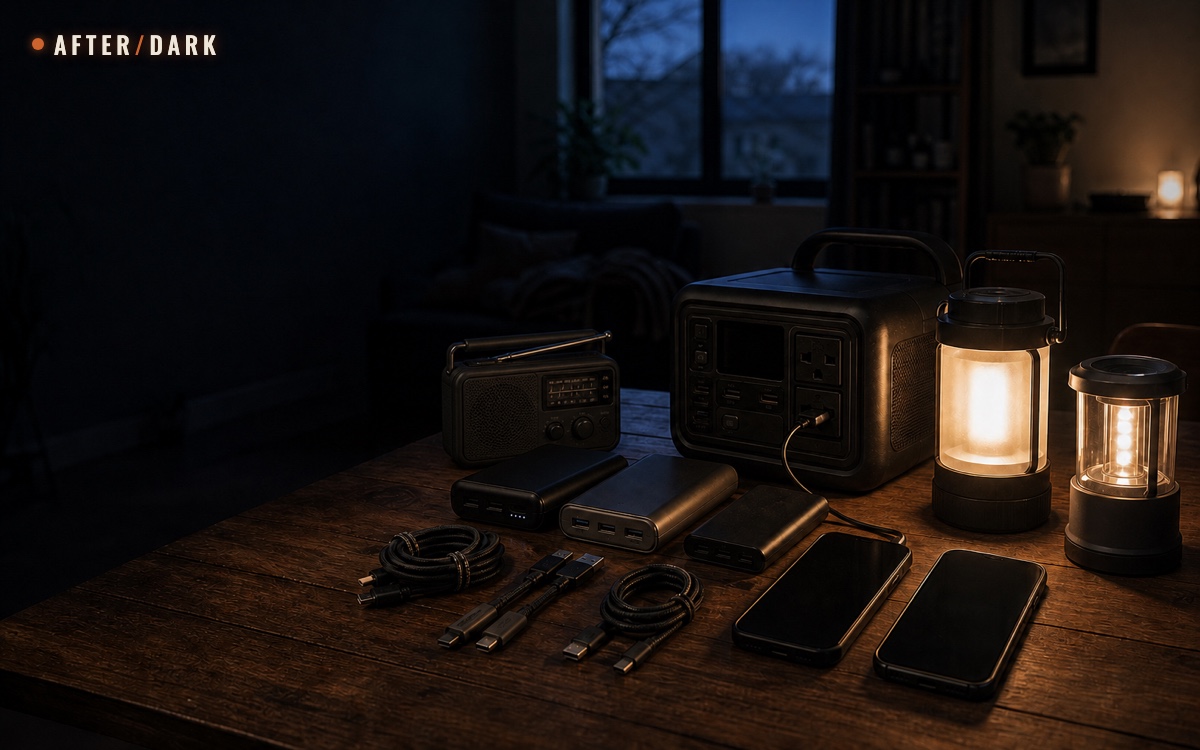
How to Keep Phones, Lights, and Radios Powered During a Long Outage
Build a small-device power system around measured demand, compatible charging chains, distributed lighting, and a written no-outlet test.
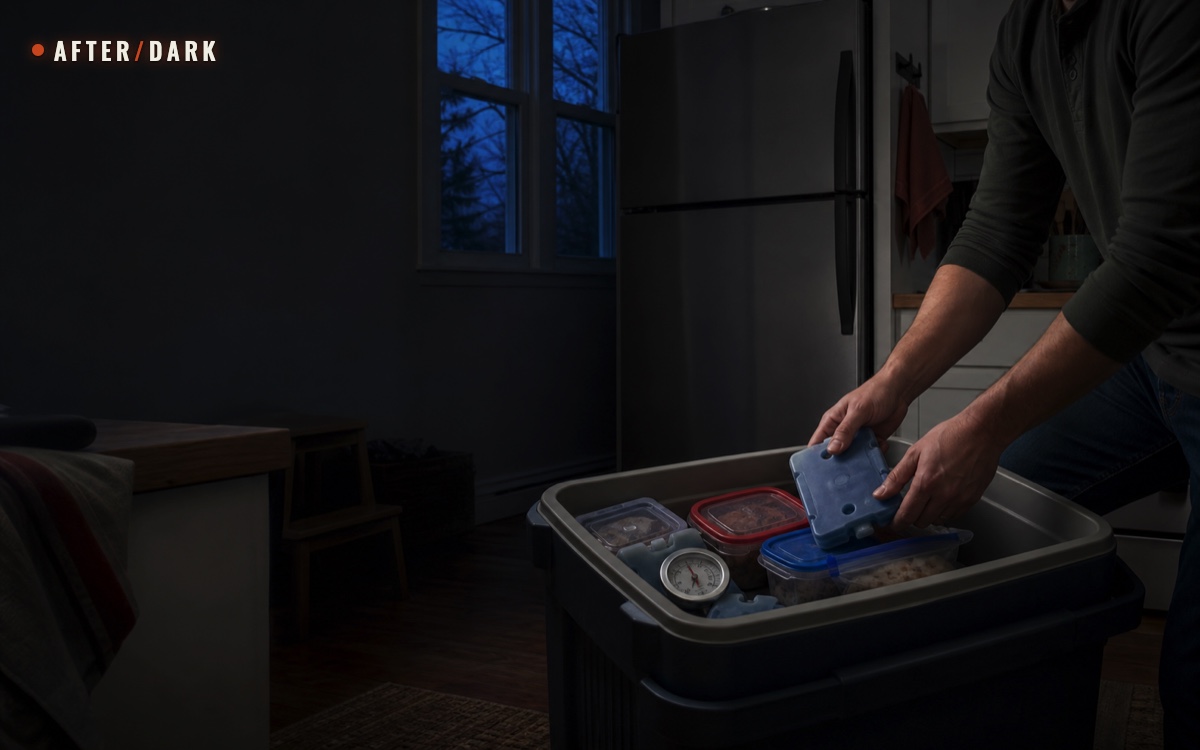
How to Keep Food Cold During a Long Power Outage
Build a measured cold-storage plan for the refrigerator, freezer, and coolers, with transfer triggers and official food-safety limits.
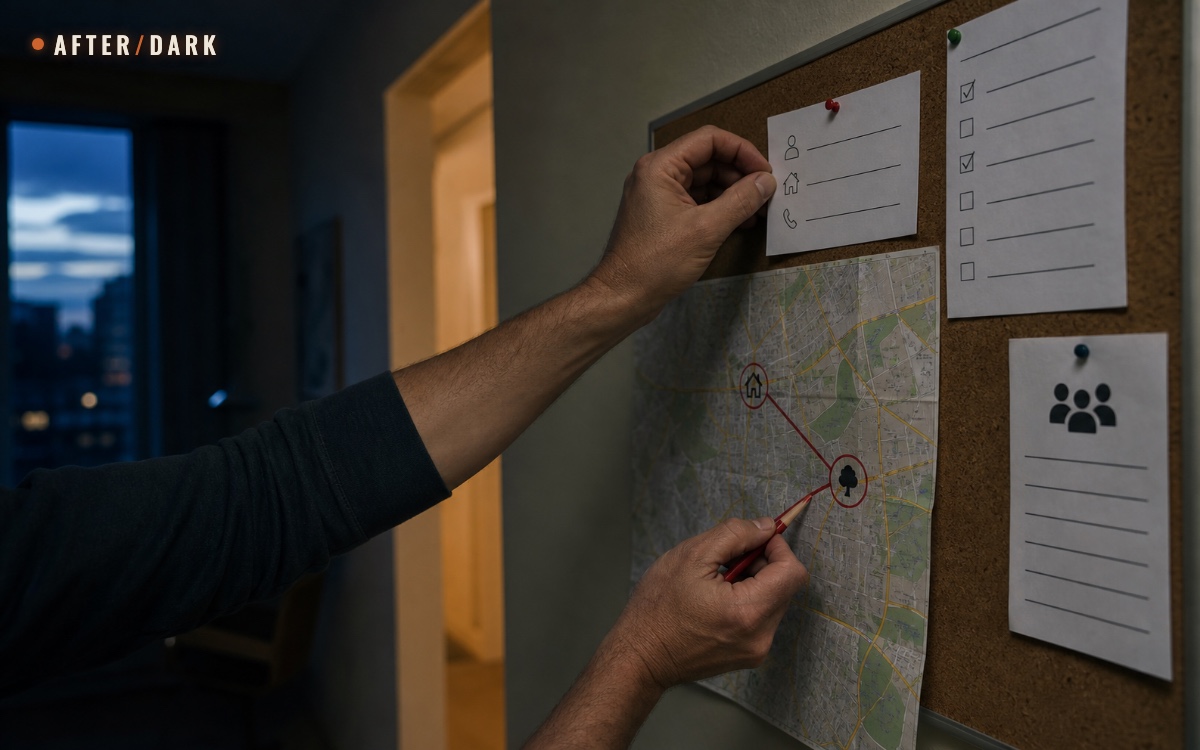
How to Build an Emergency Communication Plan
Create a household contact system that still works when phones, power, internet, or normal meeting routines become unreliable.