How to Stay Warm Without Power During a Long Outage
Keep one room workable during a cold-weather outage with a tested heat-retention layout, a first-15-minute checklist, and firm safety boundaries.
Short answer
Key takeaways
- Choose and test one warm room before an outage; a smaller managed zone is easier to organize than an entire home.
- Retain existing heat first by closing unused rooms, managing curtains with daylight, and controlling obvious drafts without blocking required ventilation.
- Store dry layers, blankets, sleeping bags, a room thermometer, backup light, and the room setup card together.
- Keep smoke and carbon-monoxide alarms operating and reject any improvised indoor heat source that conflicts with its instructions or local rules.
- Write relocation conditions and a destination before the outage so a falling indoor-temperature trend does not become an improvised decision.
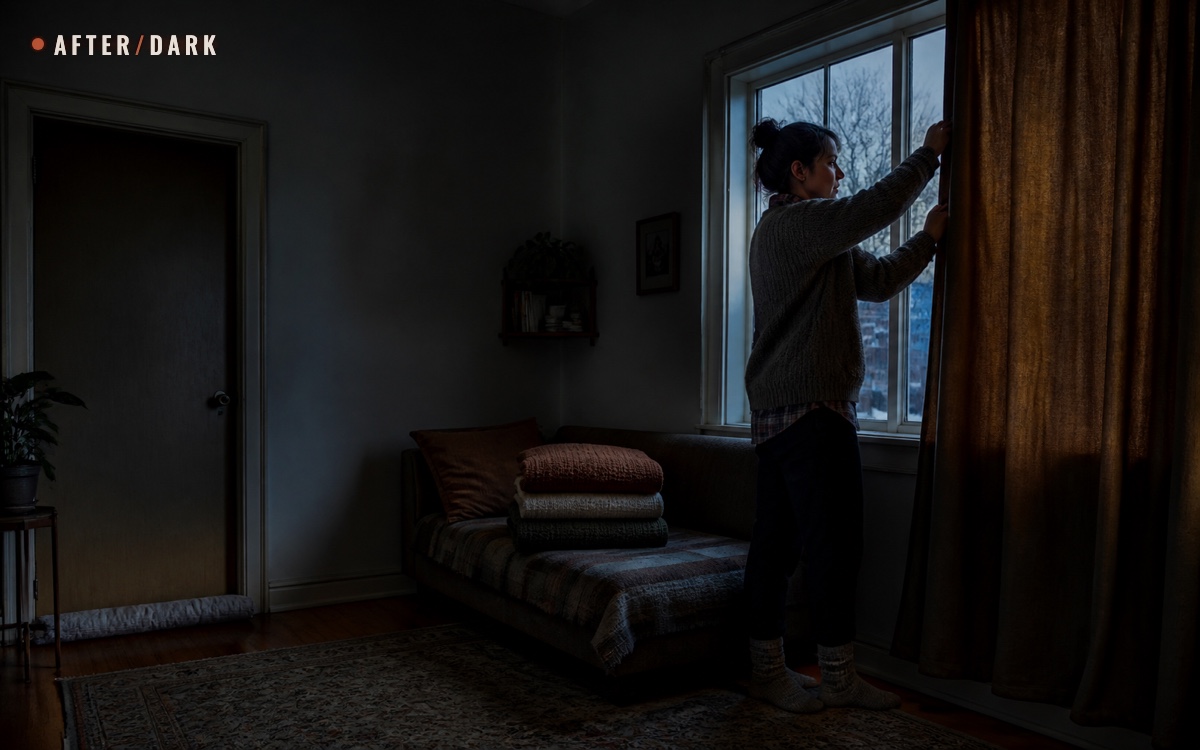
To stay warm without power, reduce the part of the home you must manage. Move normal household activity into one suitable room, close unused rooms, use window coverings to admit daylight and retain heat at the right times, control obvious drafts without blocking ventilation, and keep dry layers and bedding close at hand. Track the room's condition and the outage status, keep alarms working, and use a written relocation plan before the home becomes difficult to leave.
This guide builds a passive heat-retention system. It does not design, install, select, or modify a heating appliance, fireplace, generator, electrical circuit, chimney, flue, or fuel system. Existing equipment must be approved for its exact use and operated according to its instructions, local requirements, and current official guidance.
The goal is not to make a cold home feel normal indefinitely. It is to preserve a workable household zone, reduce avoidable heat loss, and make the next stay-or-leave decision with real information instead of guesswork.
Choose One Warm Room Before the Power Fails
A warm room is an ordinary room assigned a temporary job: concentrate the household, bedding, information, and essential routines in a smaller managed zone. It is not an airtight chamber, a guarantee of safe temperature, or a replacement for an official warming location.
Start with two or three candidate rooms. Evaluate them with the actual household present rather than selecting the smallest room on a floor plan.
Warm-room gate: every required line must pass before the room becomes the primary choice.
| Gate | Pass | Needs work | Reject for now |
|---|---|---|---|
| Access | Every expected occupant can enter, use the room, and leave without assistance beyond the household plan | One movable item needs a marked storage position | Stairs, narrow access, or fixed furniture exclude an occupant or required support item |
| Boundary | Doors and window coverings can reduce connection to unused spaces | A curtain, door sweep, or removable draft blocker must be staged | The room cannot be separated from a large open area without blocking a route or vent |
| Capacity | Seating and sleeping positions fit while the door swing and exit route remain clear | The room works after a written conversion step | Bedding, furniture, or supplies must occupy the exit route |
| Daylight | Useful daytime light reaches the room and coverings can be adjusted | A backup task light must cover a dark work area | Essential movement depends entirely on fixed electric lighting |
| Monitoring | A room thermometer, backup information method, smoke alarm, and carbon-monoxide alarm are available as required for the home | One item exists but has not been placed or tested | The plan disables, covers, ignores, or moves required alarms incorrectly |
| Indoor environment | The room is dry, maintained, and usable under normal conditions | A known maintenance task has an owner and deadline | Moisture, damage, appliance condition, or another building issue makes the room unsuitable |
| Relocation | The household can carry the room's essential module to a usable exit | The module must be divided between two assigned carriers | The room setup depends on furniture or storage that blocks departure |
If the preferred room is already the household's shelter-in-place room, reuse its route and zone plan. Do not assume it passes the warm-room gate simply because it works for another task. A basement may conserve heat differently but fail household access; a bedroom may hold bedding but have poor communication reception; a living room may be accessible but too open to manage.
Write a one-line role on the room card:
PRIMARY WARM ROOM / CLOSE UNUSED ROOMS / KEEP EXIT ROUTE CLEAR / MOVE WHEN RELOCATION CONDITIONS ARE MET
Then name a second room. The first choice may be unavailable because of a building problem, official instruction, or a route failure. A backup room prevents the household from treating one location as mandatory.
Build a Warm-Room Kit Around Functions
Do not turn the room into another warehouse. Keep a small operating layer in one tote, closet section, or marked shelf and leave the deeper household reserve in its organized locations.
The CDC emergency power checklist includes warm clothing, blankets, sleeping bags, emergency blankets, backup lighting, batteries, radios, power banks, and battery-backed alarms. Translate those categories into items the household already understands and can use correctly.
One room kit should start the system; it does not need to contain every reserve.
| Function | Room-kit contents | Completion test |
|---|---|---|
| Personal insulation | Complete dry clothing layers assigned by person, plus spare dry socks and normal indoor footwear | Each person can identify and put on the assigned layers without opening the deep reserve |
| Rest | Tested blankets, sleeping bags, mats, and pillows appropriate to the household's normal use | Every occupant has a defined place and the bedding does not cross the route |
| Draft control | Removable door draft blocker, correctly sized window coverings, and non-damaging temporary materials already approved for the surfaces | Items can be installed and removed without covering a vent, alarm, appliance, or exit |
| Information | Printed room card, household contacts, utility information, local information sources, pencil, and condition log | One person can record an update without using the internet |
| Light and power | Battery task light, charged power bank, correct cables, and radio from the household power plan | The complete chain works in the room with fixed lighting off |
| Monitoring | Room thermometer and the household's tested alarm arrangement | Readings are visible and no alarm is moved, blocked, silenced, or used outside its instructions |
| Departure | Portable document and immediate-supply module already assigned in the evacuation plan | Assigned carriers can move it through the actual route without rearranging the room |
Label each container by function rather than with a vague word such as “winter.” A person joining the room after dark should be able to find DRY LAYERS, BEDDING, ROOM CARD, and DEPARTURE MODULE without unpacking unrelated supplies.
Do not count an item until it has passed its real use test. A sleeping bag stored in factory packaging may not fit the intended user or floor position. A thick curtain may interfere with a radiator, vent, or required opening. A power bank may be charged but lack the correct cable. Test the chain, not the shopping list.
Reduce Heat Loss in the Right Order
Passive measures preserve heat already inside the building; they do not create unlimited heat. Apply them in an order that protects routes and required ventilation.
1. Complete permanent weatherization before the outage
The best time to fix a building leak is while there is power, daylight, normal access, and time to choose appropriate materials. The U.S. Department of Energy identifies caulking for stationary gaps and weatherstripping for movable doors and windows as basic air-sealing methods.
Add obvious drafts to the whole-home readiness audit. Use materials intended for the exact surface and location, follow product directions, and use a qualified local professional for work involving the building envelope, wiring, fuel-burning equipment, chimneys, flues, vents, or unfamiliar damage.
Do not plan outage-time construction. A blackout is the wrong moment to dismantle trim, apply unfamiliar foam, climb into an attic, or alter an appliance opening.
2. Reduce the active footprint
Close doors to rooms the household is not using when doing so is compatible with the building and its operating equipment. Move chairs, bedding, and the room kit into the selected warm room while keeping the exit route open.
The point is operational: fewer occupied rooms mean fewer places to light, monitor, organize, and repeatedly enter. It also keeps supplies and information where the household is already spending time.
The UK Chief Medical Officers' national-outage guidance advises gathering the household in one room, reducing drafts under doors, closing unused rooms, and using several clothing layers and blankets. Use those actions only where they do not conflict with current local instructions, ventilation needs, or equipment directions.
3. Use the sun and window coverings as a schedule
Window coverings have two different jobs. Available sunlight may help during the day; the same glass area can lose heat after dark. The EPA recommends opening drapes and shades during cold daytime conditions to admit available warmth and closing them at night to help retain heat.
Write the action into the room schedule:
DAYLIGHT / CHECK WEATHER AND WINDOW EXPOSURE / OPEN USEFUL COVERINGS
DUSK / CLOSE COVERINGS / CONFIRM EXIT AND VENTS REMAIN CLEAR
Hot-weather window operation uses the opposite heat-flow goal and a different decision rule. Use the passive home cooling plan to compare indoor and shaded outdoor conditions before changing openings during a warm-weather outage.
Do not tape over a window needed as an exit, place fabric against an operating appliance, or build a covering that cannot be removed quickly. Keep condensation and damp materials out of the bedding area and inspect the window zone during every room reset.
4. Stop temporary drafts without sealing the room blindly
A removable door draft blocker can reduce an obvious floor-level draft. A correctly installed curtain or temporary interior covering can make an existing window easier to manage. These are reversible controls, not permission to block air movement everywhere.
The EPA notes that closed doors and windows may help maintain indoor temperature but that some activities and conditions still require adequate ventilation. Never cover a combustion-air opening, exhaust path, smoke alarm, carbon-monoxide alarm, appliance clearance, or vent. When the correct ventilation requirement is unclear, follow the equipment instructions and building or local-authority guidance rather than improvising.
Use a First-15-Minute Activation Sequence
“First 15 minutes” is an editorial workflow, not an official safety deadline. Its purpose is to prevent the household from scattering across dark rooms and repeating the same decisions.
- Confirm the scope. Check whether the outage affects only the home, report it to the utility when appropriate, and record the first available official estimate or update.
- Start the information plan. Put phones into the household's low-use mode, switch to the planned radio or official channel, and begin the written outage log.
- Check alarms and the route. Confirm the planned smoke and carbon-monoxide alarms are operating and that the route to the warm room and usable exit is clear.
- Activate the room boundary. Close unused-room doors, move the removable draft blocker into place, and set window coverings for the actual time of day.
- Move the operating layer. Bring the room tote, assigned dry layers, bedding, drinking water working container, and departure module into their marked zones.
- Record a baseline. Note the time, room temperature, outside conditions if known, utility status, and the next scheduled information check.
- Assign the next decision. Name who will check official updates, who will reset the room, and when the household will review relocation conditions.
Connect device use to the existing outage power budget. The warm-room plan should not create a new unmeasured charging system. It should use the same labeled lights, cables, power banks, radio schedule, and reserve priorities already tested by the household.
Keep fixed lights switched off except for the single indicator the household plan leaves on to show power has returned, if that is appropriate for the home. The Government of Canada advises leaving one light on as a restoration indicator and monitoring official utility and local-authority information.
Arrange the Room for a Full Day, Not One Photograph
A pile of blankets makes a convincing picture but a poor operating room. The layout must support sitting, resting, information checks, water access, and departure without requiring a complete rebuild every few hours.
Divide the room into four zones:
Warm-room layout: protect the route first, then fit the household around it.
| Zone | Purpose | Keep there | Keep out |
|---|---|---|---|
| Clear route | Entry, movement, alarm response, and departure | Normal footwear position and portable-module pickup point | Bedding, charging cables, chairs, supply boxes, and draft materials |
| Rest | Seating and sleeping positions | Assigned mats, blankets, sleeping bags, and pillows | Wet clothing, drink containers that can spill, and deep storage |
| Information and light | Updates, records, task lighting, and charging | Room card, log, thermometer, radio, light, power bank, cables | Loose packaging and unrelated electronics |
| Daily supplies | Current-use water and food from the household plan | One stable working layer the intended user can handle | The entire reserve and any container that narrows the route |
Give each person a specific place for outer layers and dry spare clothing. Keep damp items out of bedding and off equipment. Use existing furniture only when it is stable and does not require a person to climb, reach over another occupant, or move through the route in darkness.
Set a simple daily rhythm:
- Morning: check the route, alarms, room condition, official information, and available daylight.
- Daylight period: adjust useful window coverings, complete necessary household tasks, and recharge only through already approved methods.
- Before dusk: reset bedding, close the appropriate coverings, stage lights, and bring the departure module back to its marked position.
- Evening: reduce unnecessary device use, record the indoor trend and official update, and make the scheduled stay-or-relocate decision.
- Before rest: clear every cable and object from the route, confirm alarms remain unobstructed, and place one reachable battery light at the room exit.
The schedule is more durable than a single temperature tip. It tells the household what must be restored after children play, a pet moves bedding, someone opens another room, or a supply container is returned to storage.
Track Conditions Instead of Relying on Memory
One thermometer reading cannot describe what the room is doing. Record a short sequence at consistent planned checkpoints and note what changed between readings.
Condition log: use the same checkpoints to make the room trend visible on paper.
| Time | Room temperature | Utility or official update | Room change | Next decision |
|---|---|---|---|---|
| Outage start | Record baseline | Outage reported; duration unknown | Warm room activated | Review after next official update |
| Planned checkpoint | Record reading | Write the verified update | Curtains changed for dusk | Check relocation conditions |
| Evening review | Record reading | Write the latest estimate | Bedding and route reset | Stay for next interval or leave |
Do not invent precision. Use the same thermometer in the same appropriate location according to its instructions, and record the trend without claiming it represents every corner of the room or every occupant's needs.
The household's decision card should combine several conditions rather than depend on one number:
- an authority instructs the household to leave or use another location;
- a smoke or carbon-monoxide alarm sounds;
- the building, room, or exit route is no longer usable;
- an essential household system cannot operate through the planned outage period;
- the room's recorded condition continues to move outside the household's pre-agreed workable range;
- the approved destination or transport option is available now but may become harder to reach later;
- the utility estimate changes beyond the household's tested supply and room plan.
Government of Canada guidance tells households to prepare to evacuate when the home becomes unsafe and to know routes that do not depend on cellular or internet service. Put the warm-room departure decision inside the existing home evacuation plan, including destination, route, transport, carriers, and the person responsible for the final room check.
Do not wait for the room to fail before discussing the decision. An early move to a verified location can preserve daylight, transport, battery power, and clear routes.
Keep Substitute Heat Inside Firm Safety Boundaries
Passive heat retention can make a room more manageable, but it can also tempt people to add an improvised flame or fuel-burning device when the room continues to cool. The safety boundary must be written before the outage.
Never use a cooking appliance as room heat
The CPSC says never to use gas appliances such as ranges, ovens, or clothes dryers to heat a home. The EPA also says unvented outdoor cooking appliances such as barbecues and camp stoves must not be used indoors.
That rule does not change because a garage door, window, or interior door is open. Do not move outdoor equipment into a house, garage, basement, crawlspace, shed, tented room, or other enclosed area.
Treat every generator as outdoor equipment
Generators do not belong in the warm room or in an attached enclosed space. The CPSC directs users to operate portable generators outdoors, at least 20 feet from the house, with exhaust directed away from the home and other occupied buildings. Follow the model's instructions and local rules, and have any connection to a home's electrical system completed through the approved equipment and a qualified professional.
The warm-room article does not size, connect, fuel, or operate a generator. If safe backup power is already part of the household system, its only role here is to support equipment within the separately tested power plan.
Keep alarms active and obey them
The CPSC recommends battery-operated smoke and carbon-monoxide alarms or alarms with battery backup and advises testing them monthly. Use the placement and maintenance required by current local rules and the alarm manufacturer. The room setup must never cover an alarm, remove its battery for another device, or reduce an alarm to a line on a checklist.
If an alarm sounds, leave and contact the responsible local service from outside. Do not search for the source or re-enter until the responsible authority says it is safe.
Use existing heating equipment only as approved
A permanently installed or portable heating product is not automatically usable during an outage. It may depend on electric controls, powered ventilation, a maintained chimney or flue, a required clearance, a particular room volume, or a legal restriction. Follow the exact product instructions, local code, building rules, and current official advice. If those conditions cannot be confirmed, do not improvise around them.
Keep bedding, clothing, curtains, paper, and other materials outside every required clearance. Do not alter a guard, vent, shutoff, cord, fuel path, or exhaust path. Installation, inspection, repair, and unfamiliar maintenance belong to a qualified local professional, not an outage checklist.
Run a Warm-Room Setup Drill
Test the layout while the home is operating normally. This is a setup drill, not an experiment in prolonged cold exposure and not a reason to disable normal heat or safety systems.
- Start with the room in its everyday condition.
- Announce a fictional power loss and turn off only the room's normal lights for the movement test.
- Retrieve the room kit, bedding, information module, and assigned lights.
- Close unused-room doors and place reversible draft controls without touching vents or equipment.
- Set window coverings for the time of day.
- Put every occupant in the assigned seat or rest position.
- Receive a test radio or printed update and enter it in the log.
- Walk the route from each rest position to the exit using the planned battery light.
- Pack the departure module and move it through the complete route.
- Restore the room to everyday use and record every item that lacked a storage location.
Time the setup, but do not turn the result into a universal standard. Its value is local: the household learns whether the tote is too heavy, the curtain blocks furniture, the bedding consumes the route, the thermometer is unreadable, or the backup room is needed.
Write corrective actions with an owner and a retest date. “Buy later” is not a completed fix.
Maintain the System Through the Cold Season
Review the warm-room plan before the local cold season and after any change to the household, room, window covering, alarm arrangement, heating equipment, communication plan, or departure route.
Seasonal maintenance: record the check, the issue, and the person responsible for the fix.
| Check | What to verify | Record |
|---|---|---|
| Room boundary | Doors, coverings, and removable draft controls fit and remain undamaged | Date, issue, owner |
| Route | Door swing and complete departure path remain clear | Date and drill result |
| Personal layers | Assigned dry layers and bedding still fit the intended users and room layout | Date and replacement need |
| Information | Utility contacts, local channels, destination, and printed household contacts are current | Date and source checked |
| Light and power | Lights, power banks, radio, cables, and battery plan complete their tests | Date and measured result |
| Monitoring | Thermometer works and alarms pass their required test schedule | Date and responsible person |
| Relocation | Destination, route, transport, carriers, and backup room remain available | Date and next review |
Return moved supplies to their marked locations after every drill or short outage. A warm-room system slowly fails when the blanket goes back to another bedroom, the draft blocker becomes a doorstop, the power bank migrates to a work bag, and nobody updates the card.
Zombie Scenario: One Warm Room After Sundown
Fictional scenario
On the third evening of a fictional zombie outbreak, the grid is still down and official radio updates say the surrounding streets will remain closed until morning. The household does not spread blankets across the entire apartment. They activate the room card: unused rooms close, the living-room curtains change from daytime to night position, the removable draft blocker goes under the hall door, and each person brings only the assigned layers and bedding into a marked rest space. One battery light stays beside the clear route; the radio and power bank remain in the information zone. At the evening checkpoint, the household records the room trend and the latest official update. Their relocation card is already beside the departure module, so remaining for the next interval is a deliberate choice—not a promise to stay regardless of conditions.
The fictional pressure changes the atmosphere, not the system. The same room gate, activation order, safety boundaries, condition log, and departure decision apply during an ordinary long winter outage.
Complete the Warm-Room Plan
The plan is ready only when another household member can activate it from the written card.
- Primary and backup rooms pass the access, boundary, capacity, route, monitoring, and relocation gates.
- The room kit contains assigned dry layers, tested bedding, reversible draft controls, information materials, and the operating light-and-power layer.
- Permanent air-sealing work is completed before an outage with appropriate materials or professional support.
- Day and night window-covering actions are written and do not obstruct exits, vents, alarms, or equipment.
- The first-15-minute sequence has named responsibilities and scheduled information checks.
- Seating, rest, information, daily-supply, and clear-route positions work with the actual household inside.
- Smoke and carbon-monoxide alarms remain active, correctly placed, and tested on their required schedule.
- Unsafe substitute-heat boundaries are written plainly.
- The condition log and stay-or-relocate card are printed and stored in the room module.
- Destination, route, transport, carriers, and the departure module pass a complete movement test.
- The household has completed a normal-condition setup drill and fixed every recorded failure.
One workable room is more useful than a house full of scattered blankets and untested equipment. Preserve heat methodically, monitor what the room is actually doing, and keep the departure decision available while it is still easy to act on.
Frequently Asked
What is the best room to use when the heat is off?
Can I use a gas stove or oven to heat the room?
Should curtains stay closed throughout a winter power outage?
How do I use this plan in an apartment?
When should I leave a cold home during an outage?
Sources
- U.S. Consumer Product Safety Commission — Winter Storms Aren't Over; CPSC Warns of Deadly Carbon Monoxide Risks and Fires During Power Outages
- U.S. Consumer Product Safety Commission — Carbon Monoxide Fact Sheet
- U.S. Environmental Protection Agency — Power Outages and Indoor Air Quality
- U.S. Department of Energy — Insulation and Air-Sealing Essentials
- Government of Canada — Power Outages: Get Prepared
- GOV.UK — Keeping Warm or Cool in Extreme Weather During a National Power Outage
- CDC Office of Readiness and Response — Power Sources
Related guides
How to Set Up a Shelter-in-Place Room at Home
Turn one ordinary room into a practical household base for a long disruption without blocking the exit, burying the floor in supplies, or assuming one location fits every emergency.
How to Keep Your Home Cool Without Electricity During a Long Outage
Build a passive cooling routine around shade, indoor and outdoor conditions, room choice, and a tested day-to-night operating card.
How to Keep Phones, Lights, and Radios Powered During a Long Outage
Build a small-device power system around measured demand, compatible charging chains, distributed lighting, and a written no-outlet test.