How to Survive the First Month of a Zombie Apocalypse
The first week got you somewhere to stay. Now make that arrangement last: maintain the things you depend on, reduce daily work and prepare for a failed supply route.
Short answer
Key takeaways
- Use actual experience from the first week to find the task, consumable or piece of equipment limiting the next three weeks.
- Count people's time as well as supplies; a collection taking two people one hour uses two person-hours.
- Protect food, dry essential belongings and maintain carrying equipment before small problems remove something you rely on.
- Choose improvements by the work they save and the resources they consume, including their continuing upkeep.
- Practice a handover and a supply fallback while the normal arrangement is still available.
Fictional preparedness exercise: you have made it through the first week of a zombie outbreak. You have somewhere to stay and access to some essentials, but ordinary services remain unreliable. Now the everyday details start to matter: the cart wheel that needs attention, the drying space that never empties, and the person who knows how every task works.
This guide concentrates on days 8–30. If you are still finding somewhere for tonight, start with the first 24 hours. If your next meals and water collection are unresolved, use the first-week plan. Here, the task is to make the arrangement you have easier to maintain through the following weeks. The dates organize the planning; they do not predict how a fictional outbreak unfolds.
Use the first week as evidence
Walk through one ordinary day at your current base. Look at what happened, including the awkward parts people worked around. Did the food count match what was eaten? Did collecting water displace another essential job? Is bedding still damp when someone needs it again? Which task stopped when one person went out?
Choose the problem that most limits the next few days. Describe it as something you can change: “the only collection bag has a failing strap,” or “two people spend the same morning waiting at different supply points.” That gives you a repair or coordination task. “We need to be more prepared” does not.
Also confirm the arrangement behind the address. How long may you stay? Which storage, cooking and washing facilities can you use? If permission ends soon, resolve that deadline before spending your remaining materials on permanent improvements. Assess a location by its continuing usefulness, not by the effort already spent setting it up. The shelter comparison helps evaluate a specific alternative.
If you still have no personal kit
Start with access to what is already functioning. With a host or site operator, establish which meals, water, toilet, sleeping space and shared items are available, then ask when those arrangements will be reviewed. If you have no phone, have that conversation in person; ask for help contacting a named alternative if the current stay cannot continue.
Learn one complete routine you can perform with permission and the equipment available there: recording supplies, clearing the meal space or returning shared items to their places. Ask someone to show you the task before taking it over. You can help maintain a base without owning its equipment, and receiving essential assistance does not depend on proving your usefulness.
For the next gap, ask for a specific item or arrangement: use of a suitable container, a place to dry clothing, or an agreed share of a collection. Keep what you can access distinct from what you own. If you cannot write anything down, repeat the next arrangement together so the location, person and time are clear.
Count the supplies that quietly keep everything working
Food and water are visible reserves. Other supplies disappear while making those reserves usable: soap, cleaning materials, waste liners, cooking fuel and batteries. Include the items your actual setup consumes, along with the container lids, charging leads or replacement parts it cannot operate without.
Use a short record for each important consumable: usable amount, observed use, next opportunity to replace it, and the action if that opportunity fails. Count what is physically available. Put an expected delivery on a separate line until it arrives.
Suppose you have 18 liners for ordinary household rubbish and have used six during the last four days. At that observed rate, the remaining stock represents about 12 days: 18 ÷ (6 ÷ 4) = 12. If the next confirmed supply is 15 days away, you need another arrangement. This is an inventory example, not a prescribed waste-handling rate. Recalculate if the number of people or the waste system changes.
For food, compare the meals remaining with the cooking water, fuel and cleanup they require. If the cooking method becomes unavailable, identify which stock is still usable and what preparation resource is missing. The 30-day food and water guide covers the quantity calculation; the month's operating record should show whether those meals remain practical.
Water also needs suitable storage throughout repeated refills. CDC recommends food-grade containers, protected storage and a clean method of dispensing. Check the lid and how water is poured out. A leaking cap or a container with an unsuitable previous use needs resolving before it becomes the routine collection vessel.
If you use a collection toilet, include its consumables and protected waste-storage capacity in the same review. King County's guidance connects collection with secure storage and an accepted disposal method. Local disposal instructions apply. The emergency toilet guide covers complete arrangements; here, check whether yours can continue through the next collection interval.
Measure the work, not just the stock
A reserve can look adequate while the routine needed to use it consumes nearly every available hour. Track a representative day from leaving for a task to putting everything away afterward. Include waiting, carrying, cleaning and returning borrowed equipment.
Consider this invented workload for a small household:
- Water collection: three trips taking 40 minutes each — 120 minutes.
- Meal preparation and cleanup — 60 minutes.
- Clothing, waste and basic cleaning — 45 minutes.
- Information checks and supply records — 15 minutes.
That is 240 minutes, or four hours of work, before repairs, childcare or another unexpected task. These figures illustrate the calculation; they are not expected times for every household. If two people must make every water trip together, collection uses four person-hours rather than two, increasing the total to six person-hours.
Next, mark when the work must happen. A pickup window and a shared cooking slot can collide even when their total duration looks manageable. Someone looking after a child or helping another person cannot be counted as freely available for every outside task.
For one person, arrange essential jobs in a sequence that leaves time for meals, rest and returning before a route becomes impractical. For a pair, decide which tasks truly need both people. In a larger household, assign jobs by availability and ability rather than dividing the number of task names equally.
Use the record to find a worthwhile improvement. Perhaps a suitable handcart reduces trips along a usable route; a closer permitted water point removes a long walk; or coordinating a collection eliminates duplicated waiting. Test the change with a manageable load or limited trial. If the route has steps, the cart is hard to control or its safe capacity is insufficient, it has not solved the original task.
Maintain what the household already depends on
Keep stored food usable
Choose the next meals from sound packages and their storage instructions. Keep the instructions with the food, especially after opening or repacking. A package that requires refrigeration after opening needs a meal or storage plan that can meet that requirement.
Without dependable cold storage, open a quantity the people eating can finish. FDA's storage guidance limits unrefrigerated time for perishable foods to two hours, or one hour above 32°C / 90°F. Apply that to food requiring refrigeration, not every dry ingredient. Do not plan tomorrow's meal around perishable leftovers kept overnight at room temperature.
Inspect dry-food packages and nearby shelves during normal use. Pantry pests can reach unopened thin packaging. Keep suitable dry foods in tightly closing food-storage containers, clear spills, and discard infested food while checking nearby stock. Subtract discarded quantities from the usable count immediately. For packaging, labels and rotation, follow the food-storage guide.
Finish the drying job
Washing creates another task: drying the item before it is needed or stored. Plan a manageable batch around the water, soap and drying space available. Follow the garment's care instructions and keep another usable set of essential clothing while the first dries. Do not wash all the bedding at once if there is nowhere to finish drying it.
Keep damp belongings separate from dry sleeping items and closed supply storage. Where conditions allow, use a sheltered drying place with air movement. If condensation collects indoors, EPA recommends drying the wet surface and reducing the moisture source, with increased ventilation where practical. Report persistent leaks to the person responsible for the building. A cupboard that repeatedly gets wet is a storage-location problem as well as a cleaning task.
Inspect carrying equipment before the next collection
Look over bags, footwear, container handles and any handcart after use. Find the loose fastening, worn strap, damaged lid or rubbing wheel while the item is empty and there is time to arrange a remedy. Keep ordinary maintenance within the product instructions and the tools and skills you actually have.
For a pack, remove loose debris and food scraps, inspect its straps and closures, and follow its cleaning directions. REI's care guidance emphasizes manufacturer instructions and keeping zippers clean. Allow it to dry before storage. A known compatible replacement buckle or shoelace is more useful than a pile of miscellaneous parts that fit nothing you rely on.
If you can complete a simple repair, check the result before assigning the item its normal job. Otherwise, identify a usable replacement or someone who can perform the work. Mark the item unavailable in the meantime. A broken carrier should not remain silently assigned to tomorrow's collection.
Choose improvements that repay their effort
Before starting a project, ask four questions: which recurring problem will it solve, what will it consume now, what upkeep will it need, and when can you use the result? Include permission, materials, tools and the people needed to finish it.
A modest improvement may be enough. Moving sound food to dry accessible storage can prevent repeated handling. A tested carrying arrangement can save trips. Clear labels can let a second person prepare a meal without asking the usual cook about every item.
For a hypothetical comparison, a two-hour reorganization that reliably saves 20 minutes each day recovers its setup time after six days of use. That arithmetic describes time only; material costs and other constraints still matter. Try a small section first, measure the actual result, and expand if it works. Keep some working time available for interruptions instead of filling every day with projects.
Rainwater: decide its use before counting the benefit
A collection system needs rainfall, a suitable catchment, storage, maintenance and a defined use. It may reduce demand on another supply for appropriate non-drinking tasks, but the collected volume should be kept separate from confirmed drinking-water stock.
CDC distinguishes rainwater uses and the controls needed for drinking or other close-contact uses. Its lower-contact examples include watering plants you do not eat and washing items not used for cooking or eating. Use the rainwater collection guide to assess a permitted setup. Do not promise a daily saving before you have observed what the system collects and can use through dry periods.
A garden: separate planting from having a harvest
If you already have crops approaching harvest, protecting and tending them may contribute during this month. Starting from seed is a different project. Check season, sunlight, available water, growing space and the particular crop's maturity information before committing supplies or time.
Days to maturity can be counted from sowing or from transplanting, and growing conditions affect timing. A seed packet is therefore not a promise of meals by day 30. Begin with a small planting you can maintain alongside essential chores; record what is actually harvested. The survival garden guide develops the longer project. Keep the current meal plan supported while it grows.
Share knowledge as well as chores
The Red Cross household-planning approach includes responsibilities, teamwork and practice. For weeks two to four, turn that into a practical handover: someone besides the usual person should be able to complete each essential shared task.
Choose one job and walk through it together. Show where its supplies are, how to use the equipment, what counts as finished and where to record a problem. Then let the second person do it while the usual person is still available. Correct a missing item or unclear step during the trial.
Sharing equipment between households can also reduce work without merging all possessions. Agree who owns it, the permitted use, when it must return and how damage or missing supplies will be reported. If a neighbor lends a cart only after lunch, schedule your collection accordingly. A person who needs it that morning has not gained an available resource.
Keep duties visible and review the work people actually completed. If one person keeps finishing everybody else's leftovers, change the allocation or reduce optional work. Make room for rest and personal time in the schedule. A routine that only succeeds when someone always gives up their break needs revision.
Rehearse one failed arrangement before it happens
Pick a dependency that could interrupt several tasks: the usual water source, a shared charging location, the only suitable carrier, or the person who knows the supply route. Work through its loss without deliberately withholding an essential resource.
Suppose the shared kitchen you use will close for several days. You still have food, but part of it needs cooking. A neighbor offers another kitchen at a particular time; using it would require the same person who normally collects water then. The offer is useful, but the changed schedule and meals need working through together.
Work through the consequences:
- Confirm which cooking facilities, utensils and preparation time the alternative provides, and what you must bring.
- Count meals you can complete during the closure, including ready-to-eat options and ingredients that fit the offered kitchen.
- Arrange the cooking and water collection together. Move a task to another workable time or person, with their agreement.
- Try the replacement arrangement while the original is still available, if circumstances allow. Include travel and cleanup in the trial.
- If the essential work still cannot be completed, identify another supply or accommodation arrangement before the gap begins.
Record the result, including the meal completed and other tasks affected. Keep enough of the existing arrangement intact to respond if the trial fails, and follow any urgent protective instruction rather than delaying it for this exercise.
Review the base before the month ends
Use a short review after a significant change and at an agreed regular interval, such as once a week. That interval is an editorial organizing suggestion, not a guarantee that a setup remains suitable until the next review.
Check whether the current base can support the next period of daily life.
| Part of the arrangement | Evidence it is working | Next action if it is not |
|---|---|---|
| Permission and usable space | The stay is agreed; people and essential activities fit | Resolve the space or deadline with the host, or confirm another place |
| Water and meals | Actual provision covers needs and the next replenishment is workable | Close the specific supply, preparation or access gap |
| Consumables and waste | Required supplies last until replacement; waste has protected storage and an accepted disposal route | Arrange the missing supplies or a different functioning facility |
| Daily workload | Tasks are completed within the people's real availability | Remove duplicated work, arrange help or change the location-dependent task |
| Equipment and belongings | Important items are dry, usable and available when needed | Complete suitable maintenance, arrange a repair or replace the failed item |
| Shared knowledge | Another available person can perform essential shared jobs | Practice the missing handover and make instructions accessible |
Choose one next improvement from what the review reveals. If the place still works, maintain it and extend the planning horizon. If a necessary function cannot continue there, assess the alternative using the same questions. By day 30, the useful achievement is a set of arrangements that people can repeat, understand and adapt when something changes.
Zombie Scenario: Tomorrow's Collection Can Still Happen
Fictional scenario
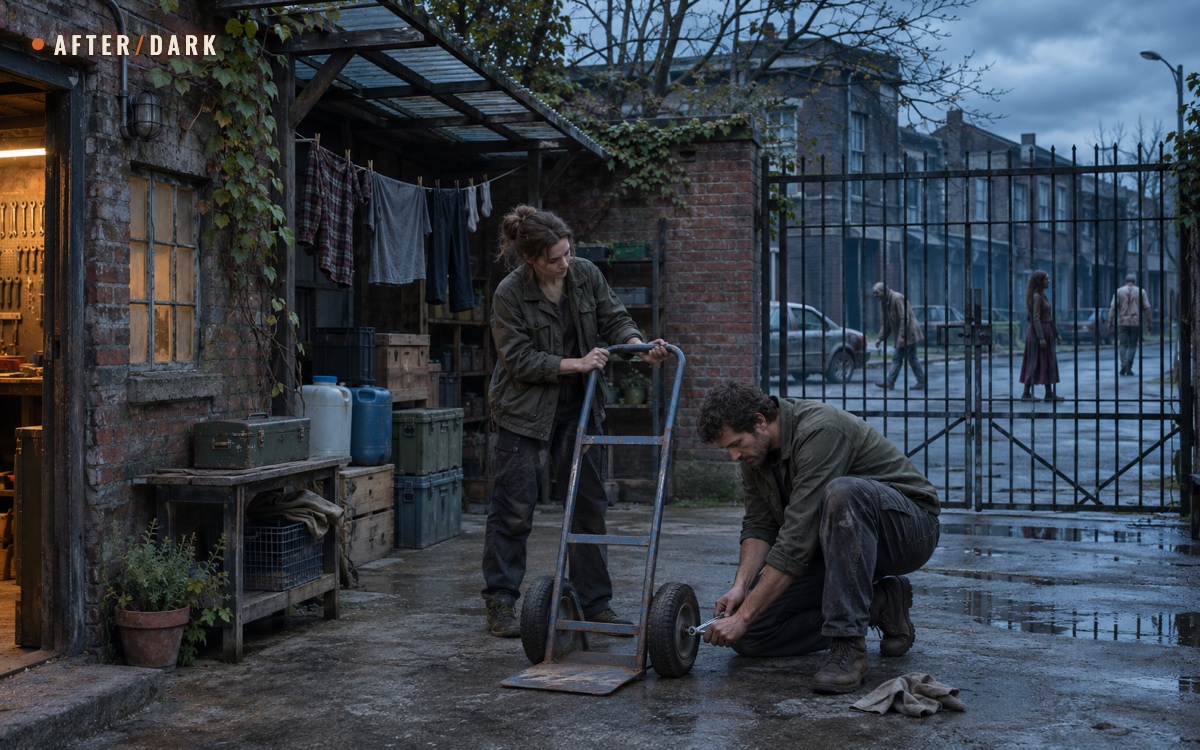
Mara and Owen are staying in a relative's workshop while the outbreak keeps normal services unreliable. By day twelve, they have food on the shelf, but their handcart's wheel needs attention. Without it, they would have to split each regular collection into several smaller trips. They had planned to spend the afternoon building more storage.
They postpone the extra shelving. With the owner's agreement and the correct tools, Owen completes a familiar wheel repair while Mara steadies the empty cart. They check it before returning it to service. Mara then walks Owen through the collection arrangements she has been handling alone.
The next day, Mara needs to help their host elsewhere. Owen can complete the collection with the repaired cart and the instructions they checked together. He returns the equipment to its place and updates the supply record. The household has kept an essential task working without leaving the whole day's arrangement dependent on Mara.
Frequently Asked
How can I plan a month when conditions change every day?
Should I join a larger group during the first month?
What if someone cannot do heavy physical work?
How do we preserve privacy in a shared base?
What if our useful equipment is too heavy to take when we move?
Can this plan work in a rented room or someone else's home?
What if electricity or water returns for only part of the day?
What should I write down if I have only one sheet of paper?
Sources
- CDC — How to Create an Emergency Water Supply
- FDA — Are You Storing Food Safely?
- University of Minnesota Extension — Pantry Pests: Insects Found in Stored Food
- U.S. EPA — A Brief Guide to Mold, Moisture and Your Home
- King County — How to Create an Emergency Toilet
- REI — How to Clean a Backpack
- CDC — Collecting Rainwater and Your Health: An Overview
- University of Maryland Extension — Fall Vegetable Gardening
- American Red Cross — Make a Plan
Related guides

How to Survive the First Week of a Zombie Apocalypse
The first night is over. Turn what you have into a workable week: usable meals, water replenishment, sanitation, shared responsibilities, and a next destination if needed.
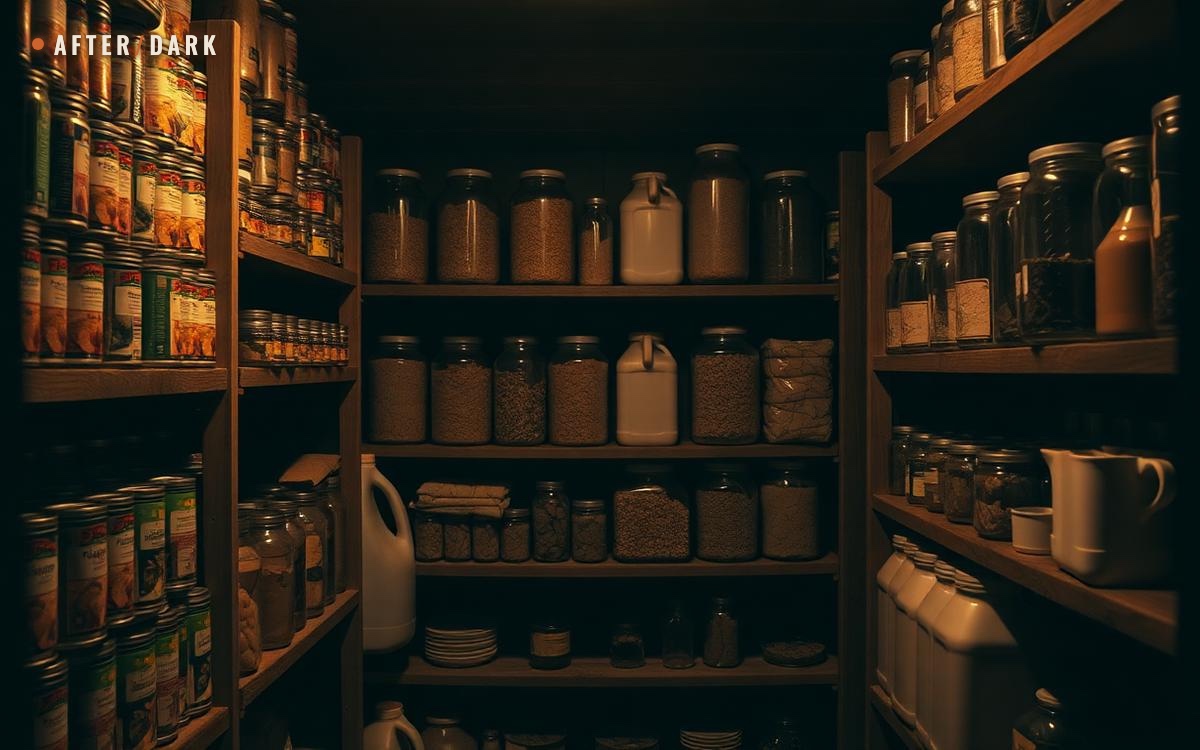
How to Build a 30-Day Food and Water Supply for an Apocalypse
A practical 30-day pantry for apocalypse preparedness, built from person-days, package labels, a no-cook layer, and stored water you can rotate.

Where to Shelter in a Zombie Apocalypse: Comparing Your Options
An upstairs apartment, a farmhouse or a camp in the woods? Compare what each place gives you, what you must supply and whether getting there improves your situation.