Stuck Outdoors Overnight: What to Do Without a Tent
A day walk can become an unplanned night outside. Choose a sheltered position, use what you actually have, and make the next few hours manageable.
Short answer
Key takeaways
- Begin arranging the night while you can still inspect the ground, trees, and materials.
- With no equipment, start with nearby wind protection, your clothing, and a dry ground layer.
- A branch frame needs a substantial covering; build only what you can make stable and finish with available light.
- A roof, clothing, and ground insulation perform different jobs. Check all three before settling.
- Keep your waiting position locatable, and coordinate any necessary move with people arranging help.
You went out to pick mushrooms, photograph wildlife, or walk a short trail. You expected to be back before dark, so there is no tent, tarp, sleeping bag, or stove. Now the return is uncertain and the remaining light is going.
The immediate task is to arrange somewhere you can wait with the resources actually present. This guide covers an unplanned night in temperate woodland, including a delay during a longer journey or communications disruption. It does not assume a camping kit. Snow, severe exposure, and extreme weather require different preparation and help beyond the simple woodland methods here.
Start Here If You Have No Equipment
Use the remaining light to improve one nearby position. Even with only your clothes, you can reduce wind exposure, arrange a better resting surface, and avoid losing more ground while trying to find the way home.
- Stop the uncertain walk. If you cannot identify the return route, do not use the last daylight to test several directions. Note the path, junction, or other recognizable feature where you stopped. Keep it in sight while examining the immediate surroundings.
- Compare the nearby resting places. Look for firm ground, some protection from wind, no water running toward it, and no damaged tree or hanging branch above. Choose a place you can reach without another route-finding problem.
- Close up the clothes you are wearing. Fasten the jacket and use its hood if it has one. Keep the clothing you need on your body.
- Improve the surface beneath you. Gather dry fallen leaves or similar loose material from within sight and make a thick resting layer. Check beneath the surface for dampness. If dry material is scarce, use it for the part of the ground you will actually sit on rather than spreading it thinly over a large area.
- Decide whether a roof is feasible. If you can see the work clearly and suitable branches and covering are close by, use the small shelter method below. If not, settle behind existing wind protection and improve that position with what is immediately available. A half-built frame is not a reason to keep wandering after dark.
This follows the emergency priorities of shelter, conserving resources, and remaining noticeable. With no phone or signalling device, call when you hear people, pause to listen, and wave when someone is within sight. Do not assume a search has started just because you are overdue.
If you do have a working phone or emergency communicator, use it early. Contact the appropriate local emergency service when you need assistance. Give your location or last confirmed point, what happened, group size, available shelter, and the approaching conditions. If you only reach a personal contact, clearly ask them to pass the request on. Once responders have your location, follow their instructions and report any necessary move.
Choose the overnight approach that matches what is actually with you.
| Starting situation | First useful action | Workable next step |
|---|---|---|
| Only worn clothes; no tools or phone | Choose nearby wind protection and improve the ground surface | Build a low natural shelter only if materials and light permit; remain noticeable |
| No equipment and darkness already falling | Stay at a known position and inspect only the immediate space | Use existing cover and reachable material; postpone construction you cannot see |
| Small day bag, raincoat, water, perhaps a phone or light | Send the needed message and put on weather protection | Use the bag or carried pad beneath you; keep essentials accessible |
| Emergency bivy or group shelter and insulating mat | Check the site, then deploy the carried shelter | Arrange ground insulation and ventilation according to the equipment instructions |
| Tarp with its own lines and supports | Choose secure anchors at a suitable site | Pitch a low sloping roof and arrange a separate ground layer |
For the earlier decision about whether you can return, use the guide to being lost in the woods. The rest of this page starts with arranging the wait.
Choose the Ground Before You Build
A useful location has to work beneath you, above you, and along the approach. Check it before spending your light on construction.
- Underfoot: choose stable ground outside low areas and flood-prone gullies. Inspect where water would reach the space you intend to occupy, not only whether the surface happens to be dry now.
- Overhead: avoid dead, cracked, or hanging branches and visibly damaged trees. The tree-hazard guidance applies even when the air is still. Do not pull down a trapped limb to make a site usable.
- Around you: use existing terrain or vegetation to reduce wind without moving onto an exposed edge or beneath unstable material. A freshly fallen tree, raised root plate, or leaning trunk is a poor foundation for improvisation.
- Back toward the route: confirm you can recognize your stopping point. From the place you will sit, consider whether a person coming along the path could notice you.
Compare real alternatives rather than searching for perfection. A slightly uneven but sheltered patch beside your known route may be more useful than an apparently dry opening reached through unfamiliar trees. Conversely, convenience does not make a drainage channel suitable for the night.
If you have already reported your position, site selection becomes a local adjustment within the arrangements for help. Do not relocate to a different part of the forest to find better building materials.
Make the ground layer before the roof
Ground protection is a separate job from overhead cover. A roof can reduce falling rain while leaving you in contact with cold, damp soil. A bed of leaves or other suitable natural material can help separate the resting area from the ground; this principle also applies outside winter.
Remove sharp loose objects from the footprint without scraping away the existing dry litter. Gather the driest loose material available nearby and build up a layer over the area your body will occupy. Sit on it to see how far it compresses. If you immediately press through to the ground, add more where your weight rests. Keep the driest material for the top, rather than mixing it into wet soil.
With little material, make a useful seat first. You can extend it if light and supplies allow. With a carried mat, use that immediately instead of spending time gathering an equivalent from the forest.
Build a Small Shelter From Branches and Leaves
This option needs suitable fallen wood, plenty of covering, workable ground, and enough light to check stability. It does not require you to cut branches to standard lengths. Select pieces that already fit the job. The aim is a low resting space, with just enough room to enter and lie or sit as intended.
Collect fallen material you can handle safely. Leave heavy pieces, standing deadwood, and living branches alone. If the only available parts need cutting, major lifting, or lashings you do not have, choose the existing-cover option instead.
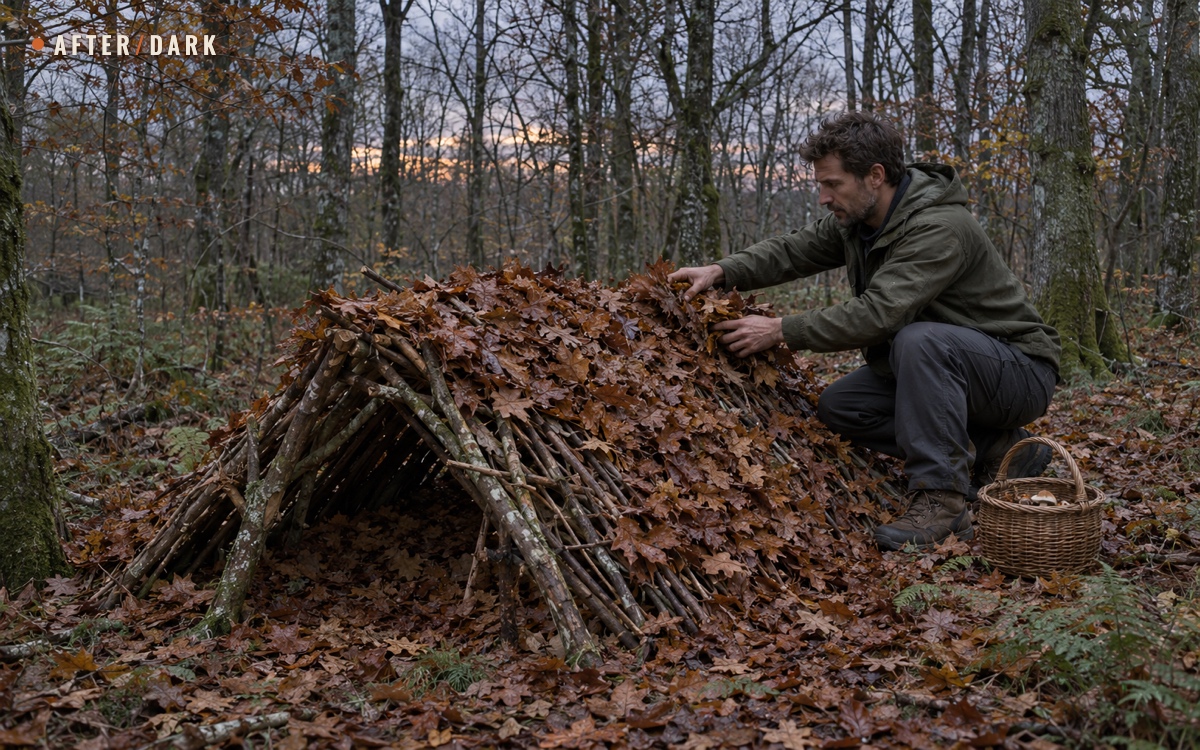
For a low frame, the Scouts' natural-shelter method uses a ridge and forked supports:
- Choose a sound ridge branch longer than your body. Support its front with two forked sticks angled outward; use a shorter pair at the back. Seat the forks securely and wedge the feet firmly into suitable ground.
- Check that the frame stays in place without being held. If the feet slide or forks twist, rearrange them before adding weight. Do not crawl beneath an unstable frame.
- Lean smaller sound branches closely along both sides, creating steep slopes. Leave an entrance and enough room for your body and ground layer.
- Add thin twigs and loose bark to support the covering. Layer leaf litter from the lower edges upward, closing visible gaps.
- Check the structure again as the covering goes on. Scouts recommends around 30 cm (12 inches) of leaf litter for rainy or windy conditions; a sprinkling of leaves is not equivalent. That depth is a construction guide, not a guarantee of a dry night.
Check the result before settling inside
Look at the structure from the entrance and sides. Is any support moving? Has the roof covering opened gaps or slid inward? Can you get in and out without pushing against the frame? Does the usable space still fit your ground layer, or has construction buried it?
Correct a small problem while you can see it. If the frame will not stay stable, stop using it as overhead cover. Keep the ground bedding and the natural wind protection already found; do not remain under a failing roof because of the effort invested in it.
A practical completion point is a stable resting space, coverage over the area you will occupy, and an entrance you can use freely. Once those are achieved, organize the night. Expanding it into a taller shelter or collecting material farther away adds work without necessarily improving your immediate situation.
When darkness or wet material stops construction
If you cannot see enough to inspect supports and footing, stop building. Keep the clear space you have already checked. Gather only material you can identify and reach without leaving that position; do not feel blindly through piles or pull branches from above.
If the forest floor is soaked and there is no dry litter nearby, a pile of wet leaves will not become a dry bed. Choose the least wet stable surface within the suitable area and use existing wind protection. If you have a bag or pad, this is where it becomes especially useful. If you have neither, keep your clothes on and work with the terrain rather than searching deeper into the forest for a missing resource. Tell any reachable helper that your shelter is inadequate.
Use the Equipment You Actually Carried
A day bag may contain only a drink, a raincoat, and a phone. Lay out the plan mentally before unpacking: what will you wear, what goes beneath you, and what must remain dry and reachable?
A day bag and weather layers
Put on available insulating layers and weather protection before settling. Use the hood and close openings against wind. Managing the small details of clothing and shelter matters: an open bag filling with rain or a hood lying open defeats equipment you already carried.
If using a rucksack as a seat, keep its contents protected and move hard or fragile items out of the pressure area. It only covers the ground beneath it, so arrange the rest of your resting surface separately. Keep the raincoat available for its primary job unless you have another way to protect your body.
Take out one needed item at a time and close the bag again. Put the light and whistle where you can reach them from your resting position. Check that a water bottle will not roll away and that the phone can be retrieved without unloading everything in the dark.
A bivy, group shelter, or tarp
Use a carried shelter before deciding to construct one from branches. Open it in the protected position and follow its own deployment instructions. Keep the opening and ventilation clear, with your face uncovered. Put the insulating mat or arranged ground layer beneath the occupied area.
Different products do different jobs. A purpose-built bivy, group shelter, and tarp have different setup and space requirements. Check that everyone fits, that the entrance works, and that your arrangement does not block the vents. Keep an eye on condensation as well as rain entering from outside.
With a tarp and the lines and supports to pitch it, make a low, sloping roof with the more closed side toward the wind. Secure the anchors and check where the lower edges shed water. Keep your resting area inside those edges and outside any runoff path. A roof without a groundsheet or mat still leaves the ground problem to solve.
If the lines or supports are missing, do not plan around a fully pitched tarp. Use the material only in a stable arrangement appropriate to its instructions, keeping the face and exit clear. You may have less coverage than its full dimensions suggest.
Make the Night Work Without a Fire
Arrange the resting place so it remains useful even if you never light anything. Protect clothing and bedding from further wetting, keep essentials close, and stop unnecessary trips away from the position. A first attempt at friction fire should not consume the remaining light needed for these tasks.
If you already have the materials, skills, suitable conditions, and means to extinguish a fire, the fire-making guide covers that separate decision. A leaf shelter and its bedding are combustible: keep flames and cooking outside and away from the shelter. Fire restrictions and local conditions may rule a fire out entirely.
Keep a way to attract attention
A natural shelter blends into the surroundings. Keep a view toward the nearby route, and place any spare bright item where it can be noticed without removing clothing you need. An available whistle or light should be reachable from inside.
Use repeated signals with pauses to listen. For example, AdventureSmart recommends groups of three whistle blasts; follow local rescue instructions when given. Without a whistle, call when you hear people and listen for a response. Stay at the locatable position rather than chasing a distant noise through the trees.
With a phone, preserve enough power for communication: dim the screen and stop unnecessary browsing or recording. Keep it protected from rain. If help has been contacted, agree how you will receive the next message before switching off reception or the device. A phone that cannot receive a callback changes the arrangement.
Account for food, water, and the next necessary task
Check the drinking water and food you actually have before putting things away. Keep drinking water closed and accessible. For food, wrappers, and scented items, follow the area's wildlife-storage requirements: in bear country, a backpack or shelter is not secure food storage. Use the required container or facility if available, and tell a ranger or dispatcher if you are stranded without it. Do not scatter scraps or improvise a food-storage excursion in the dark.
Before getting up for any necessary task, identify the destination and the way back to your resting place; use available light for footing.
If there is no water, include that in the request for help. The guide to finding and collecting water covers options with and without a container. If you collect water from a natural source, appropriate treatment is still necessary; use the water-treatment guide for the method your resources allow. Do not turn a search for water after dark into an unplanned trip to an unknown stream.
Reassess When Something Changes
Check your position when rain starts, the wind shifts, the roof sags, or water begins reaching the bedding. Deal with the actual problem: secure a loose cover if you can do so safely, move belongings away from a drip, or change the resting position within the checked area. If the site becomes dangerous, leave the hazard and inform responders of the new location as soon as possible.
Some changes are larger than a shelter adjustment. If conditions exceed what your clothes and cover can handle, seek assistance through any available means; do not treat this guide as a promise that remaining there until dawn is always viable. Without communications, maintain visible or audible signals and use the nearest clearly safer position you can identify. Avoid choosing a new route on the assumption that walking must eventually improve things.
In the morning, check the plan before packing
Daylight gives you more information. It does not automatically establish the way home. The Forest Service's route-confidence guidance remains relevant: uncertain direction is a reason to pause, not an invitation to explore several alternatives.
- Check any instructions or agreed contact time with people arranging help. Update them before changing a reported location when possible.
- Look for a recognizable route connection from your position: a sign, junction, or landmark that you can relate to the journey you actually made.
- Check whether that connection and the onward route are usable in the current conditions. A familiar path can still be obstructed.
- Account for the remaining journey, available water and light, and everyone in the group. Pack only once the next action is clear.
If no reliable route has emerged, improve the waiting position and signalling in the available daylight. If a return is now justified, take your belongings, follow the confirmed route, and tell the relevant contacts when you are out. That final update closes the help arrangement instead of leaving others looking for someone who has already returned.
Zombie Scenario: The Last Light Beside the Footpath
Fictional scenario
During a prolonged communications outage in a zombie-apocalypse setting, a traveler follows a woodland route toward a known meeting point. An uncertain junction costs him daylight. He has ordinary outdoor clothes and a small day bag, but no tent, tarp, or reliable way to send a message.
Close to the path, he finds dry litter but no forked branches that will hold a stable ridge. He abandons the roof attempt while he can still see, keeps the gathered leaves as ground bedding, and settles in nearby wind protection. His raincoat stays on. The bottle and whistle remain within reach, and a spare bright bag cover marks the position toward the path.
At dawn, the junction is visible again. He checks it against the route information he actually has before deciding whether to move. The night's useful result was a better place to wait without losing the known path; it did not depend on completing an impressive shelter.
Frequently Asked
Is there a temperature above which sleeping outside without a tent is safe?
Can an emergency foil blanket replace a sleeping bag or mat?
Should I take off my only coat and use it as a roof?
What changes if two or more people are stuck outside?
Can I keep walking if I am on a marked trail and have a headlamp?
Does this shelter plan also work in a tropical rainforest?
Should I leave the branch shelter standing when I go?
What small additions would help on the next day walk?
Sources
- National Park Service — Outdoor Emergency Plan
- U.S. Forest Service — If You Get Lost
- National Park Service — Tree Hazards
- National Park Service — Finding and Setting Up a Campsite
- National Park Service — Bear Safety: Storing Food
- AdventureSmart — Winter Shelter: Ground Insulation and Visibility
- Scouts — Survival Shelters
- Scouts — Den Building
- Mountaineering Scotland — Keeping the Cold at Bay
- Mountaineering Scotland — What to Pack in Your Rucksack for Emergencies
- New Zealand Mountain Safety Council — Emergency Shelters
- AdventureSmart — Communication & Signalling
- National Park Service — Two Ways to Purify Water
- National Park Service — Ten Essentials
Related guides
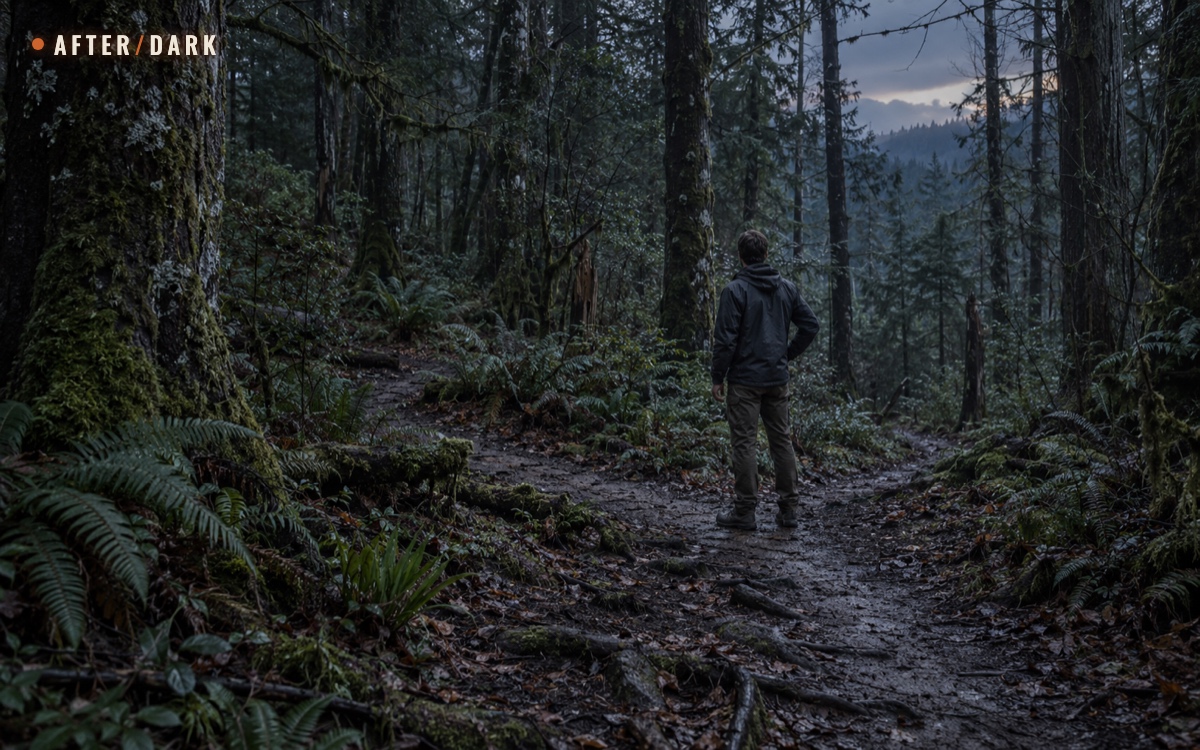
What to Do If You Get Lost in the Woods
A practical plan for losing your way in a forest: recover a known route when you can, and make yourself easier to find when you cannot.
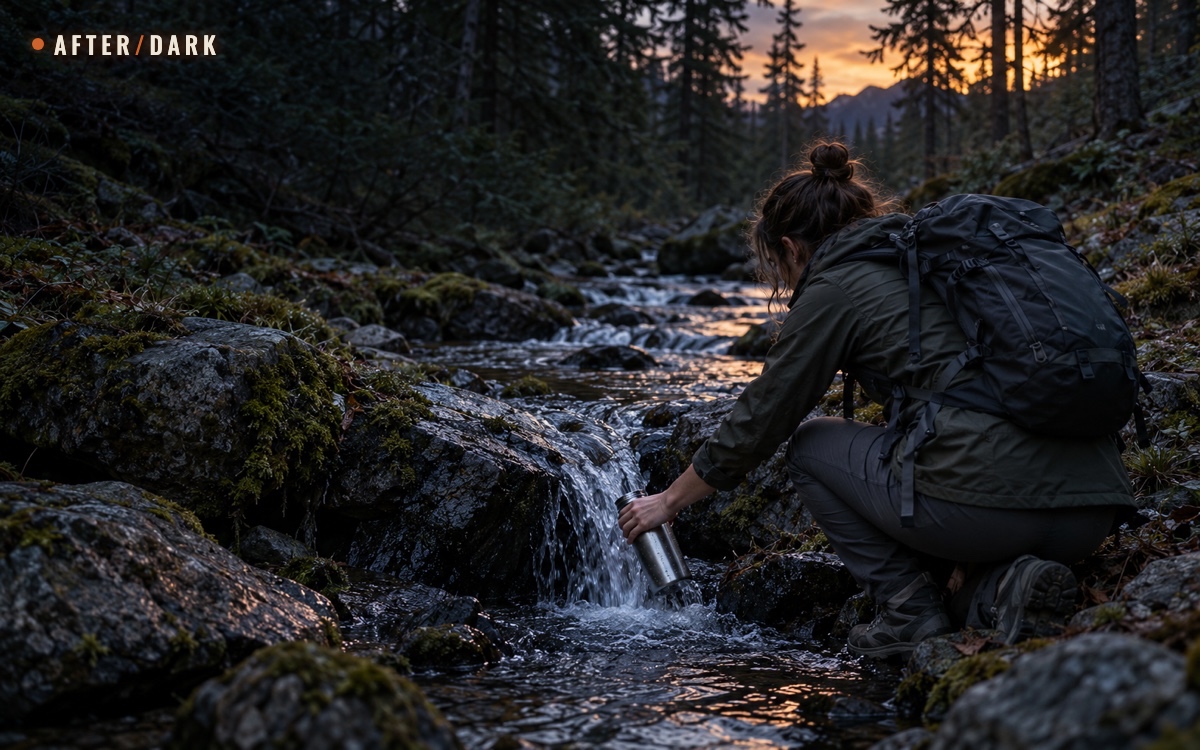
How to Find and Collect Fresh Water in the Wild
Locate reachable water, work with the equipment you actually have, and collect from streams, springs, rock pools, or rainfall.
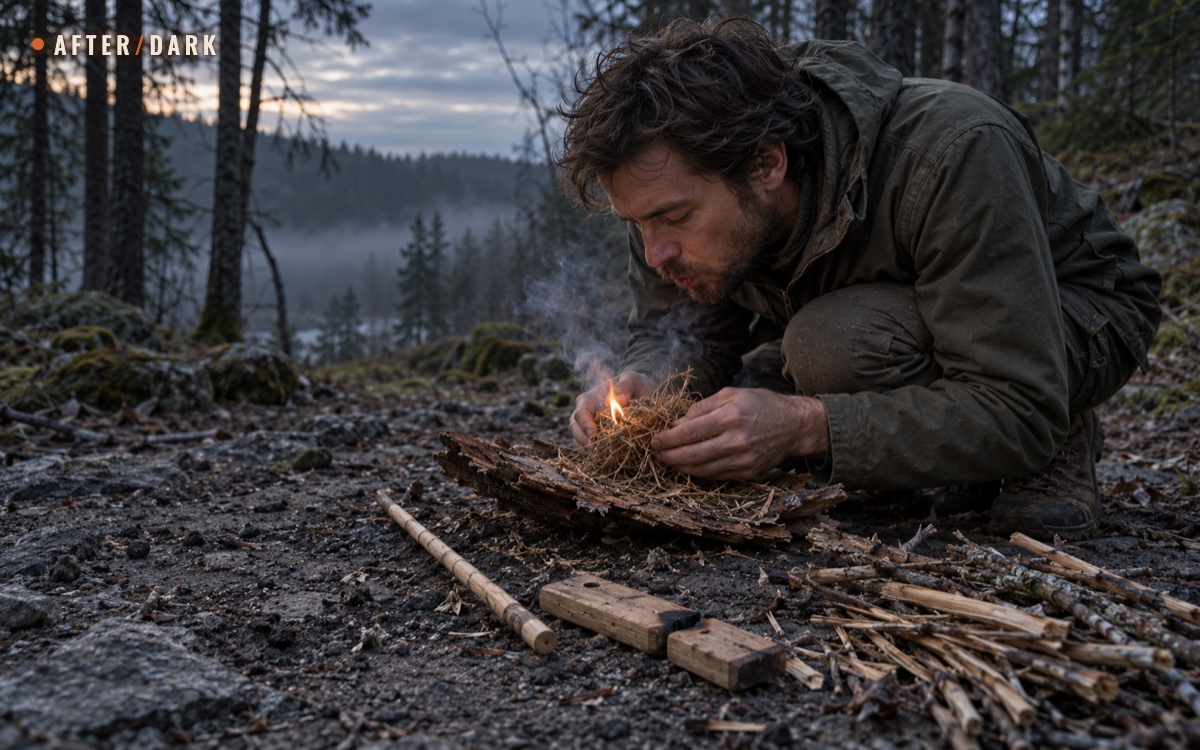
How to Start a Fire Without Matches or a Lighter
A practical route from raw materials to an ember and a small fire, including what changes when you have no tools, usable cord, wet wood or no success.