Portable Power Station vs Generator: Which Backup Power Do You Need?
Choose backup power that can start your appliances, last through the outage, and be replenished. Includes worked energy budgets and a practical buying checklist.
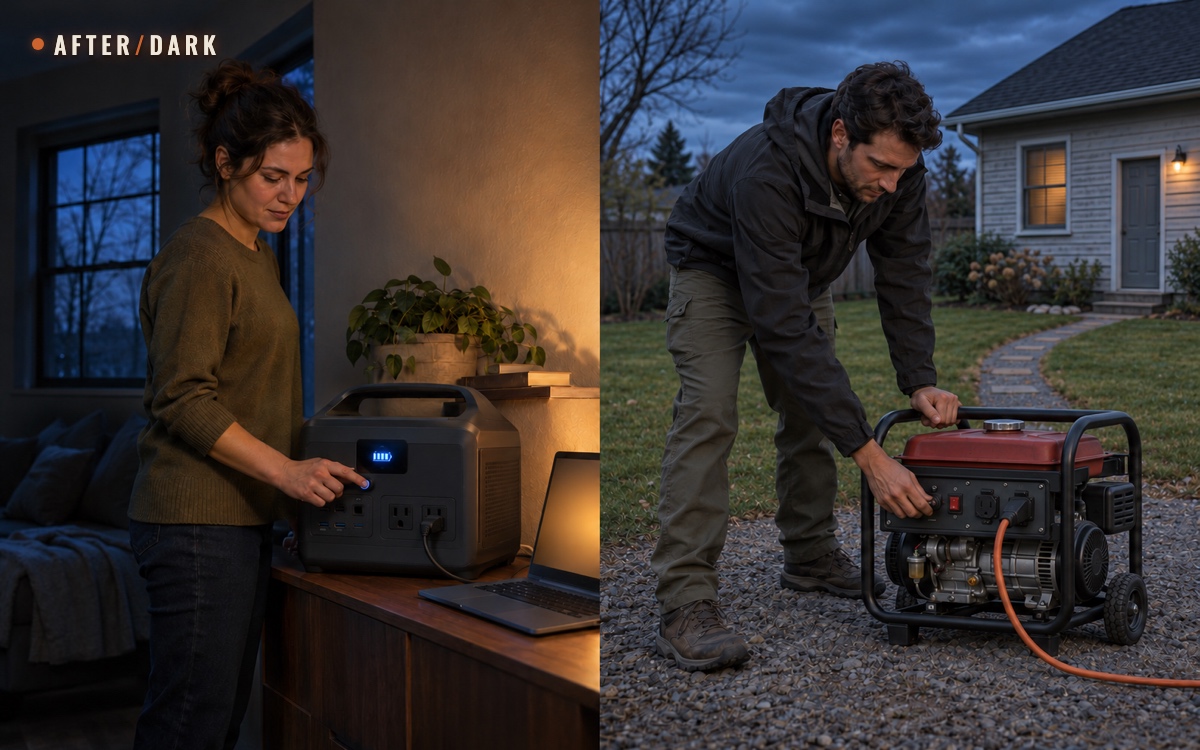
Short answer
Key takeaways
- Choose the operating location before the equipment: a fuel generator requires suitable open outdoor space.
- Watts tell you whether appliances can run; watt-hours help you calculate how long a battery can supply them.
- Check motor starting demand separately from normal running power, including other appliances already connected.
- Compare the same essential loads over the same outage length, including the next recharge or refuel.
- Test the complete setup and its controls before relying on advertised runtime or automatic backup features.
A portable power station and a fuel generator solve different parts of an outage. One gives you a stored reserve of electricity; the other produces electricity while consuming fuel. Either can be useful, but neither becomes a complete backup plan just because its box shows a large number.
The useful comparison is your household's actual work: keep two phones charged, light a room, run a refrigerator, or support several essential appliances through repeated days without mains power. This guide helps you turn that work into requirements before choosing equipment. It covers portable units and direct appliance connections, not electrical installation.
Portable Power Station vs Generator: Start With Your Situation
Choose where the equipment could operate before comparing capacity or price. The EPA's generator placement guidance calls for outdoor operation at least 20 feet, approximately 6.1 metres, from homes and other structures, with exhaust directed away. A balcony, porch, garage, or open window does not provide an acceptable substitute. Check the equipment instructions and applicable local requirements too.
A starting choice for different households; the load and replenishment checks below determine the final size and setup.
| Your situation | Start by considering | What could change the choice |
|---|---|---|
| Apartment without a suitable outdoor generator location | Battery power for selected devices | Too much demand for the available storage or no way to recharge |
| Phones, a radio, and small lights | Power banks or a modest battery station | Required ports, number of charging sessions, and outage length |
| House with suitable open outdoor space and repeated appliance use | A generator, or a battery with a proven recharge plan | Fuel access, noise, maintenance, and actual daily energy demand |
| Refrigerator plus small devices for several days | Compare measured consumption against both options | Compressor startup and the next day's energy supply |
| Quiet overnight power with higher daytime demand | A compatible battery-and-generator combination | The extra cost and work of owning both systems |
| Outage already underway, with neither available | Reduce the immediate tasks and use resources already present | A confirmed, reachable place to charge or stay |
If the power is already out and you have no backup equipment
Write down what needs electricity in the next few hours. Send the essential household update while your phone still has charge, reduce unnecessary screen use, and use a separate light if you already have one. Keep the refrigerator closed while you make a food plan. Choose a meal that needs no heating from what is available; our no-cook meal guide offers combinations to adapt.
Then check an available utility update or household contact. If you need outside charging or somewhere to stay, confirm that the destination has power and is reachable before setting off. Without a working phone, use any existing battery radio, building notice, or agreed household meeting plan available to you. Record the unmet need instead of assuming that a new generator will be obtainable and usable today. The home power outage plan helps organize those immediate decisions.
Understand What the Equipment Actually Does
A portable power station combines a rechargeable battery, controls, and outputs such as USB, DC, and AC sockets. It can supply electricity without burning fuel at the point of use. Its reserve eventually runs down unless you replenish it.
A fuel generator uses an engine to produce electricity. Its running duration depends on fuel, load, servicing, and operating conditions. It brings an outdoor operating task with it, not just an extra appliance to store.
An inverter generator is still a fuel-powered engine. Its electronics condition the output, and models with variable engine speed can reduce fuel consumption and noise at lighter loads. Honda's explanation of inverter operation describes that distinction. “Inverter” does not mean battery-powered or suitable for indoor use.
A solar generator usually means a battery power station with solar charging capability, sometimes sold with panels. Check what the package includes. A panel rating is not stored energy, and a station cannot replenish itself merely because solar appears in its name. Utility guidance on backup systems emphasizes choosing around critical needs, duration, and the ability to recharge or refuel.
Make an Appliance List Before a Shopping List
For each essential task, record the appliance, the connection it uses, its running power, any starting requirement, and the time you need it each day. Separate three groups:
- Keep available: devices whose interruption defeats the plan, such as a refrigerator you are relying on.
- Use in sessions: phone charging, a laptop task, or lighting an occupied room.
- Leave off or replace the task: discretionary appliances and jobs you can complete without electricity.
This prevents sizing backup around every socket in the house. It also exposes missing dependencies: a router may need a separate fibre terminal, and a gas heating system may still need electrical controls or a pump. Ask the equipment supplier when a requirement is unclear.
Do not assume that an appliance with a short daily use is insignificant. A hypothetical 1,500 W heater running for one hour uses 1,500 Wh. A 2,000 W kettle running for six minutes uses 200 Wh, but still needs a source capable of supplying 2,000 W while operating. These are calculation examples, not typical consumption guarantees. If electric cooking dominates the list, decide which meals can use your planned cooking alternative before buying a much larger power source.
Check Power and Energy Separately
Watts, W, describe power at a moment. Watt-hours, Wh, describe energy over time. One kilowatt-hour, kWh, equals 1,000 Wh. A station labeled 1,000 Wh does not necessarily deliver 1,000 W, and a generator labeled 2,000 W does not contain 2,000 Wh.
First, will the appliances start and run?
Add the running demand of devices that may operate together. Compare that total with the source's continuous rated output, the relevant outlet limits, and your appliances' required voltage and frequency. Then check starting demand for motors. Generator sizing guidance distinguishes starting and running loads; the maximum or surge figure is not the continuous rating.
For a hypothetical appliance drawing 100 W while running but 800 W total during startup, with another 100 W already connected, the source must support 200 W normally and 900 W during that start. Do not count the same appliance's running draw twice if its quoted starting figure already includes it. Ask whether a specification means total startup power or additional starting power.
Check how long the source can sustain the required surge. A refrigerator can restart automatically while another appliance is in use, so a plan to “turn it on first” does not settle every later start. If startup information is unavailable, obtain model-specific guidance or a permitted compatibility test before purchase.
Special boost modes also need care. The DELTA 2 manual limits which devices suit its X-Boost feature. Treat an advertised boost number as a feature with conditions, not a replacement for the normal output rating.
Second, how much energy will each day require?
For a steady load, use watts × hours = watt-hours. This is the standard energy-consumption calculation. Count charging sessions using energy taken at the source, including the charger, rather than treating a phone's battery label as the complete cost of a charge.
A refrigerator cycles, so its instantaneous reading does not describe an entire day. Where practical, measure at least a representative 24-hour period with a suitably rated plug-in energy meter used according to its instructions. Annual-label consumption divided by 365 can provide an initial estimate, but room temperature, contents, door opening, and operating behavior can change the result. Keep startup and daily-energy measurements as separate entries.
Two Worked Budgets: Small Devices, Then a Refrigerator
The figures below are illustrative assumptions, not appliance recommendations or a test of a product. Replace them with your own measurements. Energy is counted at the backup source's outputs so the examples do not mix device-battery capacity with delivered energy.
Example 1: communication and evening light
An example daily budget with limited operating hours; it does not include a refrigerator or electric cooking.
| Task | Assumed use | Daily energy |
|---|---|---|
| Two LED lights | 2 × 5 W × 4 hours | 40 Wh |
| Small radio | 3 W × 4 hours | 12 Wh |
| Two phone charging sessions | 12 Wh taken from the source per session | 24 Wh |
| Router and any required local network equipment | 10 W combined × 6 hours | 60 Wh |
| Total | 136 Wh |
Three days require 136 × 3 = 408 Wh, before a reserve for changed use or uncertainty. Run the network equipment only when the connection remains useful; the sample assumes all its necessary local components fit that 10 W total.
Now suppose a candidate station has 1,000 Wh nominal capacity, but the planning estimate is 800 Wh delivered to this load pattern after conversion and the station's own consumption. That is an explicit example assumption, not a universal 80% efficiency rule. The three-day budget fits, leaving 392 Wh against that assumed usable amount. A smaller unit might also fit after testing; the point is to compare delivered energy with the job.
Example 2: add the refrigerator
Suppose your refrigerator's representative measurement is 900 Wh per day. With the same small-device budget, the requirement becomes:
- One day: 900 + 136 = 1,036 Wh.
- Three days: 1,036 × 3 = 3,108 Wh, before reserve.
The same assumed 800 Wh usable supply now falls short of even one day. Dividing 800 by 1,036 and multiplying by 24 gives approximately 18.5 hours at the averaged demand. Actual operation will not drain the battery evenly, and usable output must be checked for this different load pattern.
This is where another battery, dependable recharging, or a suitable generator becomes worth evaluating. It is also where the decision to preserve one refrigerator rather than several appliances can substantially change the purchase. Use the separate food-cooling outage guide for temperature monitoring and the fallback when refrigeration cannot continue; a power estimate alone does not establish food safety.
Plan the Second Day Before Buying the First Day's Power
A full battery or tank is only the starting condition. Write down the target outage length and identify the first point at which energy must be added.
Recharging a battery station
Specify an actual source: a reachable powered location, compatible solar panels at a usable site, or another approved charging arrangement. Record the charging equipment, access, time, and dependencies. “Recharge elsewhere” is incomplete if the station is too heavy to carry there or the available outlet cannot support the charging setting.
For solar, consider sunlight at the actual panel position, shade, season, weather, and permitted deployment space. Solar backup depends on those site conditions. Do not multiply the panel's rated watts by every daylight hour and call the result guaranteed daily energy. Check the station's approved panel combination and input limits, then measure a representative day's replenishment when possible.
Compare what you replenish with what you consume. If a proposed charging session restores only enough usable energy for your small devices, it does not close the refrigerator's much larger daily gap. Include a cloudy-day or unavailable-outlet fallback: fewer powered tasks, more stored energy, or a confirmed change of location.
Refueling a generator
Use runtime data at a load reasonably close to yours. For a concrete illustration, Honda lists the US EU2200i at 3.2 hours per tank at rated load and 8.1 hours at quarter load in its model specifications. These are manufacturer figures for one model, checked November 2026, not our test or a product recommendation.
The difference shows why “runs all night” is incomplete without a load. Determine the daily operating hours you require, the expected fuel consumption at that load, how much fuel you can properly store, and whether more will actually be obtainable. Include shutdowns, cooling before refueling, and scheduled servicing in the plan. A three-day outage does not imply that a small generator can run continuously for three days without attention.
Using both together
A battery can cover a defined quiet period while a generator supplies an approved charger during another period. This may make sense for a household that can manage both systems and needs more energy than its battery stores.
Before choosing that arrangement, check generator-to-charger compatibility, charging input, and any other load running simultaneously. The charger is itself a load. Also account for the battery station's pass-through limits and the actual energy restored during the session. Use manufacturer-supported connections; this is not a reason to improvise adapters or house wiring.
Buy both only when the schedule solves a demonstrated gap. For occasional small-device use, the extra engine, fuel, and maintenance may add work without improving the task you care about.
Check Placement, Handling, and Daily Upkeep
The generator's location check comes first, but several other requirements determine whether you can use it repeatedly. The following operating essentials follow the CPSC's portable-generator safety guidance:
- Keep the generator dry and protected from water with an appropriate open shelter arrangement; do not enclose it to deal with weather.
- Use sound, correctly rated outdoor extension cords for permitted direct appliance connections. Plan the route without crushing or pinching them.
- Never feed electricity into house wiring through a wall outlet. A house connection needs a properly installed transfer arrangement and qualified help.
- Turn the engine off and let it cool before adding fuel. Store fuel in approved containers outside living areas, away from ignition sources.
- Maintain the recommended carbon monoxide alarms with battery backup. Alarms supplement correct outdoor placement.
For a battery station, check ventilation, water protection, and temperature instructions for the exact unit. The DELTA 2 manual, for example, requires unobstructed ventilation and protection from liquids. Indoor use still needs a suitable location; do not tuck an operating station into a closed cupboard just to hide it.
Try the carrying route before committing to a large unit. Include stairs, thresholds, panel cases, cables, and any extra battery. A handle or a set of wheels does not prove that one household member can move the complete setup. For a generator, arrange handling while it is off and cool, following its manual.
Finally, decide who will perform routine checks. A stored battery needs charge checks under its manufacturer's schedule. A fuel generator needs its specified engine servicing and storage procedure. Put those dates somewhere the household already uses, rather than relying on an app notification that nobody notices.
Compare the Complete Cost, Not Just the Main Box
Price the same service from each option: the same appliance list, daily hours, and outage length. Otherwise a small battery for phone charging will appear to beat a generator sized for refrigeration without either quote answering the same question.
Items to include in a like-for-like quote; buy only the accessories your chosen setup actually needs.
| Cost or practical burden | Battery power station | Fuel generator |
|---|---|---|
| Initial setup | Station, required cables, optional compatible panels or expansion battery | Generator, appropriate cords, approved fuel containers, suitable weather arrangement |
| Replenishment | Electricity and access to the chosen charging source | Fuel and a realistic way to obtain it |
| Continuing work | Charge checks, storage instructions, checking capacity against the task | Fuel management, engine servicing, storage and operating checks |
| Space and handling | Indoor operating/storage location and transport of the full kit | Suitable outdoor operating area plus permitted equipment and fuel storage |
| Help and support | Warranty terms, repair route, compatible accessories | Service access, replacement parts, warranty terms |
For electricity cost, use energy taken from the wall during charging, including losses, multiplied by your own tariff. For generator running cost, use fuel actually consumed for the planned workload multiplied by local fuel price; add maintenance separately. Neither calculation tells you whether the backup is large enough, but both reveal what repeated use costs.
Ask what happens if an accessory or the main unit fails. A low purchase price is less useful when the only compatible charger is difficult to replace, or the nearest service option cannot support your model. Compare a complete delivered setup and a workable support route, without treating a sale countdown as a preparedness deadline.
Turn the Comparison Into a Purchase and Test Plan
Before ordering, make a one-page specification containing:
- The essential appliance list: exact models, ports, voltage, frequency, and tasks.
- The power requirement: simultaneous running load and the relevant starting event.
- The energy requirement: daily Wh, target days, and your reasoned reserve.
- The replenishment plan: source, time, equipment, and what happens if it is unavailable.
- The location and handling plan: where the unit operates and how the whole kit gets there.
- The complete price: required accessories, consumables, and maintenance access.
Keep any unknown item visible. Ask the manufacturer or supplier to resolve a missing compatibility detail before paying for a unit that might not perform the intended job.
Once you have equipment, test it under normal conditions using its operating instructions. Keep normal household power available; you do not need to disconnect the entire home to test portable appliances. Confirm the essential devices work together, observe representative cycling loads, and record delivered energy or battery change over a useful period. Do not repeatedly force a compressor to restart for a test.
Check controls as well as capacity. Can another household member turn on the required outputs without your phone? Does an output remain available when an appliance temporarily stops drawing power? The DELTA 2 manual describes automatic shutdown of unused outputs. Check your model's available timeout settings and verify them with the intended load.
Test the recharge method too. Record the starting state, elapsed time, energy restored where the unit reports it, and any loads left connected. Finish by writing what passed, what did not, and what must change. Retest the affected part when you replace an appliance, add a battery, change settings, or alter the charging method. The small-device power guide develops the cable inventory and charging schedule in more detail.
Zombie Scenario: Enough Power for the Next Night
Fictional scenario
By the third evening of an outbreak, a couple's street is still without power. Their apartment has no suitable generator location, so their plan was built around a battery reserve for communication and light, with refrigeration treated as a separate limitation.
Before the disruption, their test showed that adding the refrigerator would exhaust the reserve before their next reliable charging opportunity. They used that result to prepare a food fallback and kept the smaller electrical budget intact.
Now an invitation arrives to charge at a relative's powered home. They confirm access and whether the trip is practicable before committing the remaining reserve to extra tasks. Their purchase did not make the apartment independent indefinitely. It gave them a measured period of useful power and a clear next decision.
Frequently Asked
Do I need a power station if I only want to charge phones?
Will backup power keep my Wi-Fi and internet working?
Can a power station run appliances while it is charging?
Can a portable power station replace a UPS for my computer?
Will an extra battery let a power station run a larger appliance?
Can I keep a battery power station in an unheated shed?
Does a quiet inverter generator make little enough noise for close neighbors?
What if I need a hardwired pump or the whole house to keep working?
Sources
- Idaho Power — Choosing a Backup Power System
- US EPA — Where to Safely Use a Fuel-Powered Portable Generator
- US CPSC — Portable Generator Safety Alert
- Honda Power Equipment — How Much Power Do I Need?
- Honda Power Equipment — Inverter Generator Advantages
- Virginia Cooperative Extension — Estimating Appliance and Home Electronic Energy Use
- Honda Power Equipment — EU2200i Specifications
- EcoFlow — DELTA 2 User Manual
- Anker — SOLIX C1000/C1000X User Guide, US Model A1761
- Ofcom — Stay Connected in Severe Weather
Related guides
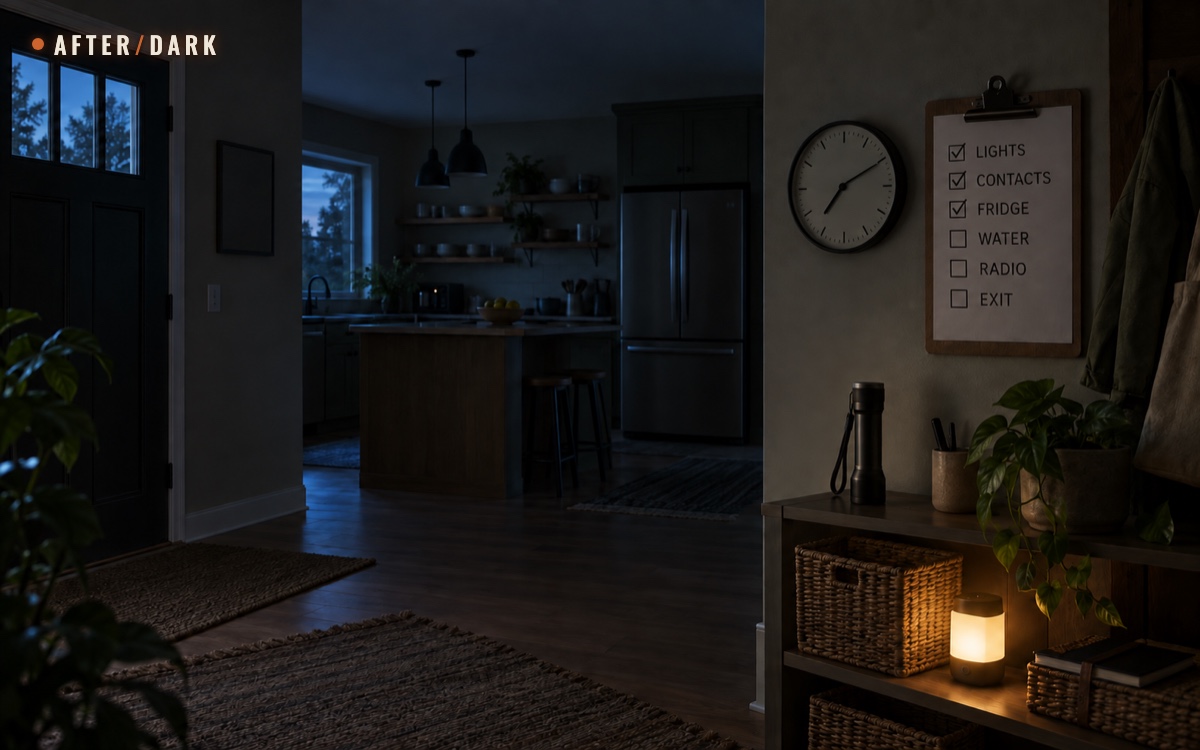
How to Build a Home Power Outage Plan for a Long Blackout
Turn separate outage supplies into one tested household sequence for lighting, food, communication, water, temperature control, and recovery.
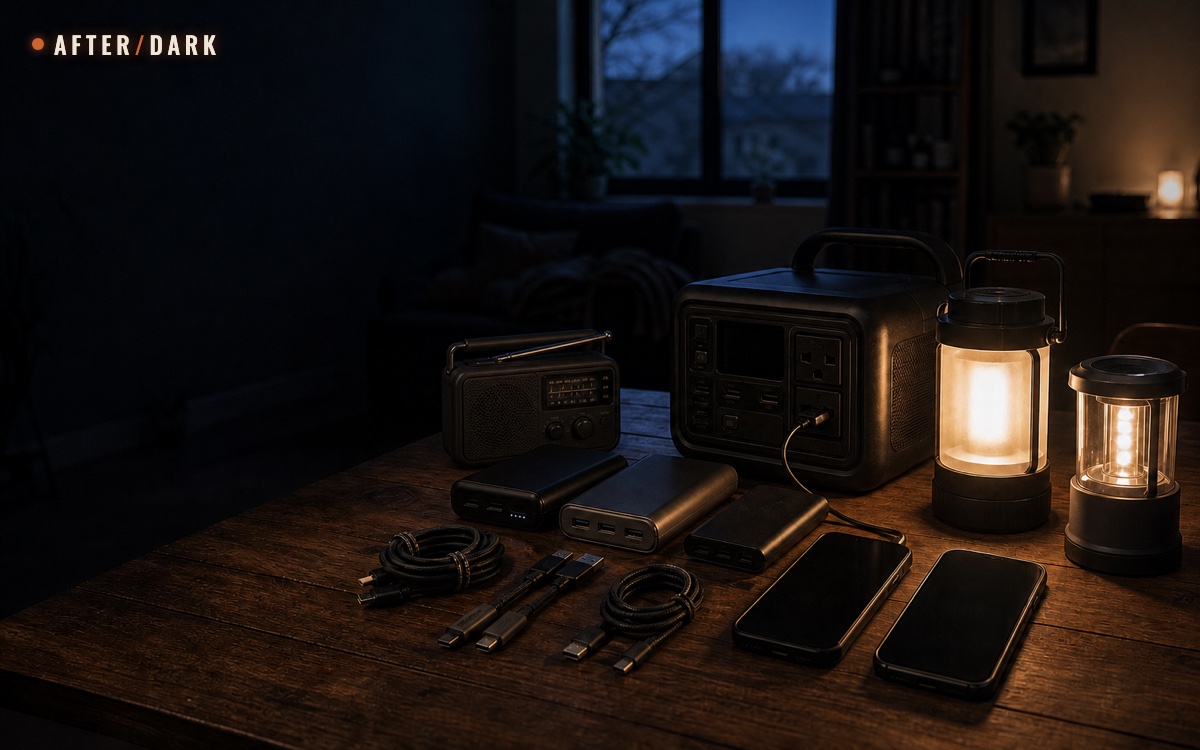
How to Keep Phones, Lights, and Radios Powered During a Long Outage
Build a small-device power system around measured demand, compatible charging chains, distributed lighting, and a written no-outlet test.
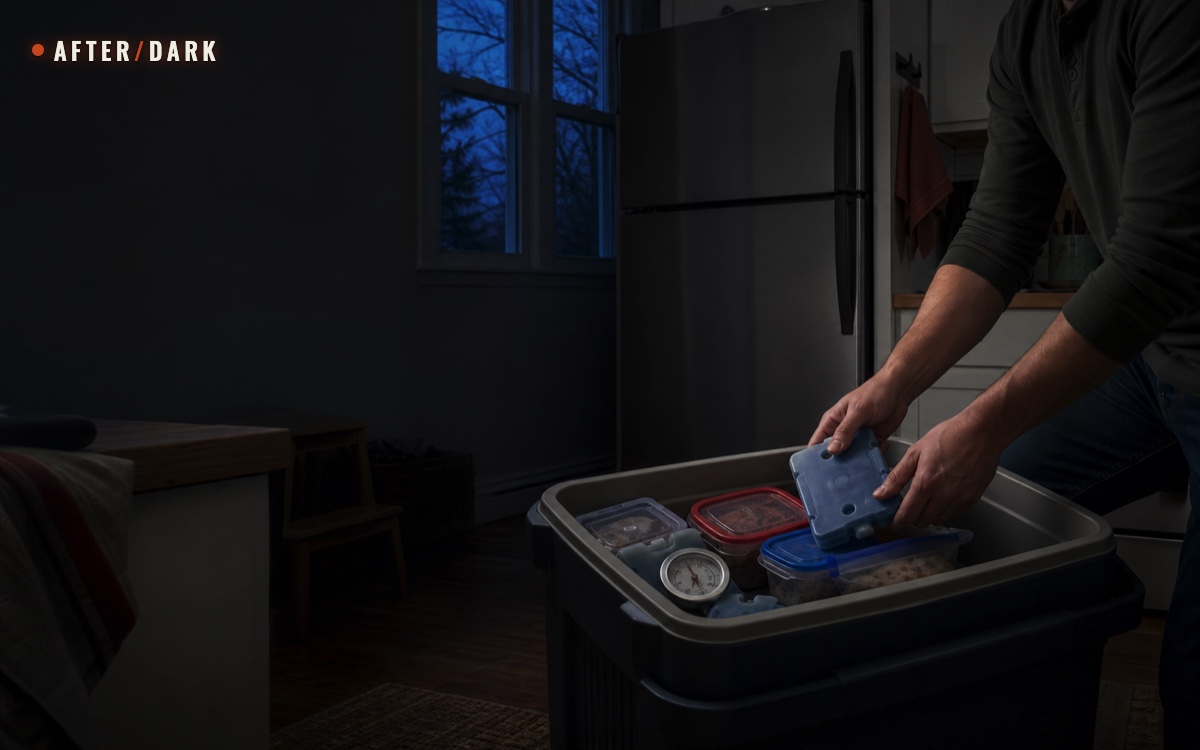
How to Keep Food Cold During a Long Power Outage
Build a measured cold-storage plan for the refrigerator, freezer, and coolers, with transfer triggers and official food-safety limits.