How to Stay Clean Without Running Water
A working wash routine for days without a tap: start with ordinary supplies, use water deliberately and leave the setup ready for the next person.
Short answer
Key takeaways
- A small pouring bottle can supply handwashing; a special camping shower is optional.
- Prepare the rinse water, towel and clean clothes before starting a body wash.
- Keep the supply vessel separate from the basin receiving used water.
- Count refills, clean cloths, drying space and waste disposal as part of the daily routine.
- Confirm access to another washing place when the arrangement you have cannot meet the household's needs.
When the tap stops, everyday washing becomes a job of carrying, pouring and clearing up. The bathroom may still provide privacy and somewhere to catch drips, even though the shower no longer works. Elsewhere, a bottle, a clean cloth and an agreed private space may be your starting point.
The aim is to finish a useful wash today and make the next one possible. Start with what you have, including ordinary household items, before deciding whether extra equipment would help.
Start With the Water and Supplies You Have
Check for water, soap, clean cloths, a towel and something to pour from. Set them together. A clean jug and basin can do the work of a purchased washing kit; with less equipment, choose the smaller routine you can complete.
Choose the starting arrangement that matches your available resources.
| Your situation | First action | A workable starting setup |
|---|---|---|
| Water stored and ordinary bathroom supplies available | Prepare one pouring container and a place for runoff | Handwashing plus a cloth-and-soap body wash |
| Only a few bottles remain | Check the next refill and keep drinking needs accounted for before allocating a wash | Pouring bottle for hands; a small body wash or body wipes if available |
| No water or washing kit set aside | Ask a reachable neighbor, host or building manager for water and missing basics, or access to working facilities | Borrowed soap, a clean cloth and suitable water, or a confirmed wash elsewhere |
| Staying temporarily with others | Agree which water, room, supplies and disposal route you may use | A personal pouch and a shared washing place with agreed privacy |
If you have nothing prepared, make the request specific: a supply of usable water, some soap, a clean cloth and a place to wash. A friend outside the affected area may offer a shower; a host may have a jug and basin you can borrow. Confirm that the facilities work, when you can use them and how you will get there. Without a phone, start with a reachable person or reception desk who can help arrange this.
For a continuing supply problem, the water-outage guide covers collection points, delivery, carrying loads and assistance. Here, the immediate result is access to a wash and the supplies it needs.
Use stored drinking water when it is the known-suitable supply available. Where a water notice applies, check its instructions for bathing and brushing teeth: a restriction on drinking and a restriction on all water use can require different arrangements. Keep any differently designated supplies clearly separate.
Set Up Handwashing Without a Working Tap
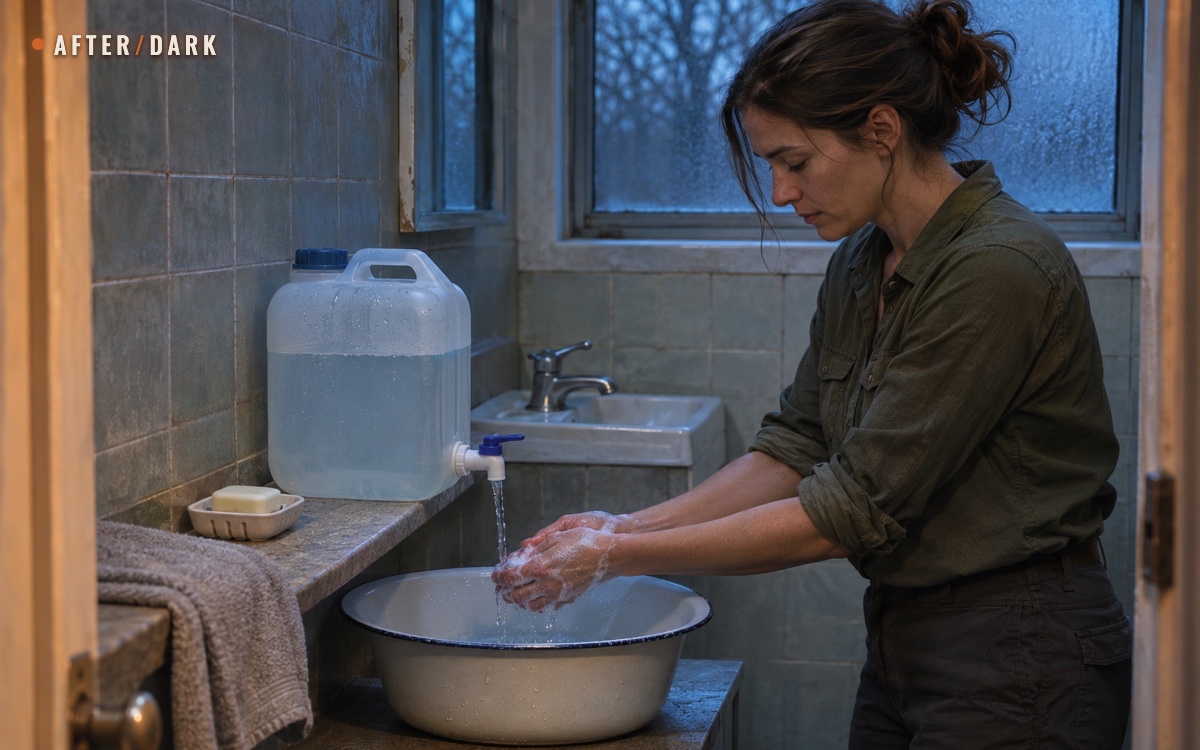
Put soap, drying supplies and a bottle or dispenser together at a convenient height. A gravity-fed container needs stable support, with its outlet over the receiving basin. Try opening and closing it before filling it completely. Leave room beneath the spout for both hands.
A small bottle works too. Pour over one hand, then change hands; put the bottle down while rubbing them together. For rinsing, pour over each hand in turn, without touching the bottle opening. A helper can pour when available, but the arrangement should also work when you are alone.
Follow the complete handwashing sequence: wet hands with clean flowing water, stop the flow, apply soap and scrub for at least 20 seconds, including backs, fingers and under nails. Rinse with fresh flowing water and dry with a clean towel or air-dry. The receiving basin catches the water; it is not a shared bowl for dipping clean hands.
Keep this available before food preparation and eating, and after toilet use, rubbish handling and dirty chores. Place the drinking supply where splashes from the washing point cannot reach its opening. If your temporary toilet is in another room, make the route to handwashing obvious.
Wash Your Body With a Cloth and Small Pours
Prepare a private place, soap suitable for body washing, a clean washcloth, rinse water, a towel and clean clothes. Put everything within reach before undressing. Keep the floor clear and use a basin inside the bath or shower tray if that gives you a convenient place to catch drips.
The cloth-and-soap washing method works without a full bath:
- Wet the cloth and the area you will wash. Work in sections rather than soaking yourself all at once.
- Wash with soap. Begin with cleaner areas, then move to dirtier areas; leave intimate areas until last.
- Rinse away the soap. Use fresh water and a rinsed cloth or a separate clean rinse cloth. Do not return a used cloth to the supply container.
- Dry before dressing. In a cool room, uncover, wash and dry one section at a time.
- Set used cloths aside for laundering. Give the next person clean supplies.
Pour water onto the cloth over the catch basin, keeping the source vessel out of contact with it. This leaves the main supply available for the rest of the wash. Set aside the rinse portion first: an almost empty bottle discovered after lathering is a practical problem that preparation avoids.
You do not need two large basins. With one basin, use it to receive drips and rinse runoff while the fresh water stays in a bottle or jug. If that basin initially held clean water, transfer what you need into a suitable clean pouring vessel before using it for collection. It cannot do both jobs at once.
A seated arrangement may be easier to use, provided the seat is stable and the supplies and collection basin are reachable. Keep water off the walking route. In shared accommodation, agree that the space is private for the time needed to finish, dress and clear up.
Fit Hair Washing and Teeth Into the Setup
Wash hair when you can finish the rinse
Prepare your ordinary shampoo, a pouring jug or bottle, enough suitable water for wetting and rinsing, and a towel. Position yourself over a basin or usable shower area so runoff does not soak your clean clothing. A helper can make pouring easier, but a light jug lets you alternate pouring and washing yourself.
Wet the hair, use shampoo according to its label, and gently work it into the scalp, letting the rinse run through the length. Finish the rinse before using the remaining water for another job. If your usual conditioner requires rinsing, include that water too. Absorb the excess with a towel and leave time and space for drying.
The first attempt tells you whether your jug is manageable and whether the water you set aside is enough. Record the amount used, including any additional rinse. Hair length, products and the pouring method change the task; a universal bottle-sized allowance would be misleading.
Dry shampoo can temporarily absorb oil, but it does not replace washing hair with shampoo and water. Follow its directions if you already have it. If you use a product specifically labeled for no-rinse washing, follow that product's procedure; do not assume ordinary shampoo can be left in the hair.
Keep a small teeth-cleaning setup separate
Place your toothbrush, toothpaste and a small amount of drinking-quality water together. Use clean water for brushing teeth during an interruption, following any local advisory. Pour what you need into a clean cup rather than dipping the brush into the shared water supply. Keep the brush away from body-washing cloths and splash, and return it to a clean place to dry.
When There Is Too Little Water for a Body Wash
Body wipes or baby wipes intended for skin can provide a temporary way to remove everyday dirt and sweat. Use a clean wipe for each new area as needed, work from cleaner areas toward dirtier ones, and follow the label. Have a bag or bin ready before starting. This is the temporary wipe-wash option described in emergency hygiene guidance.
For hands, the alternative is different: when soap and water are unavailable, CDC recommends hand sanitizer containing at least 60% alcohol. Use it as directed. It works less well on visibly dirty or greasy hands, so arrange access to washing for those jobs. An ordinary body wipe is not automatically a hand-sanitizing product.
If neither a wash nor a suitable temporary option is available, focus the next supply request on what is missing. Ask to use a working bathroom, borrow the basics or collect a hygiene pack where one is actually being distributed. Check opening hours, access, available water and whether towels or toiletries are supplied. At an evacuation shelter, ask staff about the washing arrangements on arrival rather than assuming showers are provided.
In a prolonged outage, a scheduled wash at a confirmed working location can be part of the routine. Agree transport and timing before you use the last supplies at home.
Leave the Washing Place Ready for Tomorrow
Once you have washed, deal with the receiving basin before adding more water to the station. Use a functioning household drain only where current instructions permit it. If wastewater service is restricted, use separate labeled containment and ask the building manager or responsible utility about disposal. Identify somewhere else to wash if you cannot manage the runoff.
Empty the basin, wash it with soap or detergent suitable for its material, rinse it and leave it to dry. Keep water for this reset in the task's allowance. Clean the dispenser's frequently touched parts according to its care instructions. Return soap to a draining dish or close its container, and replace the clean drying supplies.
Wipes and period products belong in the bin, including wipes labeled flushable. Provide a lined, closable bin where people change, and keep the disposal route usable when normal collection is delayed. Keep personal washing equipment apart from the basins used for washing dishes.
Give personal items somewhere to dry
Assign each person their own cloth and towel, with a recognizable hanging place. Spread damp items so they can dry rather than leaving them bundled in a pouch. Set soiled items aside for washing and replace them with clean ones. A towel that has dried is not thereby laundered.
Keep clean underwear, socks and a change of clothes accessible. The manual-laundry guide covers washing and drying the reusable items. Plan a small load that you can finish; a bucket of soaking laundry occupying the only washbasin can stop everyone else's routine.
Keep familiar menstrual supplies available in a private, reachable place. Count the supporting items too: underwear, soap, waste bags and, for reusable products, the water and facilities required by their instructions. UNICEF's guidance distinguishes these supply and washing needs. Include enough replacements while reusable items are being washed and dried.
For a child or someone who needs help reaching the equipment, check the outlet height, privacy and who will assist with refills. A working dispenser should not depend on the strongest person being home all day.
Measure one complete routine
Use a marked jug or record the starting and finishing amounts in your bottles. Include handwashing refills, body washing, hair washing when done, rinsing and equipment cleanup. Keep these entries visible within the household water reserve, alongside drinking and food preparation.
The useful record is what was actually used, for which tasks, and how many people. A day that includes hair washing and cloth laundering will differ from one that does not. Do not turn the smaller day's figure into a fixed maximum for every day.
For example, two adults sharing one basin can keep the pouring jug ready for hands, take separate body-washing turns and postpone a laundry load until both are finished. After the first turn, the second person needs a clean cloth, a cleared basin and sufficient water. If any is missing, the job is to replace that resource before starting. The example's constraint is shared equipment, not an invented ration.
Before bed, check the next refill or available washing place, the clean-cloth supply and tomorrow's access to the room. A confirmed delivery or appointment is more useful than assuming the tap will be working by morning.
Keep a Small Hygiene Kit Ready
Build this from items you already use. Store the dry supplies together and keep the water in suitable containers nearby. A portable pouch can become the hygiene part of your three-day emergency kit.
Choose equipment for a complete washing routine and the conditions in which you will use it.
| Item | Job | Ordinary starting option |
|---|---|---|
| Water dispenser or pouring vessel | Deliver fresh water without a tap | A manageable clean bottle or jug |
| Soap | Wash hands and, where its label permits, the body | Your usual bar or liquid soap |
| Basin | Catch drips and used water | A suitable household washbasin |
| Clean cloths and towel | Wash, rinse and dry | Personal bathroom cloths with clean replacements |
| Toothbrush, toothpaste and cup | Keep teeth-cleaning supplies together | Your usual toiletries |
| Body wipes and hand sanitizer | Cover temporary gaps for their respective uses | Suitable products already in your supplies |
| Personal hygiene supplies and clean underwear | Maintain everyday changing routines | Familiar products, sized for the people using them |
| Waste bags and drying space | Finish the job and prepare the next use | A lined bin and available hooks or rack |
Try the kit once while the tap still works. Close it, perform the routine using the stored setup, then note the item you had to fetch, the container that was awkward and the amount of water used. Put those corrections into the kit. You should be able to find the same supplies in low light and leave the equipment ready for someone else.
Zombie Scenario: The Bathroom Still Works
Fictional scenario
On the fourth evening of a fictional zombie disruption, the apartment's shower is still dry. The occupants have water in bottles, a jug, one basin and ordinary toiletries. They agree on separate washing turns and hang a note on the door while the room is occupied.
After the first wash, a used cloth goes to the laundry container and the basin is emptied through the confirmed working drain. The next person brings a clean cloth and refills the jug. Nobody has to search the dark apartment while wet or discover that the last towel is already in use.
Their evening check identifies tomorrow's shortage: clean cloths, not another gadget. They schedule a small laundry load around the same basin and the next water delivery.
Frequently Asked
What if I have water but no soap or hand sanitizer?
Do I need hot water or antibacterial soap for handwashing?
Can I wash with collected rainwater?
Is a camping shower useful inside a bathroom?
Should I pack disposable wipes or reusable washcloths?
How can I wash if I cannot lift a full water container?
What should I take when I will be away from home all day?
Can I use the shower as soon as water returns?
Sources
- CDC — Guidelines for Personal Hygiene During an Emergency
- CDC — About Handwashing
- CDC — Hand Hygiene Frequently Asked Questions
- CDC — Drinking Water Advisories: An Overview
- Be Ready Utah — Hygiene & Sanitation
- American Academy of Dermatology — 10 Hair Care Habits That Can Damage Your Hair
- American Academy of Dermatology — Dry Shampoo: Tips for Getting Your Best Results
- UNICEF Supply Division — Menstrual Hygiene Products
- Thames Water — Bin It, Don't Block It
Related guides

No Running Water at Home: What to Do During a Water Outage
A practical plan for life with dry taps: obtain water, keep essential routines working, organize the next refill, and decide when to stay elsewhere.

How to Set Up an Emergency Toilet at Home for Water or Sewer Outages
Choose a workable toilet when water or sewer service stops, including a setup from household supplies, then handle washing, replacement, and collected waste.
How to Wash Clothes Without Electricity During a Long Outage
Keep essential laundry moving during a long outage with a measured manual wash, rinse, water-removal, and drying system sized to your home.